Photo: Nathaniel Doubleday
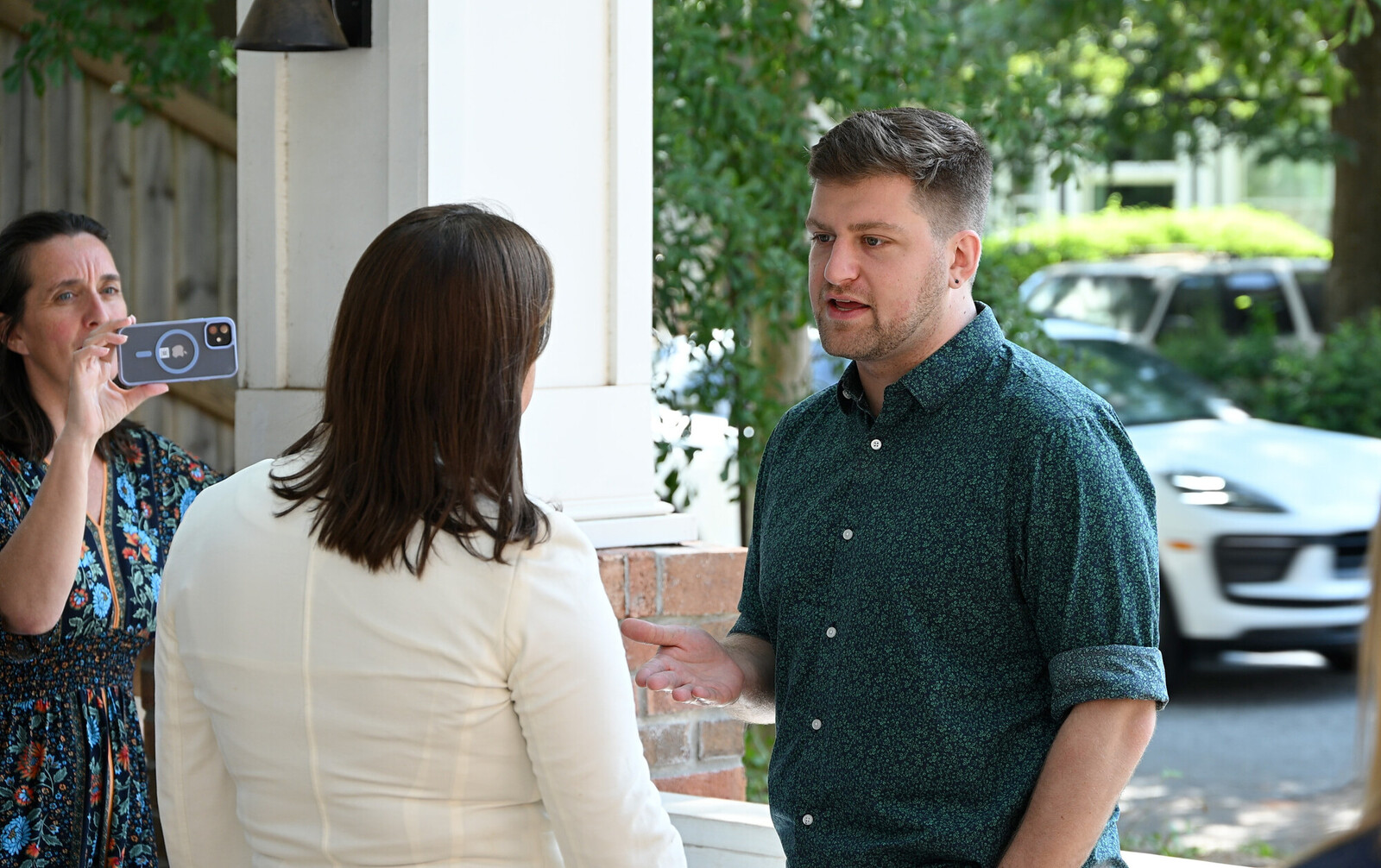
Bird-dogging is the disciplined art of seeking out a public official and asking polite but pointed questions to hold them accountable—in public, on the record, where they can’t easily dodge.
For a long time, I thought of it as something constituents needed to do every four years, mainly in states like Iowa and New Hampshire that had early presidential primaries.
I was wrong.
Bird-dogging is actually an evergreen tactic. It can be used for many issues and can come in handy almost anywhere. In 2017, ordinary people confronted their senators at town halls over the effort to repeal the Affordable Care Act, with some sharing their own medical histories on camera. These interactions went viral, helping to sink the repeal effort.
Other grassroots activists—including AIDS/HIV advocates—have used the same tactic for decades, showing up at hearings and offices to demand lawmakers explain their votes. School board meetings, corporate shareholder meetings, talk radio call-in lines, and almost anywhere a candidate appears on the campaign trail are also prime venues for bird-dogging.
Bird doggers can help educate policymakers, the media, and the public. They can shape public narratives. Ultimately, they support movements for social and economic justice.
And anyone can do it. You don’t need a title, a press pass, or any experience. Some of the best bird doggers are young people—even small children, asking a question so simple and compelling that it cuts through the usual political noise.
It’s something that can be especially useful in the next few years. Starting with the obvious, the mid-term elections are around the corner, which provides ample opportunities to question candidates and raise critical issues. Then there’s the lame-duck period, which offers chances to inform newly elected officials about our issues before they’re sworn in. That’s followed by the first 100 days of the new Congress and state legislative sessions—a key window when priorities are still being set. And then it’s off to the races with the 2028 elections.
Then there’s the context. On July 4, 2025, the president signed the “One Big Beautiful Bill Act” (HR1), which set up the largest transfer of wealth from working-class and poor people to the very rich in U.S. history. It will impose billions of dollars in cuts to food assistance and healthcare programs while giving massive tax cuts to the very wealthy over the next several years. It was unpopular at the time of its passage, and it’s even more so today.
The impacts will hit hard across the U.S., and they won’t be limited to low-income families. Hospitals will close. Businesses will be shut down. Jobs will be lost. Public services will deteriorate. And the toxic effects of extreme inequality will be felt even more.
The damage has already started. Over the last year, over 5 million people, including at least 1 million children, have lost access to SNAP food assistance—and the worst is yet to come. The cuts to Medicaid alone will cause 51,000 preventable deaths per year when fully implemented, according to public health researchers at Yale and the University of Pennsylvania. For perspective, the National Archives reports 58,220 U.S. military deaths in Vietnam over 20 years between 1956 and 1975.
Every member of Congress who votes to keep these cuts in place will have a lot to answer for over the next few years. Some need to learn the facts about the cuts and understand the options for reducing the harm—as we build a movement to undo as much of the damage as possible. The voices of those impacted need to be heard loud and clear.
Bird dogging isn’t the only tool in the box. But over the next few years, it’s going to be one of the most important ones, if we learn how to use it.