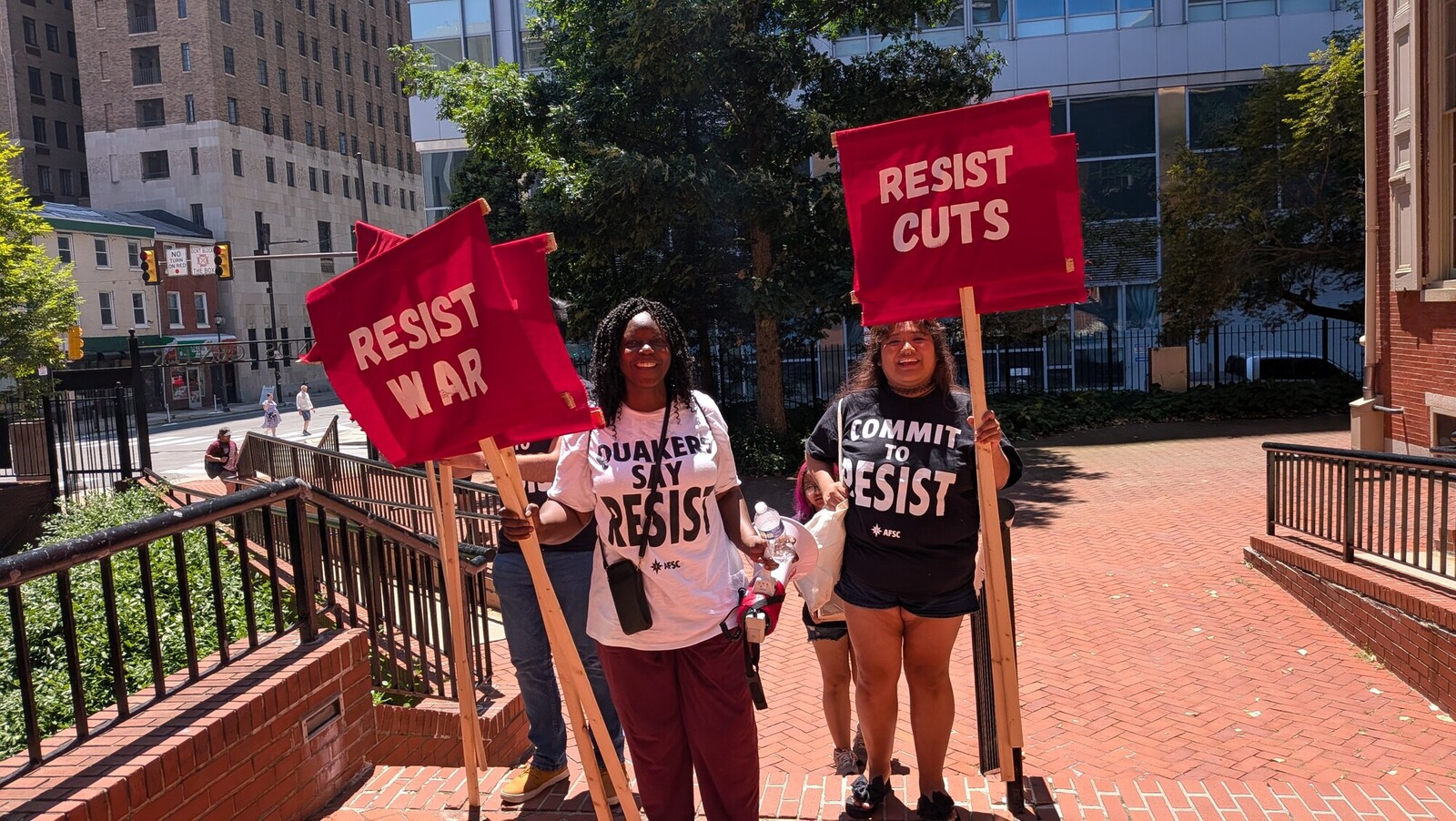
Photo: Ralph Medley/AFSC
Every person deserves access to the resources they need to live a healthy life, including nutritious food and quality healthcare. The One Big Beautiful Bill Act (OBBBA) strips away both from millions of low-income people—to fund tax breaks for the rich.
OBBBA was passed by Congress in 2025 as one of the Trump administration’s signature policy efforts. The law made historic cuts to Medicaid and the Supplemental Nutrition Assistance Program (SNAP). It slashed crucial environmental protections. And it poured hundreds of billions of dollars into the already bloated Pentagon spending and funding for Immigration and Customs Enforcement (ICE).
The impacts of this law have already started to take effect. SNAP paperwork requirements have pushed millions of people off their benefits. The loss of healthcare subsidies has already raised insurance premiums for millions more.
Many other harmful provisions are still to come. In January 2027, new Medicaid work requirements will go into effect, threatening healthcare coverage for millions of low-income people nationwide. And in October 2027, states will be forced to absorb new SNAP costs—a shift that risks even deeper cuts down the line.
But this moment is also an opening. A new Congress will take office in January 2027. Every newly elected and re-elected member will have to decide whether they will stand with the constituents harmed by this law—or against them.
This is our chance to demand they reverse course, starting with restoring cuts to Medicaid and SNAP. Here’s what you need to know and how you can take action.
How OBBBA hurts everyday people
Gutting Medicaid
OBBBA slashes $1 trillion from Medicaid—the largest cuts in the program’s history. This follows Congress’s decision to allow healthcare subsidies to expire under the Affordable Care Act. That has already raised insurance premiums for people who buy coverage on the marketplace and forced many to go without coverage.
The combined impact will leave an estimated 16 million people without health coverage by 2034. More than 1,200 healthcare facilities across the country—many in rural communities—are now at risk of closing.
Public health researchers at Yale and the University of Pennsylvania estimate that this law's health care provisions will cause more than 51,000 preventable deaths a year once fully implemented. Those provisions include people losing Medicaid, the expiration of healthcare subsidies under the Affordable Care Act, and a rollback in nursing home safety rules.
Slashing SNAP (food assistance)
OBBBA made historic cuts to SNAP—$186 billion—that will worsen hunger and food insecurity across the country. New paperwork requirements have made it harder for people to access benefits. An estimated 5 million people—12% of SNAP recipients—have already lost their benefits.
Deepening inequality
This law takes from people who have the least and gives to those who have the most. The poorest 10% of Americans will lose about $1,200 a year. The richest 10% gain about $13,600 a year. It’s one of the clearest transfers of wealth from the poor to the rich in modern U.S. policy.
Worsening student debt
The law caps how much college students can borrow through federal loans, with even tighter limits for graduate and professional students. For many, that means turning to costlier private loans just to finish a degree. The changes make higher education less affordable, especially for students pursuing nursing, medicine, and other advanced degrees.
Harming the environment
The law eliminates many clean energy and green tax credits, opens public lands to oil and gas development, and removes fines for automakers that violate fuel efficiency standards. Together, these changes are expected to add hundreds of millions of tons of new greenhouse gas emissions. That’s equivalent to putting an estimated 72 million more cars on the road, according to one estimate.
Fueling the security state
OBBBA pumps $170 billion into immigrant detention and border militarization. That includes funding for the border wall and new detention camps, plus $150 billion in new military spending. ICE is now the largest federal law enforcement agency in the country—larger than the FBI. All to fund tax breaks for the wealthy and an already-bloated security state.
How we can stop OBBBA
These numbers make clear: this law benefits some people at the expense of many others.
Wealthy corporations and individuals walked away with permanent tax breaks. Working-class families, communities of color, immigrants, and rural communities were left to absorb the damage—through lost healthcare, lost food assistance, and a social safety net stretched thinner than ever.
This didn’t happen by accident. It’s the result of a deliberate choice about whose needs come first in this country. And it’s not the first time that choice has been made at the expense of the same communities.
But choices can be unmade.
Ahead of the midterms, we can push sitting members of Congress and candidates to answer for this law. And when a new Congress takes office in January, we can make sure they keep hearing from us.
Restoring these cuts is only the beginning. We won’t stop until every person has access to the healthcare and support they need to live a healthy life—including universal healthcare and a stronger social safety net for all who need it.
History has shown that when we raise our voices together—across race, class, and community—we make it harder for lawmakers to look away. Join us in urging them to do what’s right.
Send a message to Congress today!
More resources:
- Fact sheets about the law’s effects on every state (Center for American Progress)
- A timeline of when OBBBA policies come into effect (Center for American Progress)
- Estimates of how many people are expected to lose healthcare in each state and district (Center for American Progress)
- A list of healthcare facilities at risk of closure or cuts as a result of the law (Protect Our Care)
- How much SNAP participation has already fallen in each state (Center on Budget and Policy Priorities)
- How state governments are responding to the pressure that the law places on their finances (Multistate)
- Analysis of the law’s tax provisions (Americans for Tax Fairness)
- Analysis of the law as “the most regressive in at least 40 years” (Washington Center for Equitable Growth)
- Why AFSC opposed the law (American Friends Service Committee)