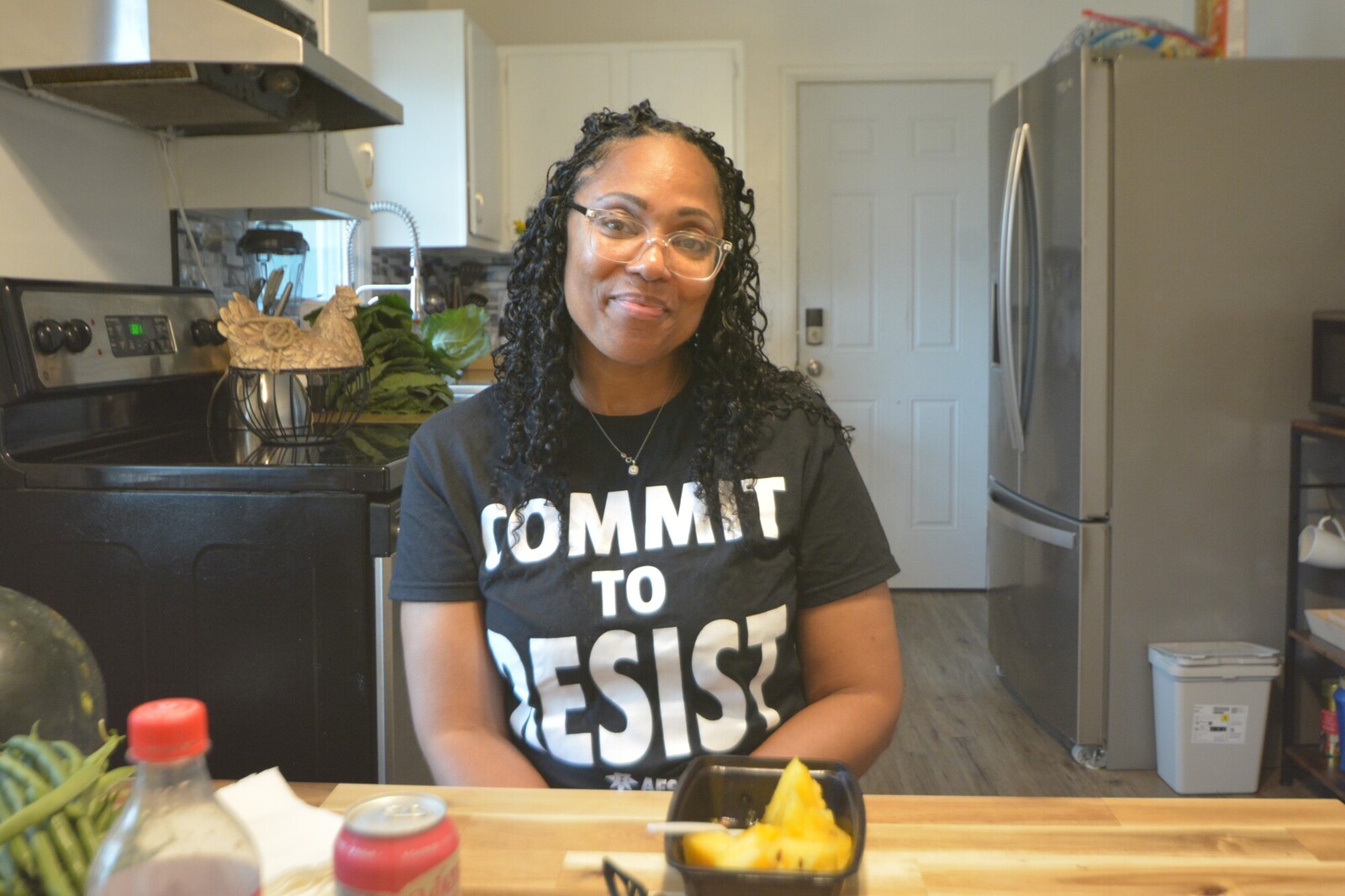
Shavonne Davis in the kitchen of Healing Homes Farm during a recent open house AFSC
Shavonne Davis and Quiana Lovett are the first two residents of Healing Homes Farm, a new community for women coming out of prison in Michigan. The project is a collaboration between the AFSC Michigan Criminal Justice Program and Second Chance Battalion. During a recent Open House at the farm, Shavonne shared about her experience “coming home” and her hopes for the farm.
What would you like to share about yourself?
I just got married in May. This adventure has been somewhat trying for my marriage. My wife is not in the advocacy/reentry/visionary journey, so she doesn’t understand my passion. So that’s a work in process for me, navigating being married, marrying my love with my passion for what I want to do with my life.
I am a mom of two. My youngest daughter, Aspen, died in 2020. She had sickle cell, and she had an inoperable brain aneurysm. I don’t know if I truly tapped into the grieving process of that. I’ve kind of compartmentalized that.
The first day I came home, my oldest daughter had a photo of Aspen for me. When we got to her house, she had her obituary for me. Even though she’d sent me a copy, to actually have the physical aspect of it was a bit much. My daughter’s wishes were to be cremated, so I know that’s going to be something that adds an extra layer of finality, of losing my daughter, when I receive her ashes.
I’m 53. While incarcerated, I completed a number of groups and programs. I have two associates degrees from Jackson College, one in business and one in arts. I also have two certificates from Jackson College – one for business and one for public administration management.
In vocational village at the prison, I took 3D printing and building trades. Prior to that, I partook in vo-tech, and I was a core member of Chance for Life for a number of years. I helped facilitate groups, mediations and conciliations through the organization.
I was also a mentor for younger incarcerated people. I was one of the elders who they looked up to and had a significant amount of respect for. I’ve always been the type of person -- if there was support that I could lend to something, and it made sense to me and wasn’t about nonsense -- I was all in for it.
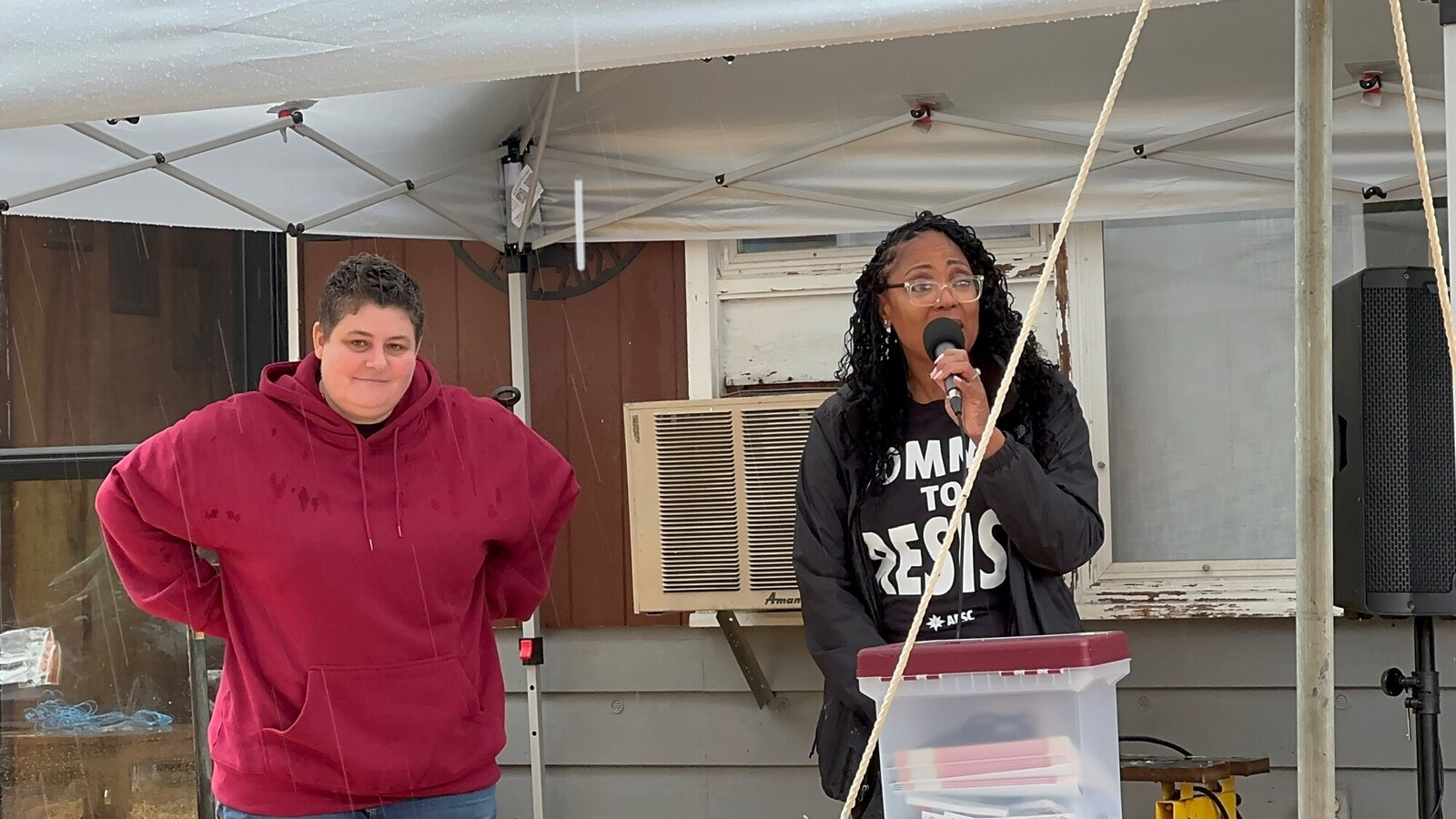
AFSC Michigan Program Coordinator Natalie Holbrook-Combs, left, listens as Shavonne Davis speaks at the recent open house. Gabriela Flora/AFSC
What does Healing Homes Farm mean to you?
I remember this initiative being a dream that brought together a group of friends in the advocacy and reform realm. “Ooh, wouldn’t it be cool if we did this?” Being incarcerated for such a length of time, you have the tendency to see what’s needed.
In prison, some programs are in name only. That’s a disservice to people who’ve done such a large amount of time. When they get out, they’re essentially encapsulated in that moment of incarceration.
Yet society and the world continuously go on. And we have no knowledge of what that actually is like. Right now, I’m trying to figure out and adjust to technology and get caught up on what I need to be doing at home. I like to think I’m a very smart person, but it’s challenging.
I remember having a conversation with the director of education at the prison. I told her everyone incarcerated has a vision: to go home. However, what does that really look like?
You fight that fight, and you’re granted your release. But for people like me, who’ve done 24 years or more, who don’t know anything about new stuff, it’s a challenge. What was a computer when they went in 40 years ago? It was a big old box. Now it’s not. It’s real scary.
She commissioned me to put together a proposal, which I entitled it, “Transitions to Success.” It addressed different areas individuals like me needed to be comfortable in transitioning to society.
That’s what I see for this place. I see this as a place of comfort, as a resource for people to have that room to breathe.
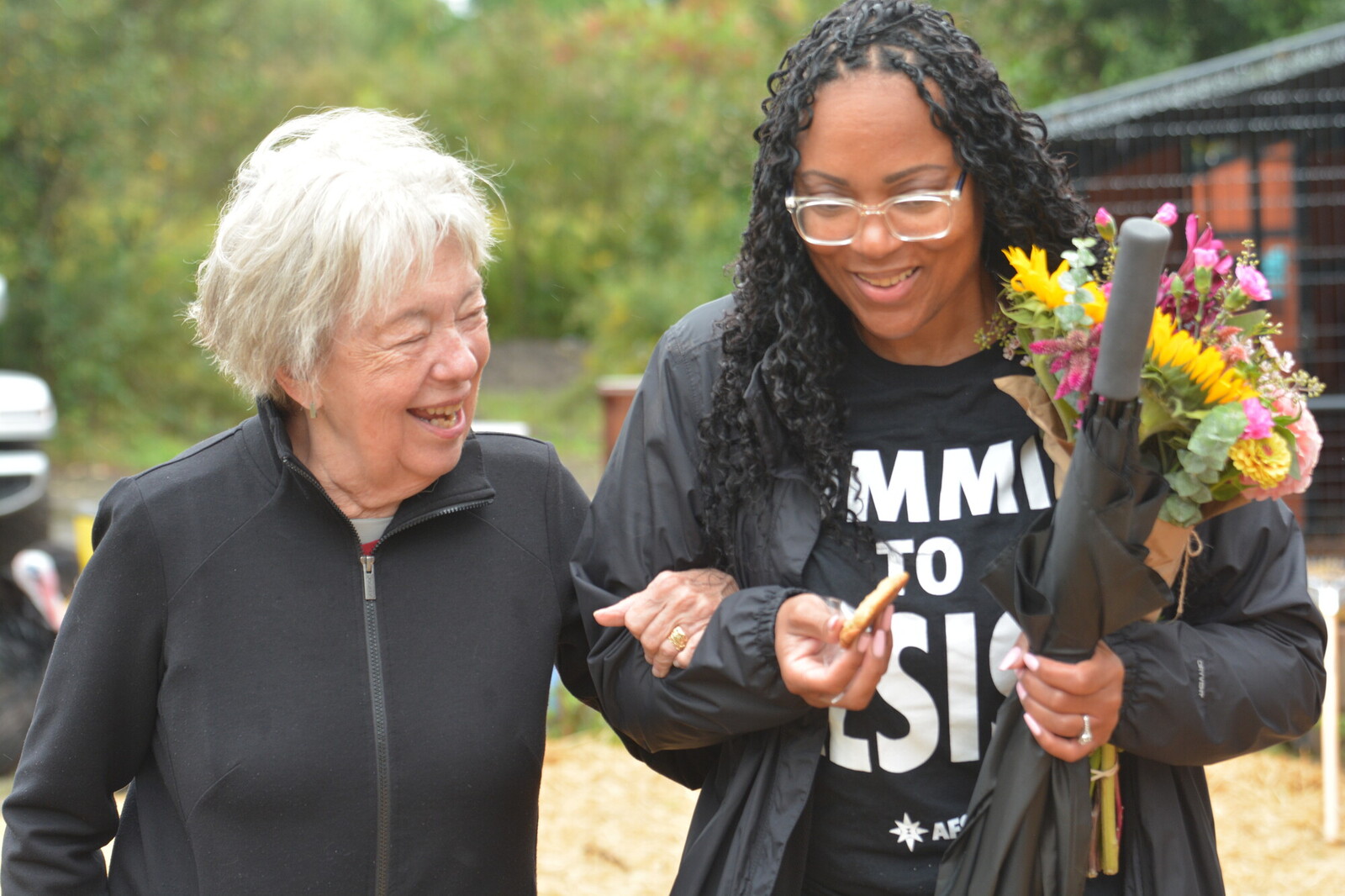
During the Open House, Shavonne gives a farm tour to a supporter. AFSC
It can be very traumatizing, scary, uncertain – but you have this network of support and services that will encompass you.
Our supporters ask: “What are your needs? We’ll address your needs. You’ll have a roof over your head you don’t have to worry about. You can stay here a year free. What are the real things you need? Do you need counseling? Do you need other resources? Are your aspirations to go back to school? Whatever you need, we’ll help you with that.”
And I think those are the things that are needed for individuals who’ve served such a long time. It’s scary coming out. This is what you want. But once you’re out here, what does that look like?
I see Healing Homes Farm as being a model for helping people see what that looks like. We want to make sure that for the women who come out – we understand you, and we got you.
What’s your vision for the farm part of Healing Homes Farm?
This property is huge, and it is very rough right now, with a lot of trees that need to be taken down. I can see my bees, and the tiny houses, and the garden. I’m more the farmer.
I have the vision to build out the farm aspect of this place. Where the women will be able to pull up, and we’ll say, “This is your orientation, this is where you’ll be staying, this is what’s expected of you. We’ll need you to help out on the farm.”
I feel like this is just the beginning of the journey. It’s a new chapter, a new book being written. It’s going to be awesome.
I don’t see Healing Homes Farm as “community placement” in the sense that’s typically defined. This is a new initiative. It’s communal, family-type living that allows a person to breathe and tap into the things they need.
I don’t think the Department of Corrections is ready for this. But they need to get ready – because this is it.
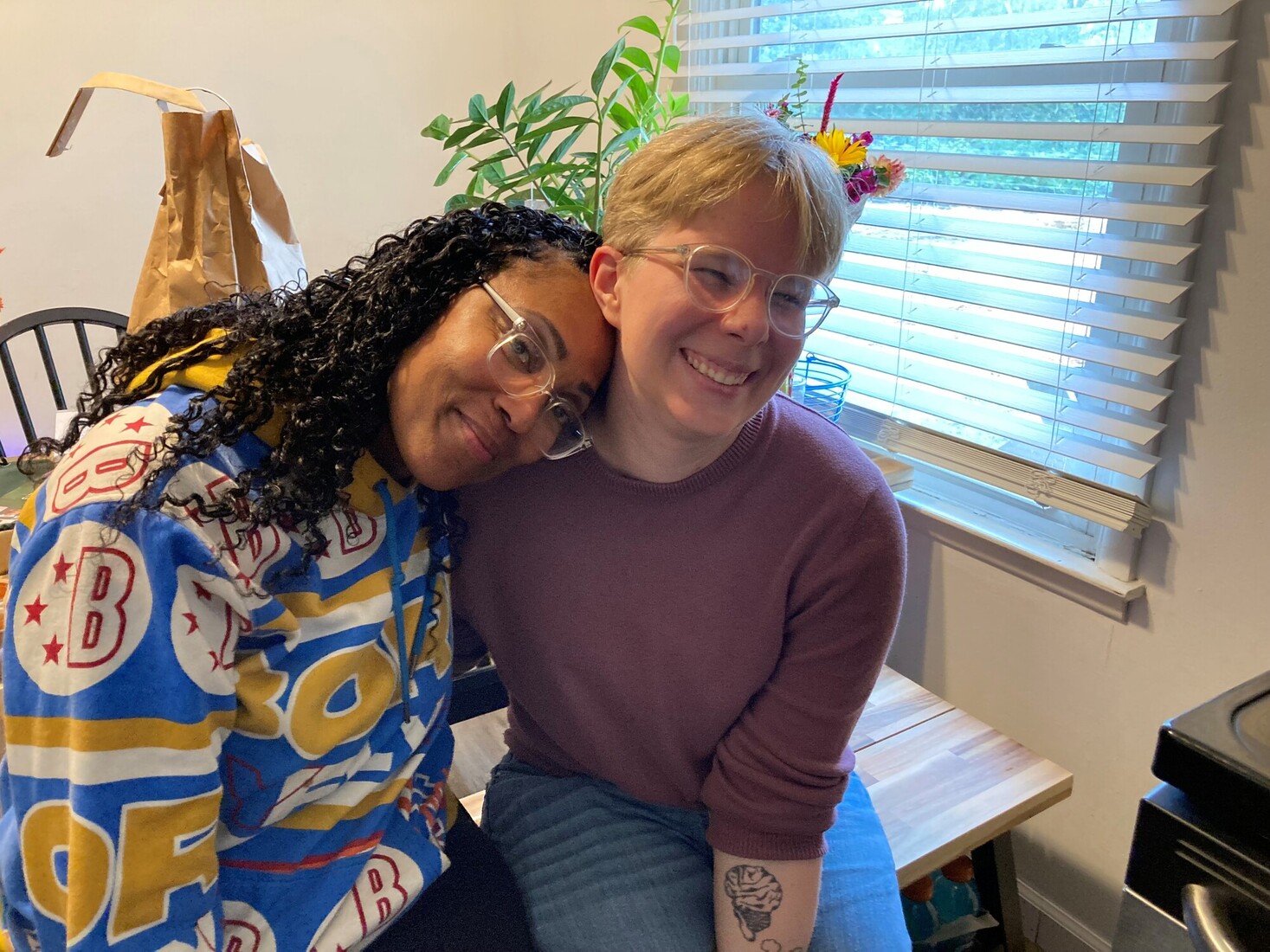
Shavonne shares a moment with Nick at the open house. Shavonne and Nick were co-mentors through AFSC’s Good Neighbor Project. This was the first time they had met in person. AFSC
Is being close to nature an important part of the healing here?
It is! The other day I had a situation where I was just so overwhelmed. I went out back, took a chair, and sat with Sebastian and Ruby, the two goats who had just arrived. They were kind of skittish and uncertain.
But they came up to the fence and were looking at me. Sebastian tilted his head and was just kept looking at me. And that made me cry more, because I’m like, “He’s here for me!”
And ever since then, me and Sebastian, we’ve been rockin’! I love Sabastian, that’s my dude! I love that goat.
The darker colored goat is Sebastian, the boy, and the lighter is the girl, Ruby. I call her “Ru.” That’s my girl Ru. She was a little more inviting when I first came, but Sebastian was more like, “No, I’m not feeling this. Who are you? Back up!”
But now he’s all in. I go in the pen and he’ll butt me, like saying, “Rub me!” I love the two goats.
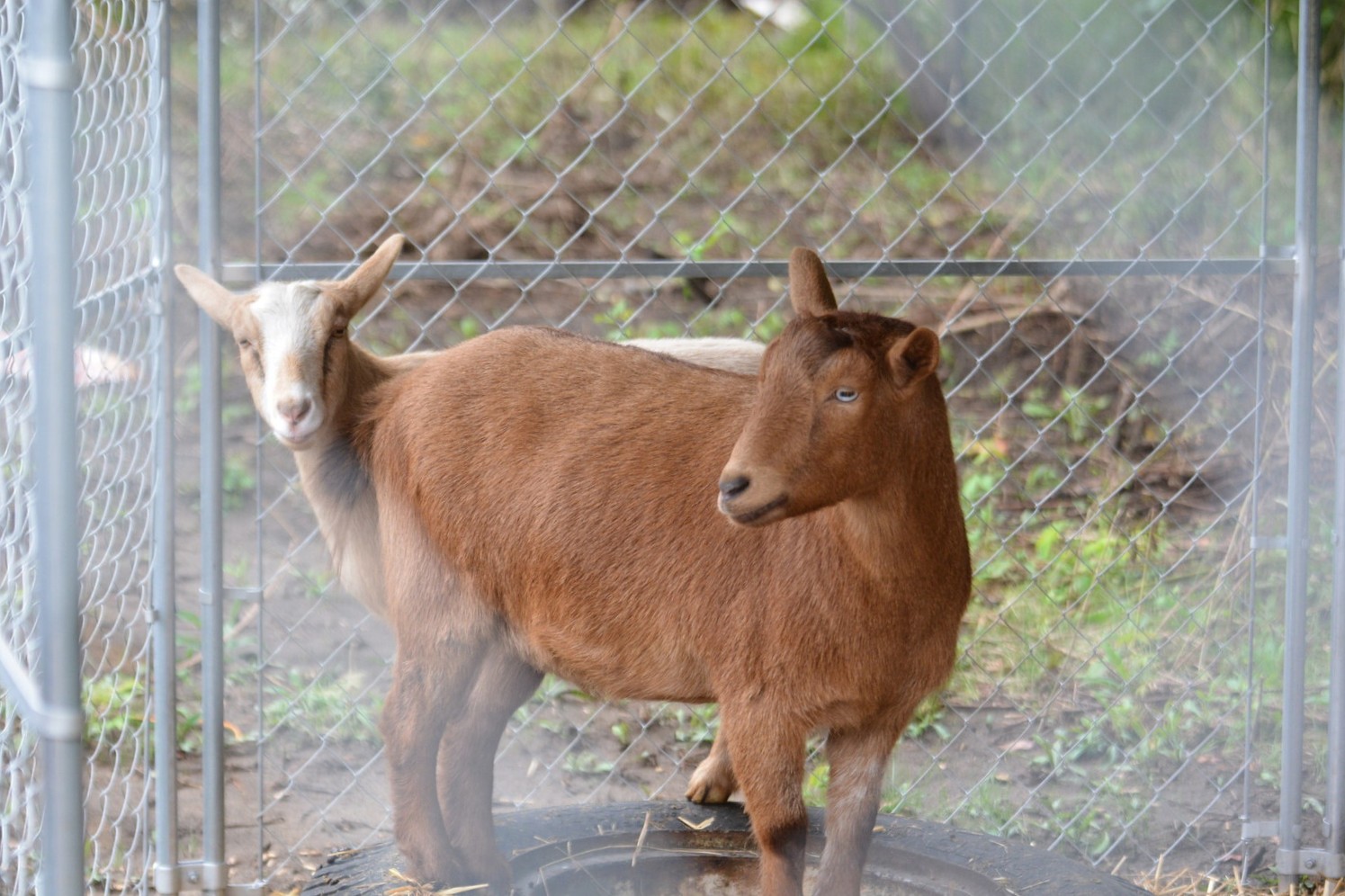
Sebastian and Ruby call Healing Homes Farm home, too. AFSC