
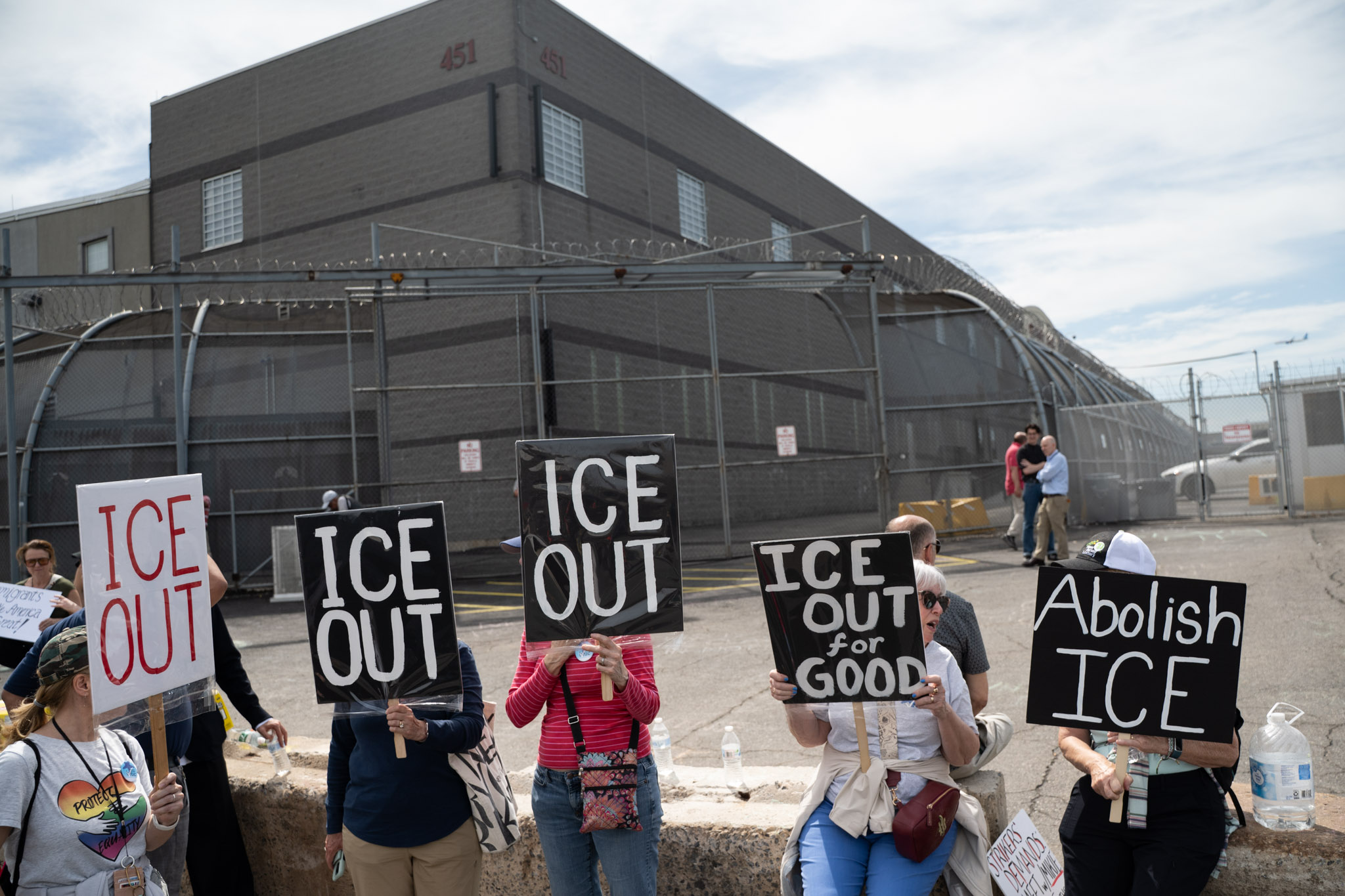
Above: Outside Delaney Hall in Newark
Dear Friend,
Here are some of the most important immigration developments in New Jersey over the past month.
Rise of the $7,500 ICE bond
Earlier this year, we began noticing ICE frequently arresting NJ immigrants who seemed unlikely to be deported or remain detained for long—often people with pending immigration cases, no prior criminal convictions, and no final order of removal. It’s confusing why ICE would target such people. Some advocates have wondered if the agents are indiscriminately detaining people just to meet arrest quotas. Whatever the explanation, AFSC NJ and other legal service providers began filing habeas corpus petitions to ask federal judges to review the legality of such arrests. Often, the federal judges found the arrests to be unjustified and would order the detained people released immediately.
By summer, New Jersey’s federal district court was so flooded with these cases that it began automatically ordering releases within 24 hours for people without criminal convictions or final deportation order, unless ICE could prove a legal reason for detention. They rarely could and many detained New Jerseyans won their freedom in August.
But everything changed on August 28. In the case of Buele Morocho v. Warden, the Third Circuit Court of Appeals (under which the NJ Federal District Court operates) ruled that immigrants who entered the U.S. without inspection cannot be held under mandatory detention without a bond hearing in front of an immigration judge.
We believe that this ruling is correct. It was deeply unjust to subject immigrants to mandatory detention without the possibility of a bond hearing. However, the practical consequences of the ruling in the NJ context have been negative. That’s because immigration courts under the current administration are generally much more biased against immigrants than the federal courts. So by shifting cases back into immigration court, detained NJ immigrants become less likely to win their freedom.
While all of this was playing out this summer, NJ ICE agents began setting their own administrative bonds directly. It is unclear why this practice was revived in NJ after mostly disappearing under the second Trump administration, and we have not heard of it being revived in any other region. Most ICE bonds in NJ are being set at $7,500 and must be paid in full upfront, with the money held until the case ends, potentially years later. ICE typically gives families just 24 hours to pay. Before the Third Circuit ruling, paying an ICE bond often made little sense for someone who might otherwise be released for free by a federal judge. Now, with that avenue closed for many, an ICE bond is often the clearest path out of detention. Local organizations that pay bonds like Envision Freedom Fund and First Friends of NY & NJ have stepped in to help—Envision paid 73 bonds in September alone. With so many New Jerseyans being detained, however, organizations are running out of money and struggling to keep up with demand.
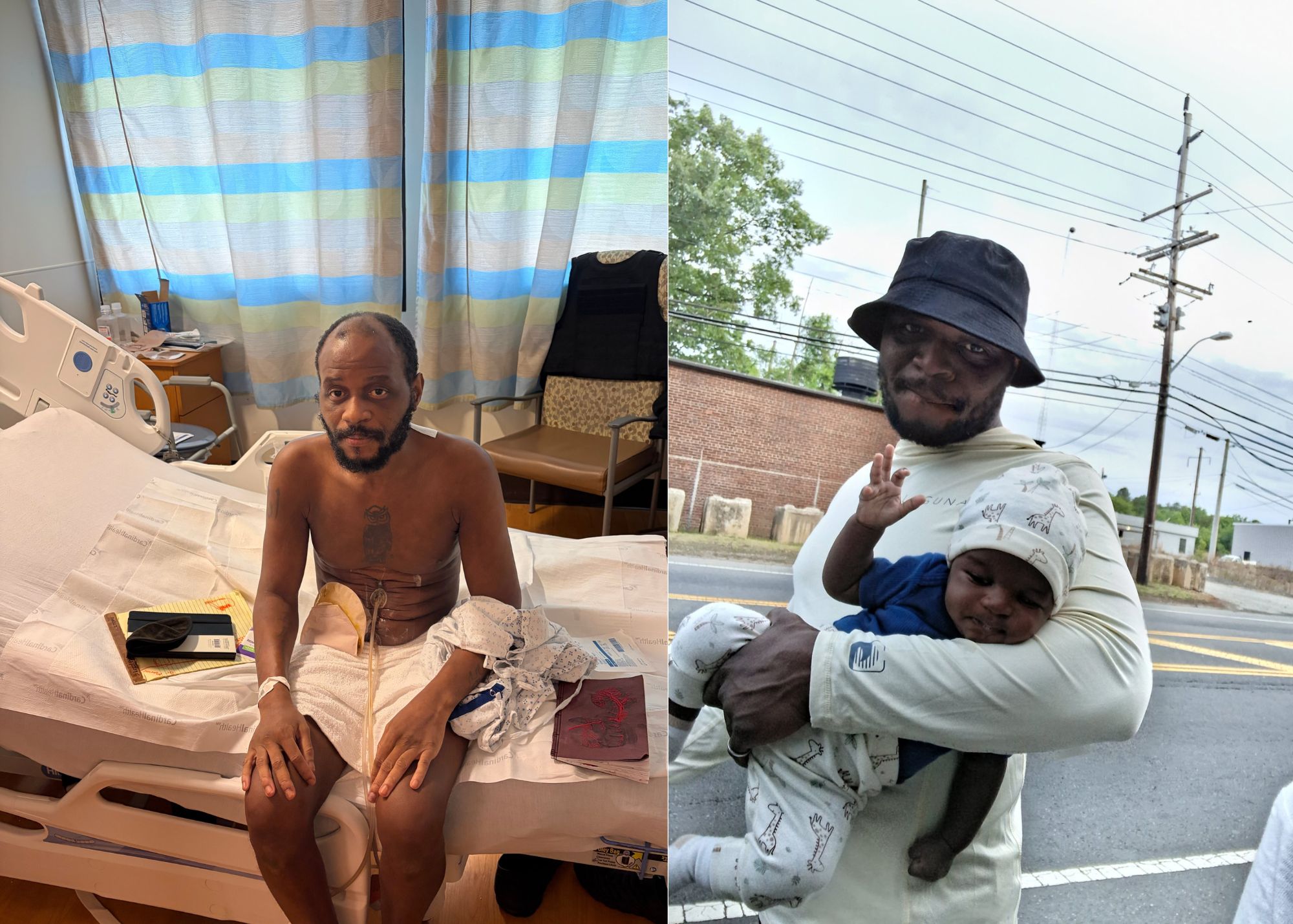
Alimamy is home
On September 9, after nearly two months in ICE custody and weeks at University Hospital, Alimamy was finally released. Alimamy has lived in New Jersey since the 1990s and was detained by ICE in July despite having status and a valid work permit. He began to experience agonizing stomach pains while in detention and was eventually hospitalized and underwent five surgeries, including the removal of his colon. After Alimamy’s last surgery, his doctors refused to discharge him back to Delaney Hall because of concerns about the facility’s ability to manage his ongoing medical care. ICE, however, refused to release Alimamy so that he could recover at home with his family.
For weeks, ICE kept Alimamy shackled to a hospital bed and did not allow him family visits, including his fiancée and their baby boy, King. His AFSC attorney, Rachel Marandett, advocated for his release both in court and through public advocacy, including an emergency habeas petition. After weeks in the hospital, Alimamy was finally able to leave and return home to his family. His ordeal was covered by NJ.com, which detailed the circumstances of his detention and the legal struggle for his release.
Recent TPS developments
Temporary Protected Status (TPS) for El Salvador has been in legal limbo since September 9, when the government neither extended nor terminated the designation. DHS has said it will make an official announcement “at an appropriate time,” but has given no indication of when that will be. Although TPS protections and work permits are supposed to remain valid for Salvadoran recipients until an announcement is made, we are already seeing people in New Jersey lose their jobs because of uncertainty over their work authorization.
We have also received reports from community members and immigration legal advocates that Haitian TPS recipients in New Jersey have been detained by ICE. These reports are consistent with similar reports from around the country. We will continue to monitor the situation and share updates as we learn more.
No ICE Deaths in the Dark Act
Reps. Bonnie Watson Coleman (D-NJ) and Shri Thanedar (D-MI) have introduced the No ICE Deaths in the Dark Act, legislation that would require ICE to report deaths occurring shortly after someone leaves immigration detention. The bill would restore a Biden-era policy requiring ICE to track and report deaths occurring within 30 days of release. The Trump administration ended that requirement in June, meaning deaths that occur after a person is formally released from ICE custody may no longer be included in the agency’s reporting.
The issue is particularly relevant in New Jersey. Jose Chajon-Raxon, a Guatemalan man detained at Delaney Hall, experienced a medical emergency shortly after entering the facility and was taken to a hospital. DHS says he was released from ICE custody on July 22 and later died; because he was no longer in ICE custody when he died, his death was not included in ICE’s official tally. Chajon-Raxon was the third person to die after being detained at Delaney Hall since it reopened in 2025.
Many NJ immigrants lose Medicaid coverage
On Thursday, October 1, thousands of New Jersey immigrants lost Medicaid coverage because of changes enacted through the “One Big Beautiful Bill Act.” The new rules eliminate full Medicaid eligibility for many immigrants who have status but don’t have a green card. New Jersey will continue providing coverage to children and certain pregnant people regardless of immigration status. You can learn more about eligibility changes here.
Even before October 1, we had already started to see the consequences of these changes. The prospect of losing access to essential medications and medical care has put clients under tremendous stress. Our social work team has worked hard this year to mitigate the damage: Reaching out to potentially affected clients, sharing information about what they needed to do to maintain eligibility, and helping eligible clients update their paperwork and provide documentation that could allow them to keep their coverage. At the same time, we’ve been connecting clients who are losing coverage with free or low-cost health care centers. This work will continue so long as the changes remain in place.
As always, thank you for your support. If you are able, please consider making a contribution to fund our work into the future.
Henry Craver
Communications Coordinator
AFSC NJ Immigrant Rights Program