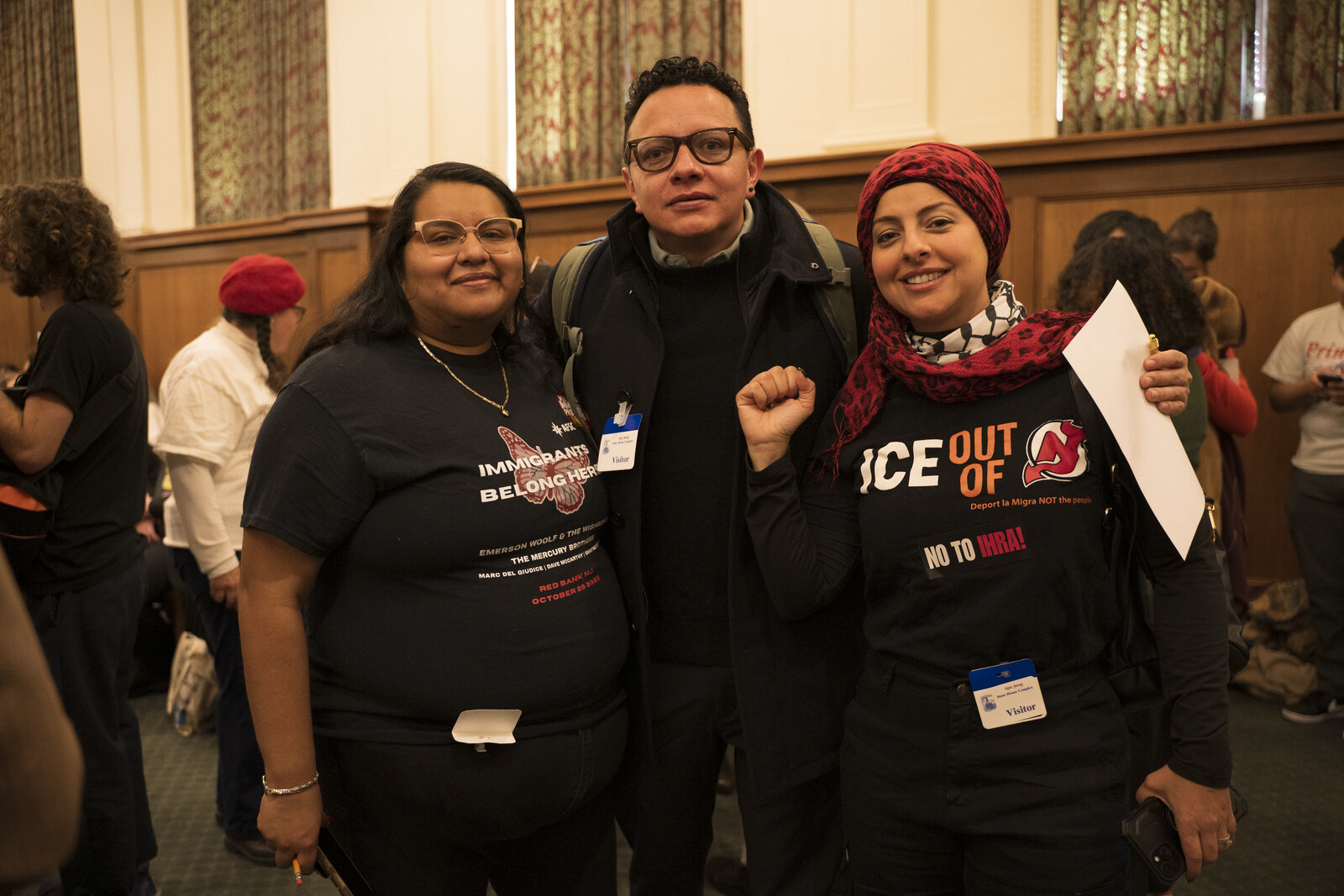
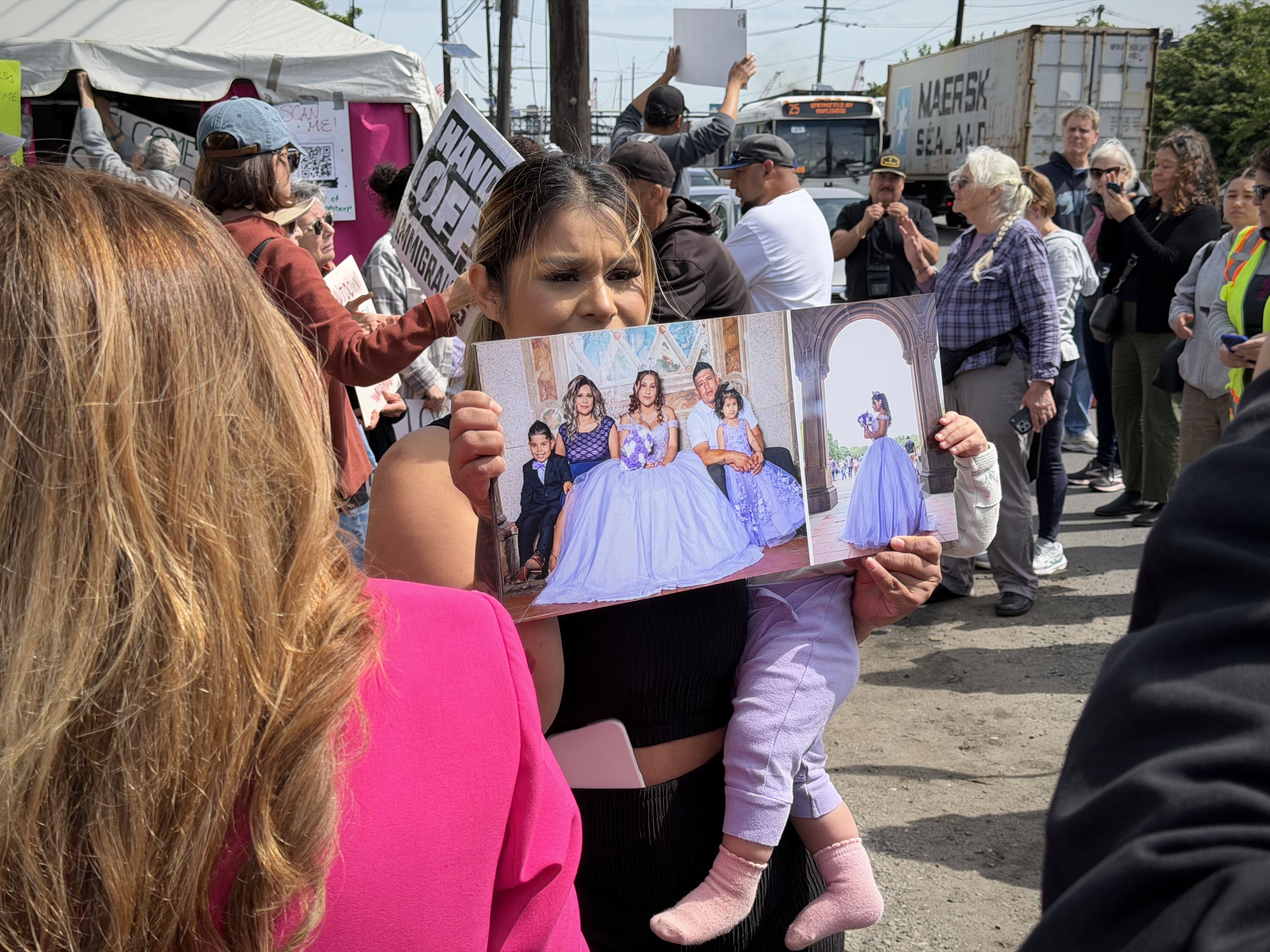
Erica Ruales is the mother of Ariadna Zumba, an 18-year-old high school senior who was detained and held at Delaney Hall for nearly two months. Ariadna was released in early June amid the labor and hunger strike led by detained individuals and supported by families and community members outside. Henry Craver/AFSC
On May 22, hundreds of people detained inside Delaney Hall—the largest immigrant detention center in the Northeast, located in Newark, New Jersey—announced a joint labor and hunger strike. The action was deliberate and began in solidarity with a rally and press conference led by families outside.
For months, people detained there had been organizing together and coordinating with activists and organizations on the outside. Their courageous efforts captured national attention and forced real results. In response to sustained pressure from strikers and their supporters, the governor of New Jersey has proposed expanding legal representation for detained immigrants.
As of late June, the strike is over. Not because the strikers voluntarily ended it. But because of a systematic campaign of retaliation by ICE and the GEO Group, the for-profit prison corporation that runs the facility.
Hundreds of detained immigrants were transferred to other ICE detention centers across the country. Many more faced other forms of punishment, from segregation to restrictions on visits from loved ones.
But the courage of those who went on strike—and their struggle for freedom and justice—are far from over.
AFSC staff have supported individuals in detention and their loved ones for many years. We maintain regular contact with people in detention to document conditions and amplify their demands.
The media focused largely on dramatic scenes outside Delaney Hall: ICE agents and New Jersey State Police assaulting protesters, New Jersey Sen. Andy Kim getting pepper-sprayed, and a curfew imposed by Newark Mayor Ras Baraka.
Far less attention has been paid to the courageous people inside who inspired the demonstrations. People whose peaceful, principled organizing reflects the very dignity that immigration detention systematically denies.
Who is striking? What are they asking for?
The strikers issued five letters of demands. They are calling for:
- The immediate release of all detained people. They are prioritizing the elderly, pregnant, young people, and those with serious medical conditions—while insisting that all detained individuals deserve to pursue their cases outside of detention.
- Meaningful and fair review of immigration cases and habeas petitions.
- An end to coercive pressure to sign deportation or voluntary departure documents.
- An in-person meeting with Gov. Mikie Sherrill at Delaney Hall so she can observe conditions and hear directly from detained people.
The most recently released letter came from nearly 40 detained women who had joined the strike. In addition to calling for the release of all detained, they also demand improvement of conditions at the facility and review of their immigration cases.
Many people held at Delaney Hall have active immigration cases. Under previous administrations, some would have been able to pursue those cases outside of detention. But the Trump administration has systematically blocked their path to release. It has issued new ICE policies and unusual legal interpretations that claim broad “mandatory detention” authority.
The administration has also purged immigration courts of judges deemed too sympathetic to immigrants and hired replacements who routinely deny bond with little deliberation.
Data shows that people detained at Delaney Hall and facilities across the country are being pressured into signing documents waiving their rights to pursue their legal case and agreeing to be deported. These documents are often signed under coercive conditions, without access to translation services or legal counsel. These so-called “voluntary departures” have increased more than seven times compared to the final months of the Biden administration.
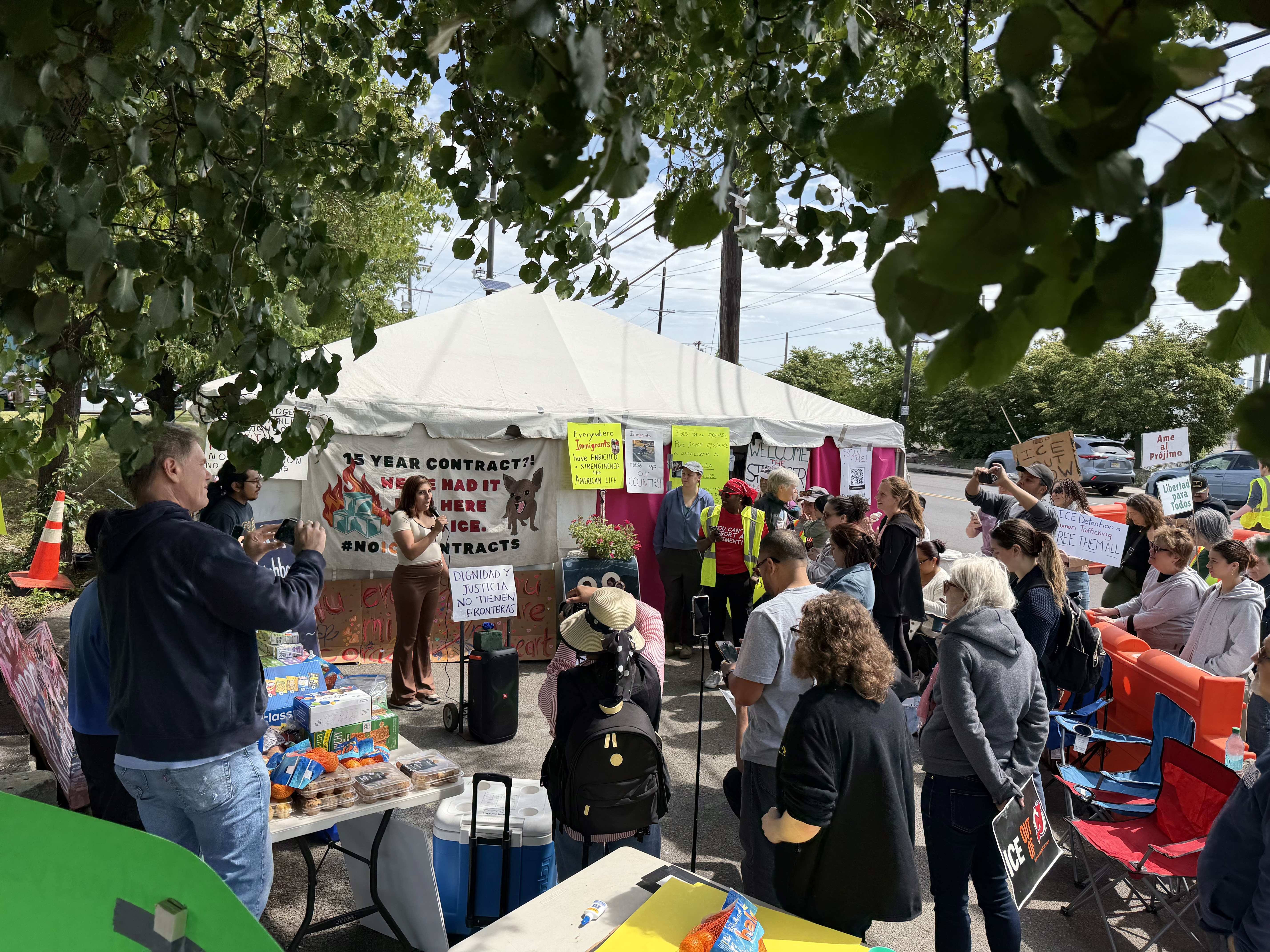
Family members of detained individuals spoke at a May 22nd press conference announcing the start of a labor and hunger strike, organized and led by people inside. Henry Craver/AFSC
What conditions are people facing inside Delaney Hall?
Strikers’ demands are grounded in documented, ongoing abuses at the facility. Through regular contact with people inside, AFSC attorneys and organizers have heard consistent accounts from clients: insufficient and poor-quality food (detained people reported finding worms in their food days before the strike began), systematic medical neglect, verbally and physically aggressive guards, extreme cold in the winter, extremely hot showers, and lack of basic supplies like toilet paper.
Sick people are routinely denied care, including people with serious pre-existing conditions. In December 2024, Jean Wilson Brutus, a 41-year-old Haitian national, died shortly after being detained at Delaney Hall.
These conditions are not unique to Delaney. Similar abuses have plagued the U.S. immigrant detention system for decades.
That is why AFSC has long viewed detention not as a system to be reformed but as one that must be ended for good. Detention is incompatible with the belief, rooted in our Quaker faith, in the inherent worth and dignity of all people. No one should be locked up in a cage, separated from their families and communities.
Who profits from immigrant detention?
Delaney Hall is operated by the GEO Group, a for-profit prison corporation. GEO Group and CoreCivic together run most of the nation’s detention centers.
Delaney Hall had operated as an ICE detention facility from 2011 to 2017, when it was closed and converted into a halfway house. New Jersey later tried to ban private detention centers altogether, but when CoreCivic and GEO sued, the Biden administration sided with them. New Jersey’s ban was struck down. Delaney Hall was reopened under the Trump administration in May 2025.
GEO and CoreCivic’s business model depends on government contracts and the coerced labor of the people they imprison. Detained immigrants are forced to perform facility work—including cooking, cleaning, shoveling, and laundry—for little to no pay.
These companies have profited enormously from the Trump administration’s anti-immigrant agenda. GEO Group’s profits surged from $32 million in 2024 to more than $254 million in 2025 as the administration vastly expanded ICE contracts.
The revolving door between these companies and the government couldn’t be more visible: President Trump recently nominated former GEO Group executive David Venturella to lead ICE itself. Before becoming attorney general, Pam Bondi worked as a lobbyist for GEO Group.
The people striking at Delaney Hall are standing up to an inhumane system that profits from their suffering.

Strikers at Delaney Hall have faced retaliation for their participation. Outside the facility, families and solidarity protesters have faced violence and intimidation from federal agents and state police. Henry Craver/AFSC
Did the strike made a difference?
Yes! Since the strike began, some vulnerable detained people have been freed, and the state has both filed a lawsuit against GEO Group and announced additional funding for legal services.
But the strike came at a great personal cost for everyone detained at Delaney Hall. Beyond the physical toll of a hunger strike, participants immediately faced retaliation.
In one incident, guards tried to remove a strike leader soon after the strike began. When other detained people formed a human shield around him, armed officers returned in force. They swept through multiple units, physically assaulted people, and deployed tear gas. People in those units told AFSC that they struggled to breathe for hours after.
The retaliation escalated in the following weeks. Hundreds of detained people have been transferred out of Delaney Hall to facilities in Colorado, Arizona, New Mexico, Texas, Louisiana, Mississippi, and Pennsylvania—far away from their families and communities.
GEO Group also severely restricted visitation to Delaney. Now the approved visitor list contains only family members, punishing not only the individual but their loved ones. Advocates, including AFSC, continue to demand the full restoration of visitation rights.
Yet the strikers have also achieved real results, even from a state whose response has been contradictory. On May 29, Gov. Sherrill deployed New Jersey State Police outside Delaney Hall, saying they would deescalate tensions and protect protesters from ICE. But as soon as they arrived, it became clear State Police were there to crush the protests. Officers erected barricades, arrested dozens of peaceful protesters, and used force indistinguishable from ICE to drive demonstrators away.
Nonetheless, some of the people the strikers prioritized for release have been freed. That included an 18-year-old who was detained just months before her high school graduation and a man who uses a wheelchair who had not been receiving adequate medical care.
On June 2, the state attorney general announced a lawsuit against GEO Group for refusing to allow state health inspectors to enter the facility.
On June 4, Gov. Sherrill announced a proposal to more than double state funding for legal representation for immigrants in detention. The plan would increase funding for the Detention and Deportation Defense Initiative (DDDI) from $8.2 million to $20.2 million—and create a Rapid Legal Response Initiative to expand immigration defense statewide.
AFSC’s New Jersey Immigrant Rights Program is one of four organizations that provide legal services through DDDI. For months, we have advocated alongside others in calling for both measures.
Having a good lawyer makes a big difference: Detained immigrants with legal representation are 10.5 times more likely to win their cases. With this extra state funding, many more detained New Jerseyans will have access to legal counsel.
These victories belong first and foremost to the people inside Delaney Hall who refused to be silent. These leaders organized peacefully and with extraordinary courage, under constant threat of retaliation. They did it not only for themselves, but for everyone facing this injustice and anyone who comes after them.
Those transferred from Delaney Hall to other facilities across the country have not been forgotten. They continue to receive support from their loved ones, attorneys, and communities here in New Jersey. These mass transfers did not crush this powerful movement—they spread it.
As one striker put it: “We are uplifting our voices, across all the detention centers, of the injustice we are suffering.” AFSC is committed to standing with them until detention is no longer a reality anyone has to face.