Photo: Saleh Al toos
Around me, people complain about the summer heat while living in homes with electricity and running water. I keep thinking of Gaza, what does this same heat feel like inside a tent, with no shade, no water, and no escape?
People in Gaza have not even recovered from the winter, when rain flooded their tents, when families drowned in mud and cold, and already the heat waves have begun.
Summer and winter in Gaza are no longer seasons. They are something people endure.
Shelter
The sun rises over tents that were never meant to hold life for this long. Many of them have been standing for nearly three years—since the start of the genocide—worn out by rain, wind, heat, and time. They are no longer suitable for living, and perhaps it is no longer accurate to even call them tents. Thin fabric stretched over the ground does not block heat, does not protect, does not hold. By midday, the air inside becomes unbreathable.
Can a tent kill?
In Gaza, it can. Children have died from the heat inside tents, while others, including newborn babies and young children, have died in the cold under the same fragile fabric. These are not isolated tragedies. Children, older people, and people with health conditions remain especially vulnerable when tents become too hot to breathe in the summer and too cold to survive in the winter. These tents do not protect people from the seasons; they expose them to every extreme. And this has not stopped.
Water
There is no water.
Not because it does not exist, but because it is being cut, targeted, and withheld.
A report by Médecins Sans Frontières, based on data from the United Nations, the European Union, and the World Bank, confirms that nearly 90% of Gaza’s water and sanitation infrastructure has been destroyed or damaged. Desalination plants, boreholes, pipelines, and sewage systems are either non-functional or unreachable. Water trucks and wells have also been targeted.
Still, Israel continues to obstruct aid efforts. Pipes remain broken. Municipalities are blocked from repairing them. Materials that could ease the crisis are not allowed in. What should be basic infrastructure has been turned into a daily struggle for survival.
Water here is not just scarce. It is unsafe, inconsistent, and never enough.
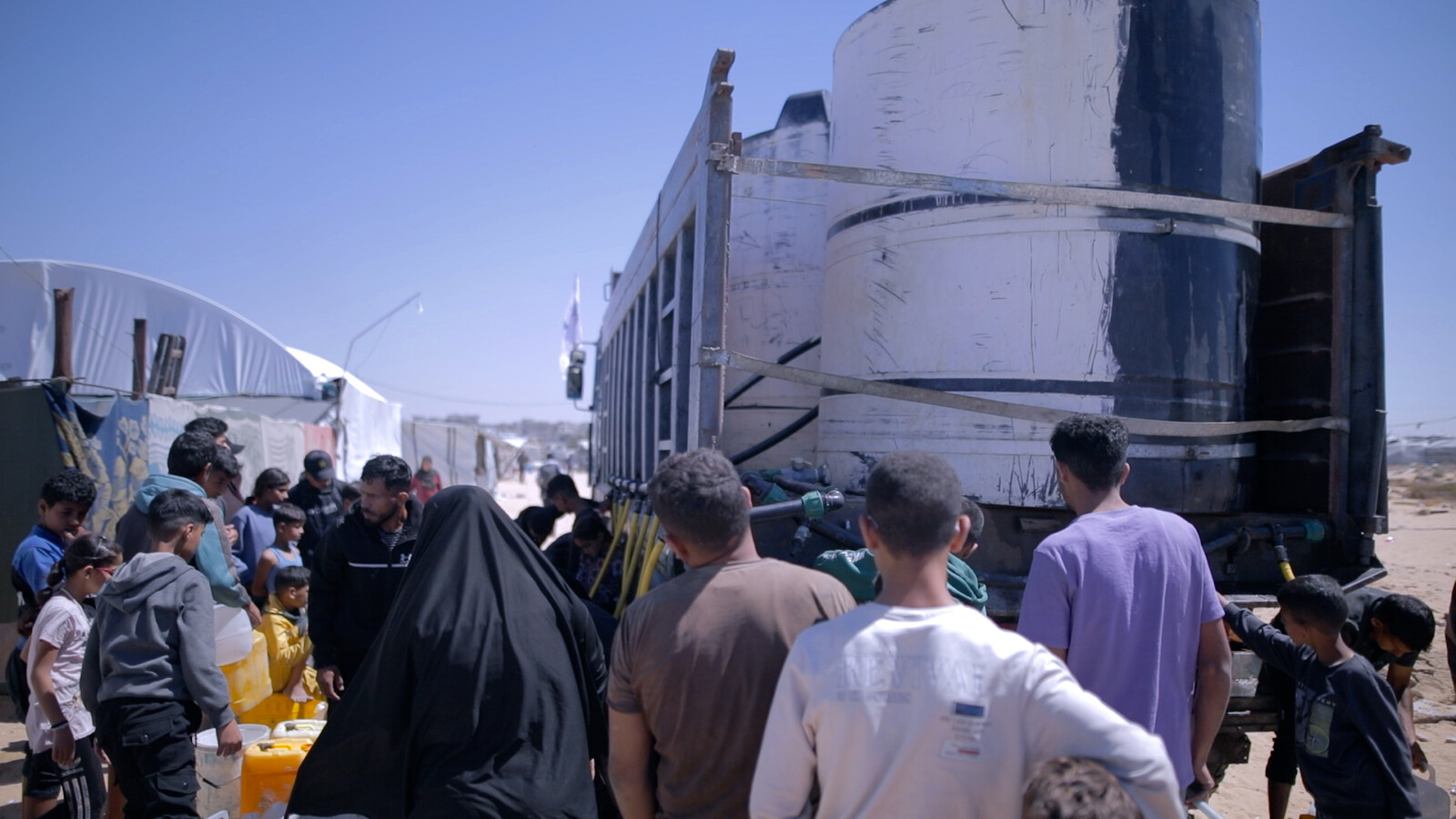
Families wait for hours for a few liters. They ration every drop. Drinking becomes a calculation. Washing becomes a luxury. Hygiene becomes nearly impossible.
With the heat comes what follows.
Hygiene
Insects multiply. Flies, mosquitoes, and rodents spread through overcrowded camps where waste cannot be properly managed. Black flies bite through the night, while people are already trapped in tents too hot to breathe in, unable to fully cover themselves without making the heat even more unbearable.
Rats move between tents. Children play where wastewater sometimes collects. Skin diseases spread. Infections become normal. Everything that should be preventable becomes part of daily life.
People in Gaza are living through entirely avoidable sanitation and hygiene conditions, conditions that no one should have to endure.
Our work
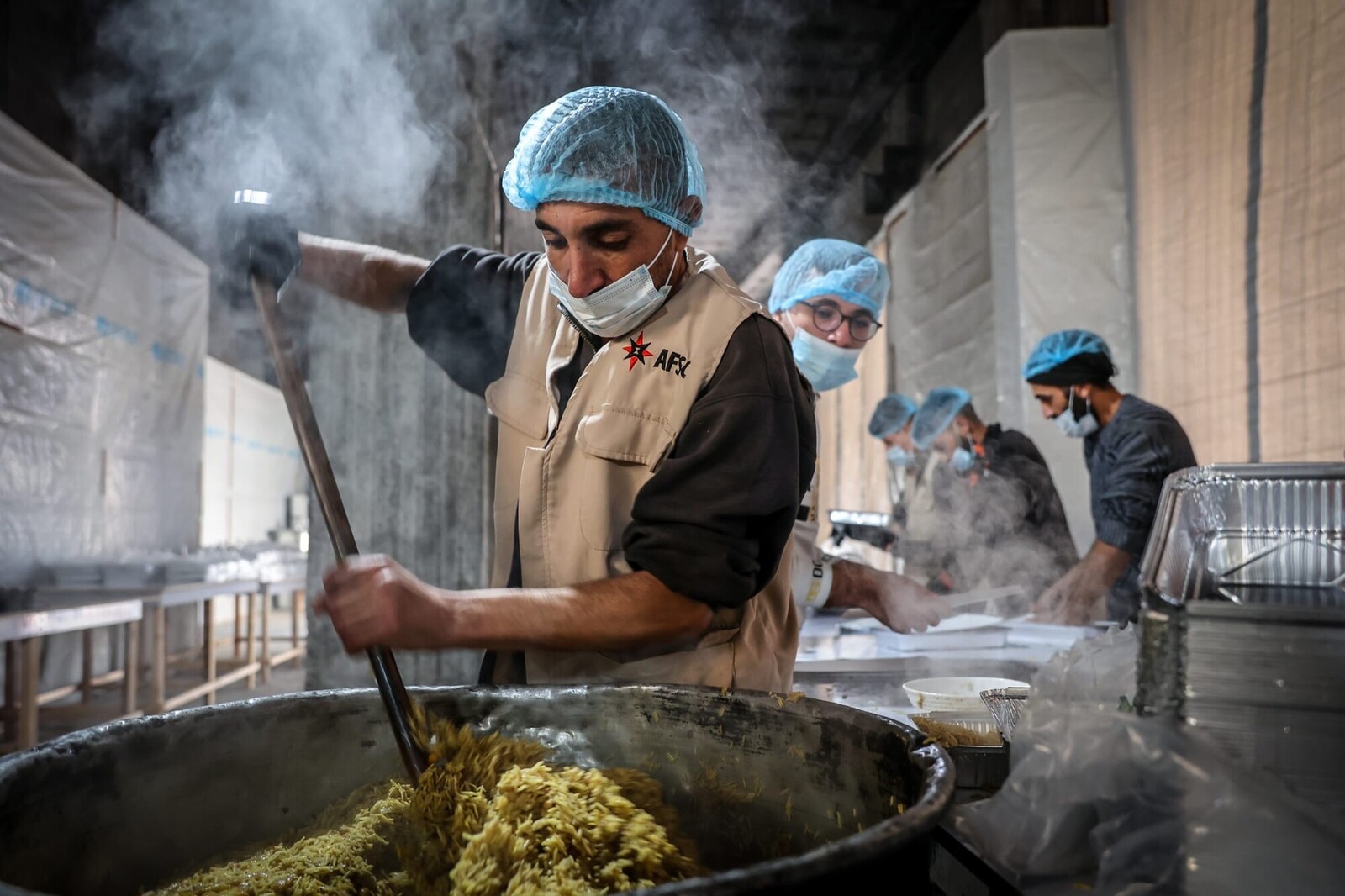
With AFSC, we continue to distribute drinking water and hygiene supplies. This year alone, we have provided hygiene kits to more than 12,000 Palestinians in Gaza, including households, women and girls, and people with disabilities, and distributed over 2 million liters of water to displaced communities across Gaza, both in the north and the south.
Water and hygiene remain among the most urgent needs. This work is not only about delivering supplies. It is about helping people protect their health and dignity in conditions where both are constantly under threat.
A hygiene kit can mean that a family is able to wash, clean, and reduce the risk of disease. A few liters of clean water can mean that a mother does not have to choose between drinking, washing, or protecting her children from the heat.
We continue because stopping is not an option. But what we provide is not enough for the scale of this man-made humanitarian catastrophe.
Every liter of clean water, every hygiene kit, and every act of care becomes part of helping people get through another day with a little more dignity. And for everyone who continues to make this possible, you help us make it possible to keep going.