Photo: Saleh Al toos
Over the past year, AFSC has sustained its humanitarian response in Gaza, thanks to supporters like you. The genocide has transformed almost every part of daily life for Palestinians in Gaza.
For many families, conditions still were not getting any better. Homes remained destroyed or uninhabitable. Families remained displaced. Water, electricity, and other basic services were severely disrupted.
The humanitarian crisis did not disappear. Families who had survived months of displacement still needed water. Parents still struggled to find enough food. Children had spent long periods away from classrooms and normal routines. Many people had lost not only their homes but also clothes, mattresses, hygiene supplies, and other basic belongings that make everyday life possible.
The needs also continued to change. A family that needed emergency meals one month might need hygiene supplies or blankets the next. Communities returning to damaged areas faced different challenges from those still living in displacement sites. In some places, the most urgent need was clean water; in others, it was food, education, or basic household support.
With your support, AFSC can respond to this constantly changing reality. From October 2025 through August 2026, we served hundreds of thousands of displaced Palestinians in North Gaza, Gaza City, the Middle Area, Khan Younis, and Rafah.
Here’s a snapshot of our efforts over the past year:
Food Security: Responding to persistent hunger
Food remained one of the most urgent needs throughout the year.
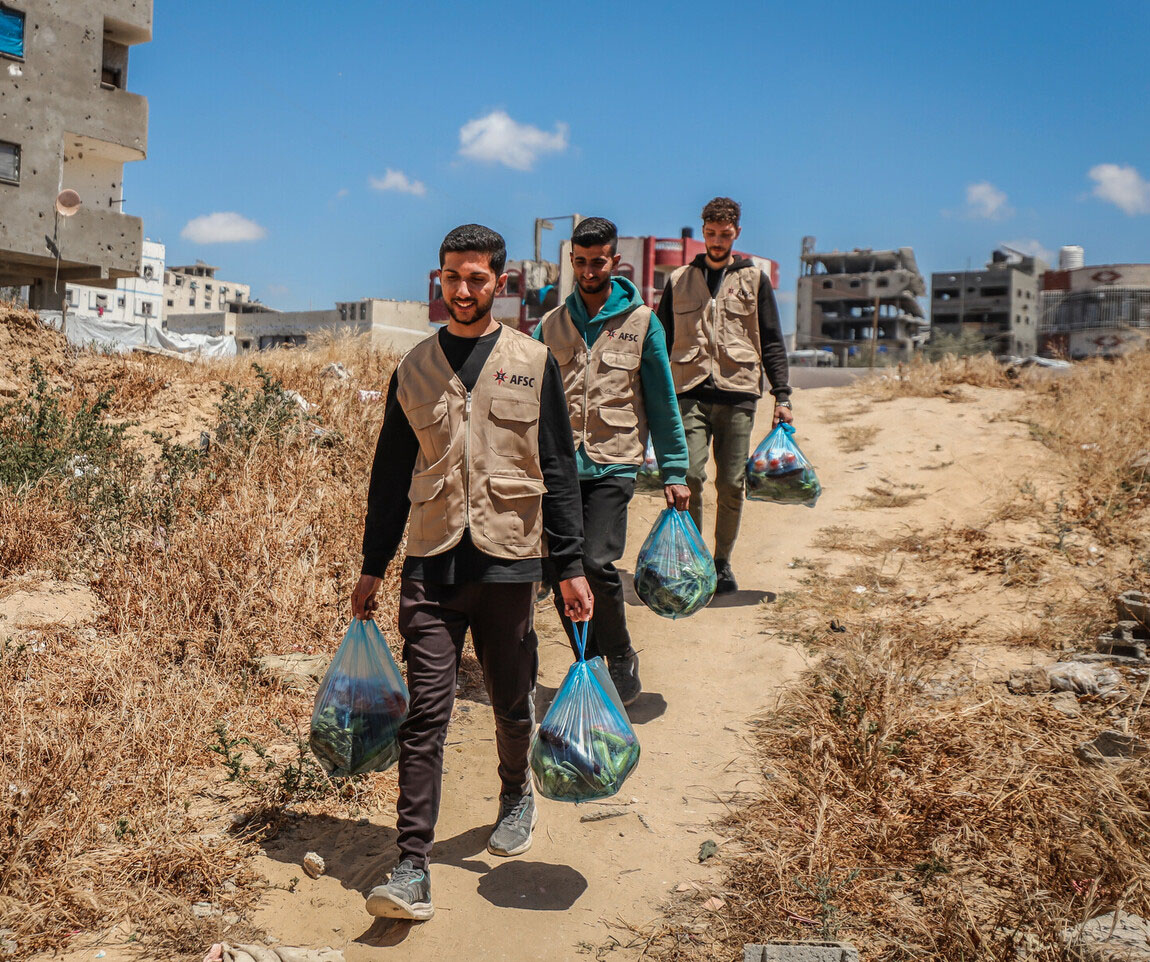
AFSC and our partners continued to adapt food assistance based on what was available and what communities needed, reaching 251,370 people.
Hot meal distributions alone reached more than 146,000 people in Gaza City, Khan Younis, Deir al-Balah, and other places where people had been displaced. In many cases, these meals were the primary way families met their daily food needs.
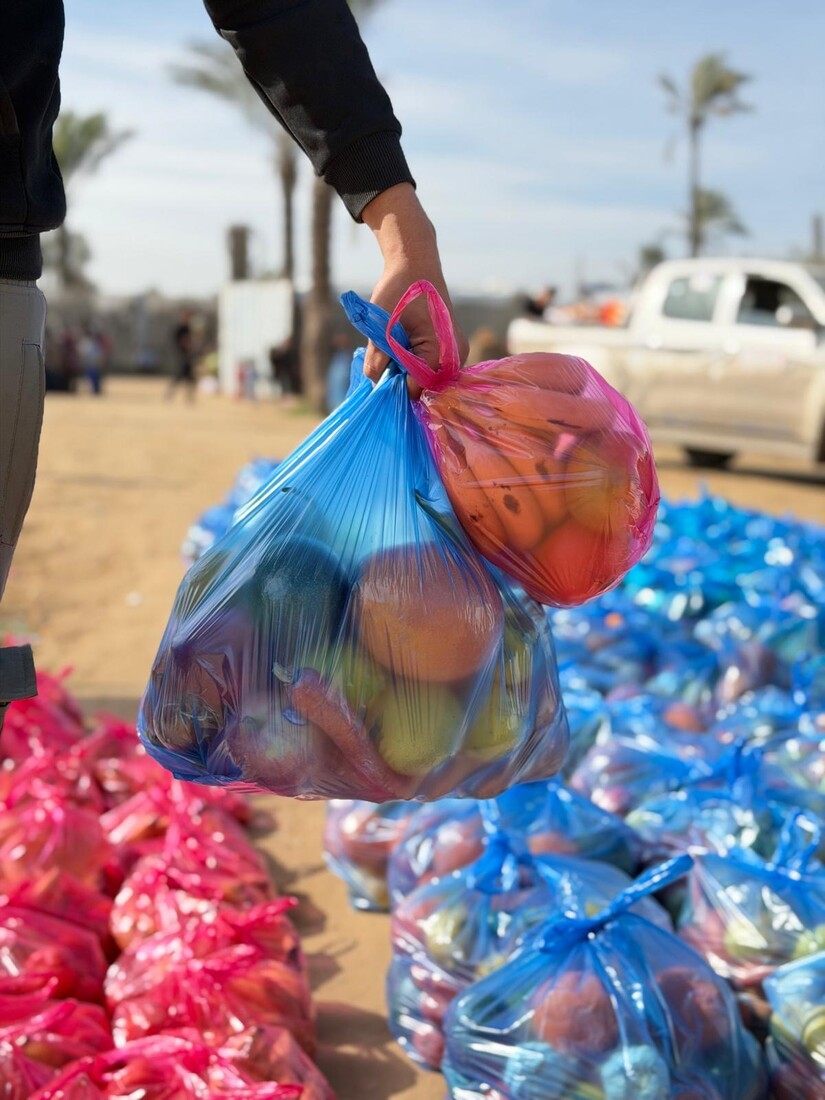
Photo: AFSC
Fresh vegetable distributions reached 61,730 people, helping families access foods that had often become difficult or expensive to find. We also provided food parcels to 17,778 people and bread to 14,970 people. A special distribution of Eid cookies during the holiday reached another 9,210 people.
The variety of these activities reflects the reality on the ground: humanitarian assistance in Gaza can’t follow a fixed model because access, availability, and community needs are constantly changing.
Water, sanitation, and hygiene: Filling a critical gap
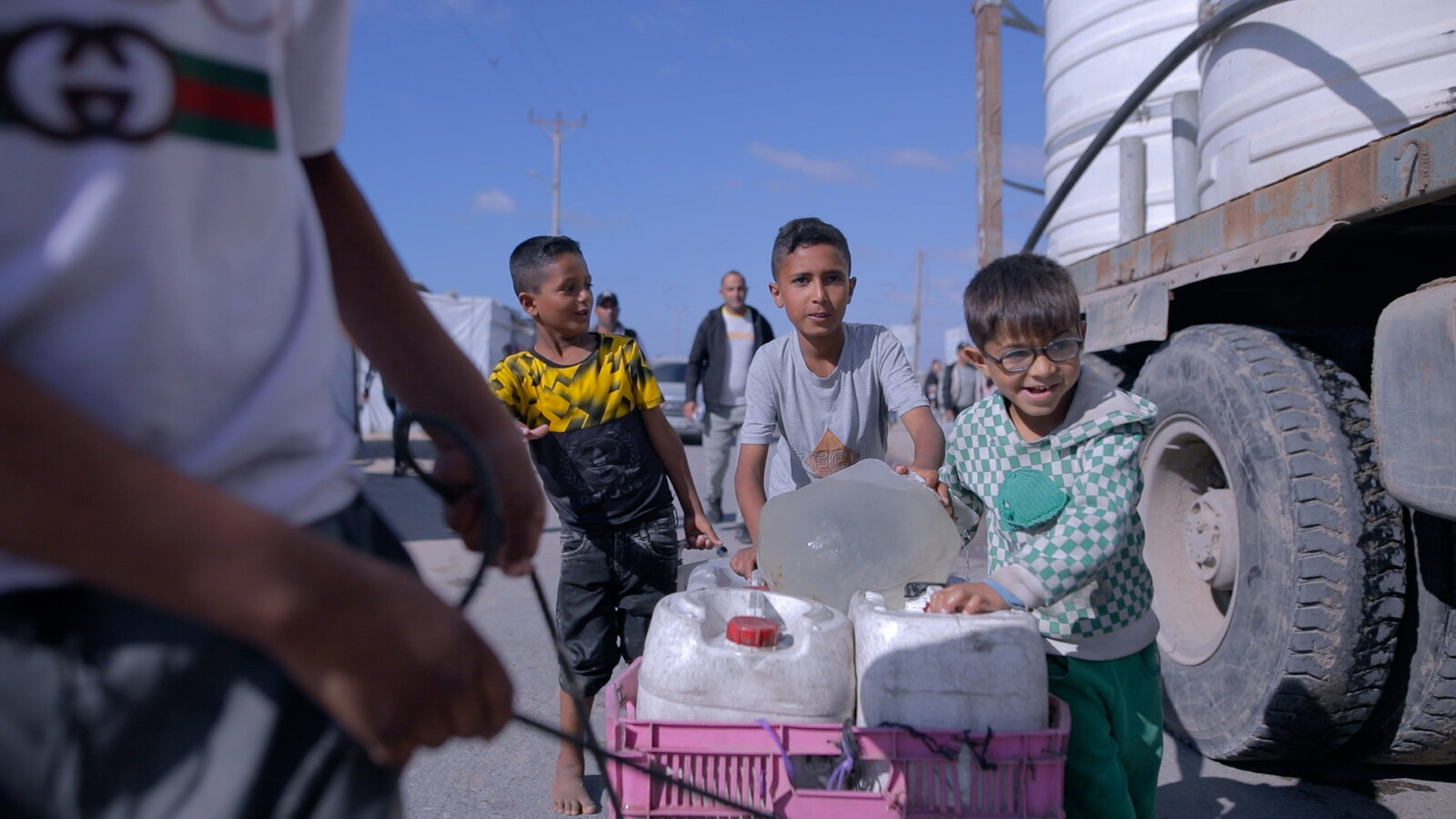
Access to clean water remained one of the largest humanitarian challenges. Over the past year, we provided water, sanitation, and hygiene supplies to 795,868 people, making it the largest area of AFSC’s response.
Water distribution accounted for most of this support, reaching approximately 769,433 people in Gaza City, Deir al-Balah, the Middle Area, Khan Younis, and other locations, where regular water systems remained disrupted or insufficient.
For families living in displacement or returning to damaged neighborhoods, access to water is critical for daily life: drinking, cooking, washing, caring for children, and maintaining basic hygiene.
AFSC also distributed hygiene assistance tailored to different needs. These included family hygiene kits—including ones for children and newborns, supplies for people with disabilities, diapers for elderly people, and items for women breadwinners.
Family hygiene distributions alone reached more than 24,000 people.
Education: Helping children return to learning
For children in Gaza, the crisis has also been an education crisis. Schools have been destroyed, depriving kids of education and the everyday experiences of childhood.
Displacement, insecurity, and destruction continue to interrupt attempts to restore learning.
Over the past year, AFSC's education and recreation programs reached 5,356 children.
That includes operating learning spaces in areas including Al Zawaideh, Deir al-Balah, Nusseirat, Al Bureij, Al Karamah, and Gaza City.
These spaces combined structured learning with stationery, games, and recreational activities, reaching 3,306 students. An estimated 2,050 children and caregivers also took part in recreational programming.
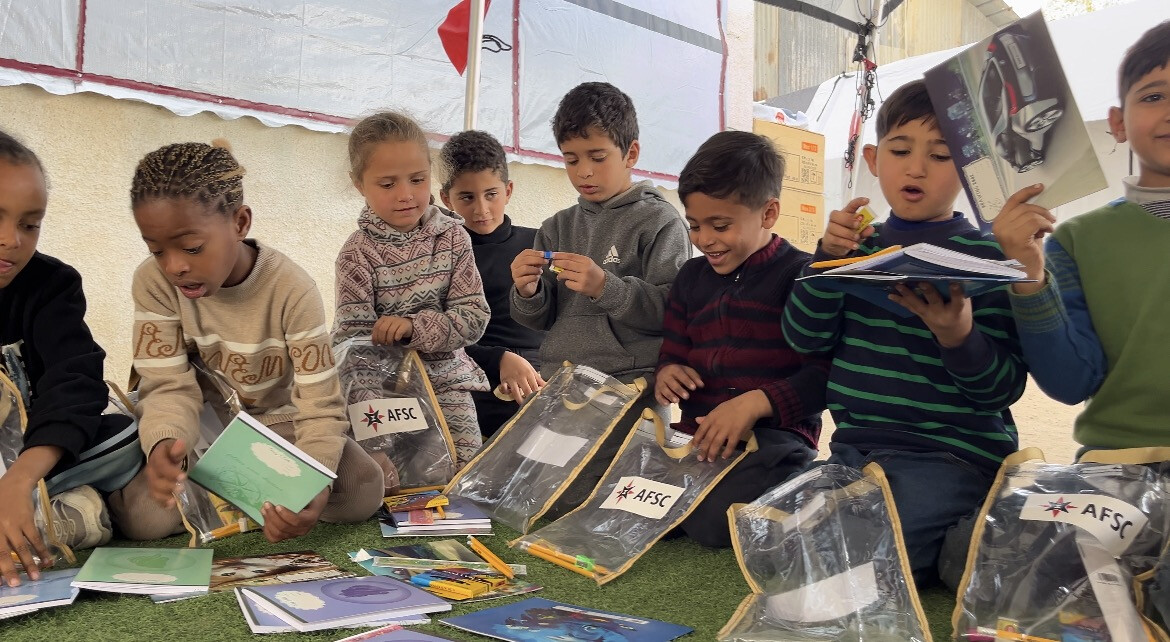
Photo: Alaa Damo
For children whose lives had become defined by displacement and uncertainty, the chance to learn and play with other children—and follow a routine—provided a small but important sense of stability.
Protection and shelter: Replacing what families had lost
For many families, displacement meant leaving behind nearly everything they owned.
AFSC's protection and shelter response reached 3,120 people. We focused on immediate, practical needs—including clothing, mattresses, sheets, and winter blankets.
Clothing assistance reached approximately 1,500 people, and 1,000 children received new clothes for Eid. Mattresses and sheets were provided to families, pregnant women, patients, and others with specific needs, while winter blankets supported families facing difficult living conditions.
For families living without basic household items, these distributions addressed needs deeply connected to dignity, comfort, and everyday survival.
Working with local partners
From October 2025 to August 2026, AFSC worked with at least 20 partners, including local associations, community organizations, field kitchens, humanitarian groups, and water providers.
Working through trusted local relationships remains essential to understanding where needs are shifting, which families were being overlooked, and how assistance could be delivered most effectively.
AFSC's response during this period was therefore not a single emergency intervention. It’s part of an ongoing effort to adapt to a crisis that continued to reshape people's lives, while working alongside local communities and partners to meet needs as they emerged.
And behind every distribution, learning space, water delivery, or meal is the same basic principle. With your support, we are helping people preserve dignity, safety, and some sense of normal life in the most unimaginable circumstances.
Thank you for continuing to stand with Palestinians in Gaza.