
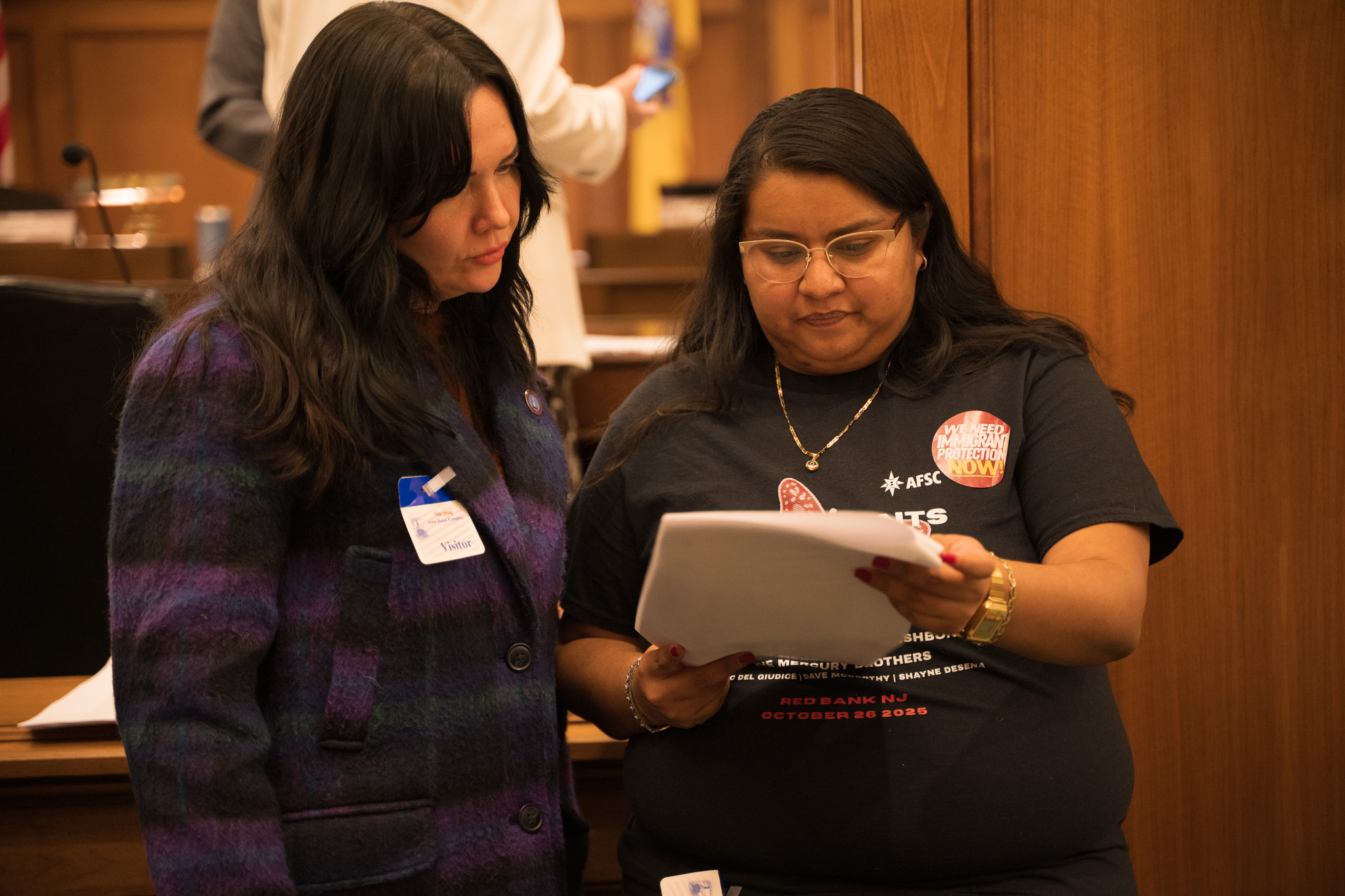
Advocating at the New Jersey State House in Trenton. Henry Craver/AFSC
In the first weeks of 2026, the New Jersey State House hummed with an energy we hadn't felt in years. Hours of testimony. Packed hearing rooms. Survivor advocates, legal service providers, faith leaders, immigrant community members, and their families lining up to tell legislators what we've known for six years: New Jersey needs to protect its immigrant communities in law, not just policy.
They listened. We walked away with a hard-won victory—and the momentum to keep pushing for more.
Where we started
In 2017, as the first Trump administration escalated its racist attacks on immigrant communities, ICE arrests in New Jersey jumped 42% compared to previous years. Our communities were living in fear.
AFSC’s New Jersey Immigrant Rights Program and dozens of our partner organizations mobilized. In 2018, we successfully advocated for the attorney general to create the Immigrant Trust Directive. This comprehensive set of guidelines limits how local law enforcement can cooperate with federal immigration enforcement. The directive established a critical separation: local and state police exist to serve our communities, not to act as extensions of ICE.
This wasn't just a moral stance. It was practical. Conflating local policing with immigration enforcement destroys community trust and enables all sorts of abuse. Predatory landlords threaten tenants with calling immigration. People who commit domestic abuse weaponize police against their partners. Employers exploit workers, knowing they'd be afraid to report violations.
The directive has been relatively effective. But here's the problem: it's a memo, not a law. Any future attorney general could withdraw it with the stroke of a pen.
For six years, AFSC and partners have been making this case—through meetings with politicians, community presentations and listening sessions, and hundreds of hours brainstorming and drafting proposals. In a state where one in four residents is an immigrant and more than 500,000 are undocumented, we need something stronger than a directive to ensure all community members can access essential services and speak out against abuses without fear.
The big push
As 2025 drew to a close, momentum began to shift. After witnessing thousands of New Jersey residents ripped away from their families and communities, state legislators finally seemed open to expanding immigrant protections. We had a window—albeit narrow—before the legislative session expired.
Three bills moved forward. The Safe Communities Act would require the attorney general to designate specific locations—such as schools, hospitals, shelters, food pantries, and courthouses—where immigration enforcement would be barred. The Privacy Protection Act would limit how state and local government entities collect and share personal information that could be weaponized against immigrant families. A third bill would codify the Immigrant Trust Directive into law and add additional protections.
Our job at AFSC—alongside the more than 50 other organizations that are part of the New Jersey Alliance for Immigrant Justice—was to ensure the voices of those affected by enforcement were heard in Trenton. We brought community members to the State House. The testimony went on for hours and could have continued much longer. There was no shortage of people ready to speak about why these protections matter.
On Jan. 12, all three bills passed the legislature. After one of the hardest years ever for New Jersey immigrant communities, it felt like we were finally going to get some relief.
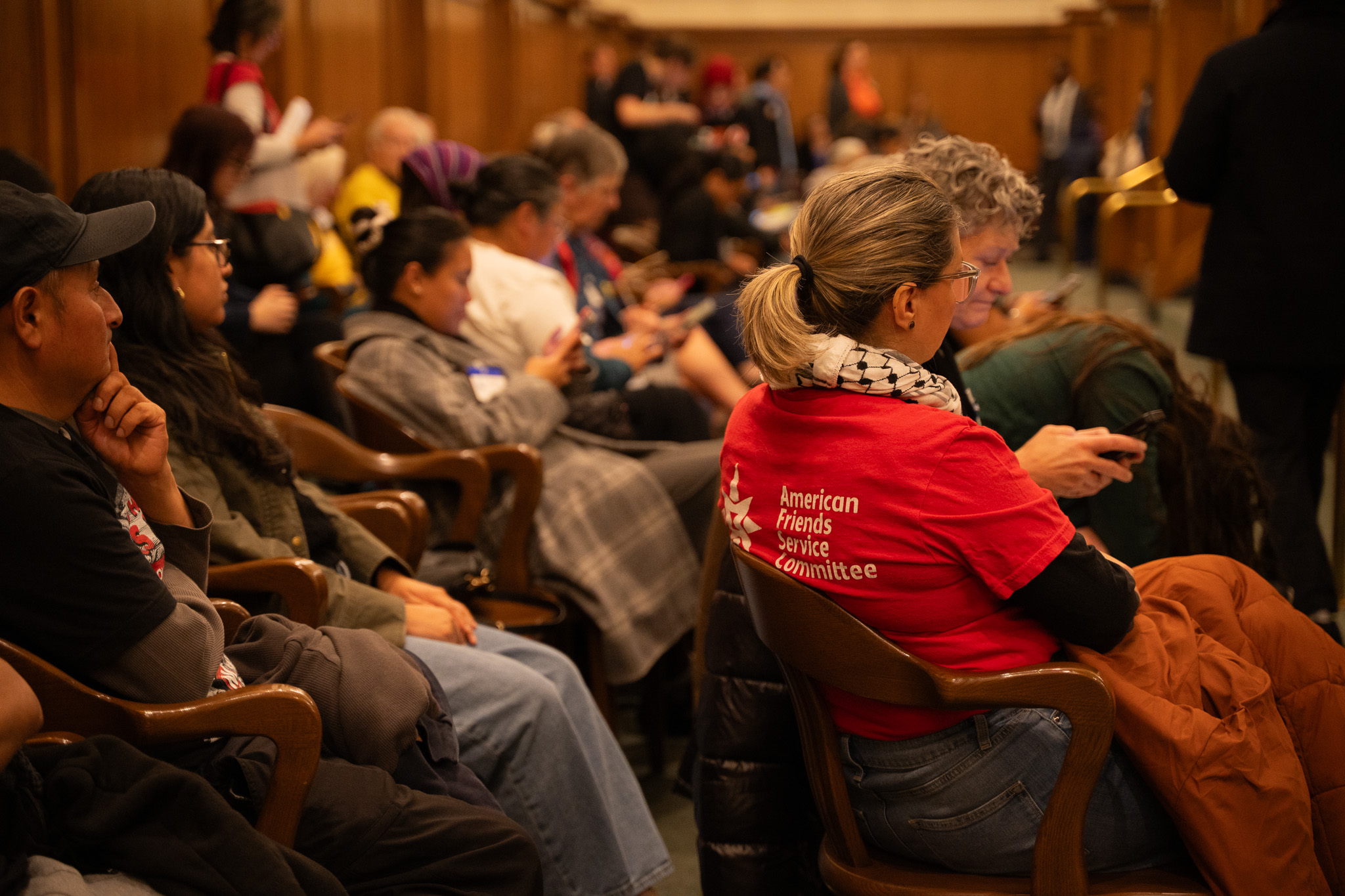
New Jersey advocates and community members packed public hearings to testify in support of more legal protections for immigrants Henry Craver/AFSC
Getting back up
Our collective sigh of relief turned out to be premature. In the waning hours of his final term, Gov. Phil Murphy signed The Safe Communities Act but let the other two pieces of legislation expire—what’s known as a “pocket veto.” He offered vague justifications, claiming a "drafting oversight" in the Privacy Protection Act could jeopardize federal funding and that the codification of the Immigrant Trust Act would invite legal challenges. We were deeply disappointed—it felt like a betrayal.
However, there was no time to despair. We immediately got back to work, advocating for the protections and meeting with legislators to get the bills reintroduced.
Amended versions of the two bills were ultimately reintroduced and Gov. Mikey Sherrill signed them into law this past March. This is a real step forward, though the final versions of the bills fall short of providing all the critical measured we’d demanded.
We will continue to advocate for those full protections. Piece by piece. Bill by bill. Testimony by testimony. That's how we build power and protect our communities.