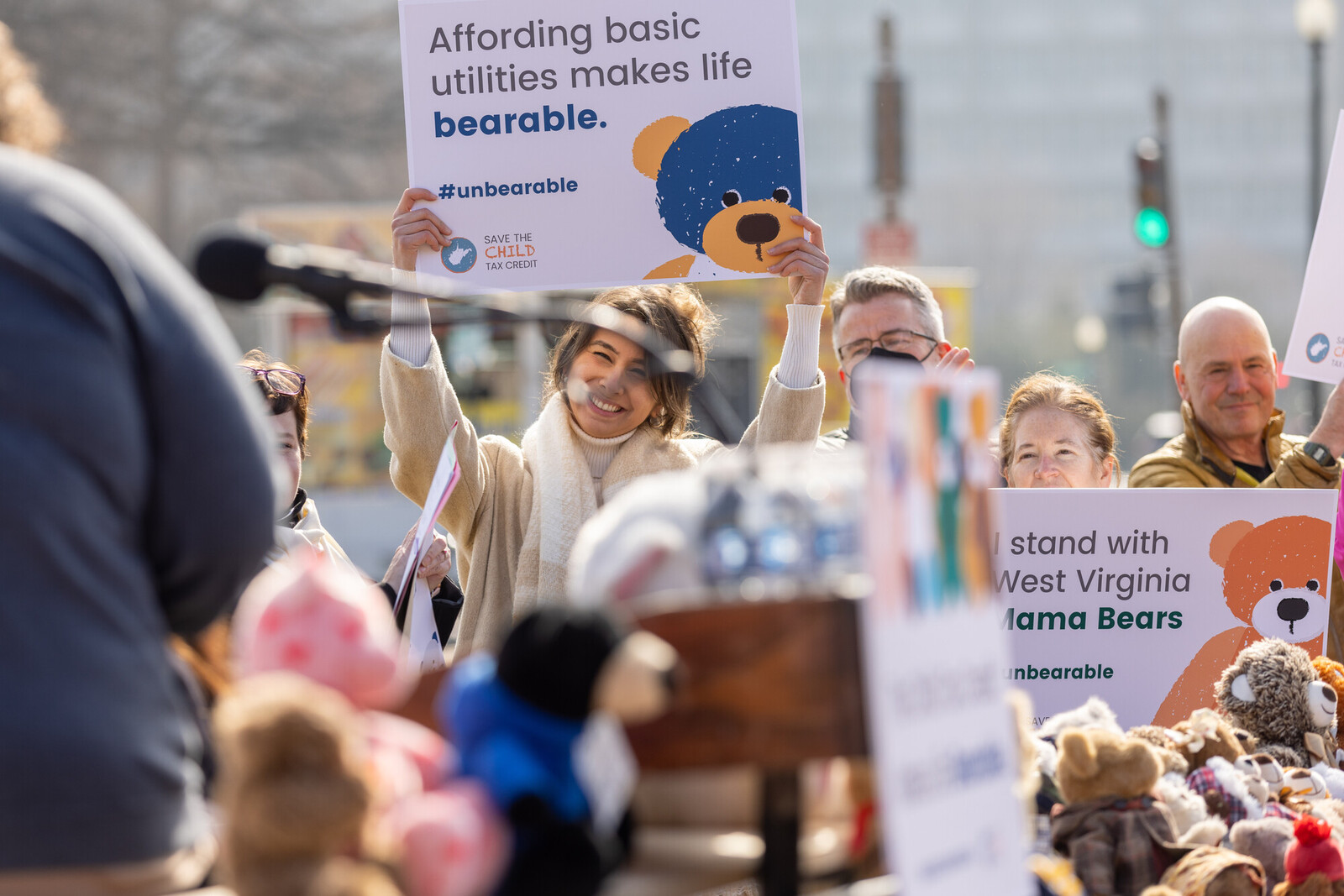
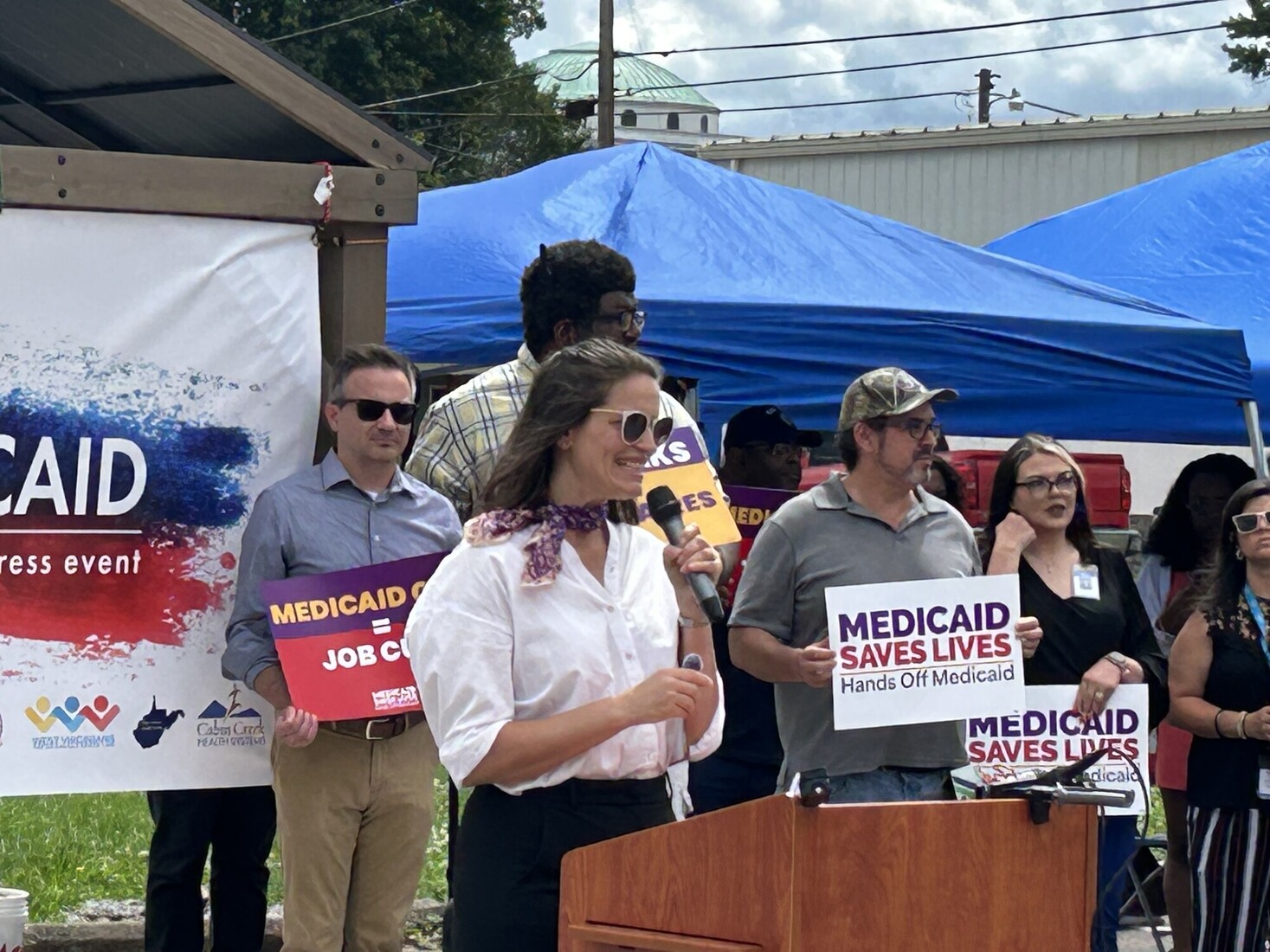
AFSC's Lida Shepherd speaks out against cuts Medicaid and SNAP at a press conference in West Virginia in 2025. Photo: Rick Wilson/AFSC
As far back as I can remember, my mom has eschewed the popular traditions of Mother’s Day, seeing the cards and the flowers as a bit shallow. Anna Jarvis, the founder of Mother’s Day, first commemorated it here in my home state of West Virginia. She had similar sentiments.
Toward the end of her life, Jarvis lamented that the holiday had become too commercial, and a travesty of her original vision that we honor our mother for “the matchless service she renders to humanity in every field of life.”
On Mother’s Day this year, I want to honor both my mother and Anna Jarvis, by asking whether we as a country are honoring mothers everywhere for their “matchless service”?
The answer is clear: because despite the proclamations and platitudes of elected officials, their policy choices have made life harder for the majority of moms. The basics of a good life—an affordable home, quality healthcare, healthy food, a good-paying job with childcare, and beyond—are more out of reach than ever.
So, as President Trump and members of Congress prepare to wish moms everywhere a happy Mother’s Day, we need to ask—and answer—the question: “What have you done for moms lately?”
The record speaks for itself. Last year, the Trump administration cut over 7,000 workers from the Social Security Administration. The result has been a massive backlog, with people waiting months before getting an appointment to receive the benefits they rely on, including SSI (Supplemental Security Income) and SSDI (Social Security Disability Insurance).
These layoffs particularly impact moms. Mothers are 92% of those seeking survivors benefits, according to 19th News. And because women live longer and also face pay disparities, they are more likely to rely on their spouse’s Social Security benefits.
Here in West Virginia, several more Social Security offices closed just a couple of weeks ago. In a rural state like ours—where people have major barriers to transportation and Internet access—these cuts and closures leave mothers and grandmothers desperate about whether their Social Security check will arrive.
And for moms already stretched thin, food security is under threat, too. Last year, Congress—including West Virginia’s entire congressional delegation—voted to pass Trump’s so-called “Big Beautiful Bill” (H.R. 1). The bill slashed funding for the Supplemental Nutrition Assistance Program (SNAP) by $186 billion—the largest cut to the program in history. An estimated 4 million people will see their SNAP assistance terminated or cut substantially.
West Virginia moms, especially in rural areas, rely on SNAP to put food on the table for their families. How can anyone claim to honor moms while taking food away from their kids?
The cuts don’t end there. H.R. 1 also eliminated federal subsidies that have made healthcare affordable for millions of families. West Virginia moms could be hit hardest by increases in monthly health insurance premiums, according to KFF. Monthly premiums are projected to spike by up to 654% (from $602 to $4,540).
In West Virginia, over 44% of mothers receive their healthcare through Medicaid. And H.R. 1 spares them nothing. With the cuts and policy changes to Medicaid contained in the bill, up to 37% of people, including moms, will likely be kicked off Medicaid. Moms will lose health care access not because they aren’t working or aren’t exempt from the reporting requirements, but because the new policies are designed to drown people in paperwork.
We are already feeling the impact in West Virginia as rural hospitals prepare for severe funding shortages. Where I live in Greenbrier County, the local hospital recently ceased offering OB/GYN services. Now, expectant moms must travel over an hour to receive care for themselves and their baby.
For even more examples of cruelty from our federal government, look no further than the Trump administration’s proposed budget for next year. It proposes:
- Eliminating Head Start and Early Head Start. The program serves more than 700,000 children and their families nationwide—including 8,499 in West Virginia. It also provides early childhood and family services and helps connect parents to resources like job training.
- Eliminating the Low-Income Home Energy Assistance Program (LIHEAP) and the Community Services Block Grant (CSBG). These programs help moms and their families afford home heating and cooling costs. Meanwhile, Appalachian Power—our electric company here in West Virginia—just filed a notice of its intent to ask for another base rate increase. If approved, moms will see a 4% base rate increase as soon as March of next year.
- Eliminating Early Childhood Mental Health Supports. That includes the Substance Abuse and Mental Health Services Administration’s Infant and Early Childhood Mental Health (IECMH) grants and Project LAUNCH (Linking Actions for Unmet Needs in Children’s Health).
The Trump administration’s budget would even make it harder for low-income moms to buy fruits and veggies for their kids. It would cut the monthly WIC fruit and vegetable benefit by $1.4 billion, reducing it from $54 to $13 for breastfeeding mothers and from $27 to $10 for young children.
While moms lose food assistance, healthcare, and other supports, big corporations and the superrich continue to post record profits—using tax breaks and loopholes also contained in H.R. 1. The burden is being shifted onto working moms and families who can least afford it.
The struggles mothers face today are not of their own making. They are the direct result of elected officials who have chosen to prioritize the wealthy elite over the everyday working people whom they were elected to represent.
Like activist Carol Hanisch wrote in her seminal 1969 essay, “Personal problems are political problems. There are no personal solutions at this time. There is only collective action for a collective solution.”
Today, one collective action we can all take is making very clear who in leadership is responsible for our problems. Then, it is up to us to hold them accountable.
This Mother’s Day, we invite you to take action. Join us in calling on Congress to reject the proposed federal budget that would further harm mothers and families across the country. Instead, we must invest in food, health care, and human needs that ensure all people can thrive.
Send a message to Congress today.