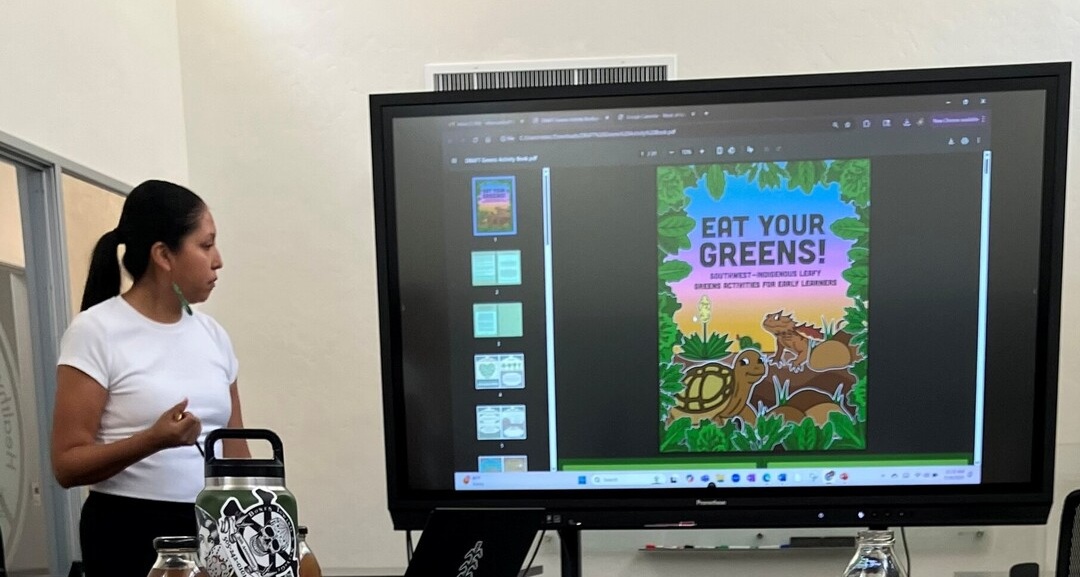
Rebecca Riley, an AFSC New Mexico contractor, explains the "Eat Your Greens" guide for vegetables. Sayrah Namaste
In 2025, AFSC New Mexico partnered with tribal home visitors to co-create activity guides for parents to encourage their young children to eat vegetables. “Activity ideas began with traditional foods in mind, intended to expand the familiarity with new foods, and guide parent-child interaction,” explains AFSC NM contractor Rebecca Riley of the Acoma Pueblo.
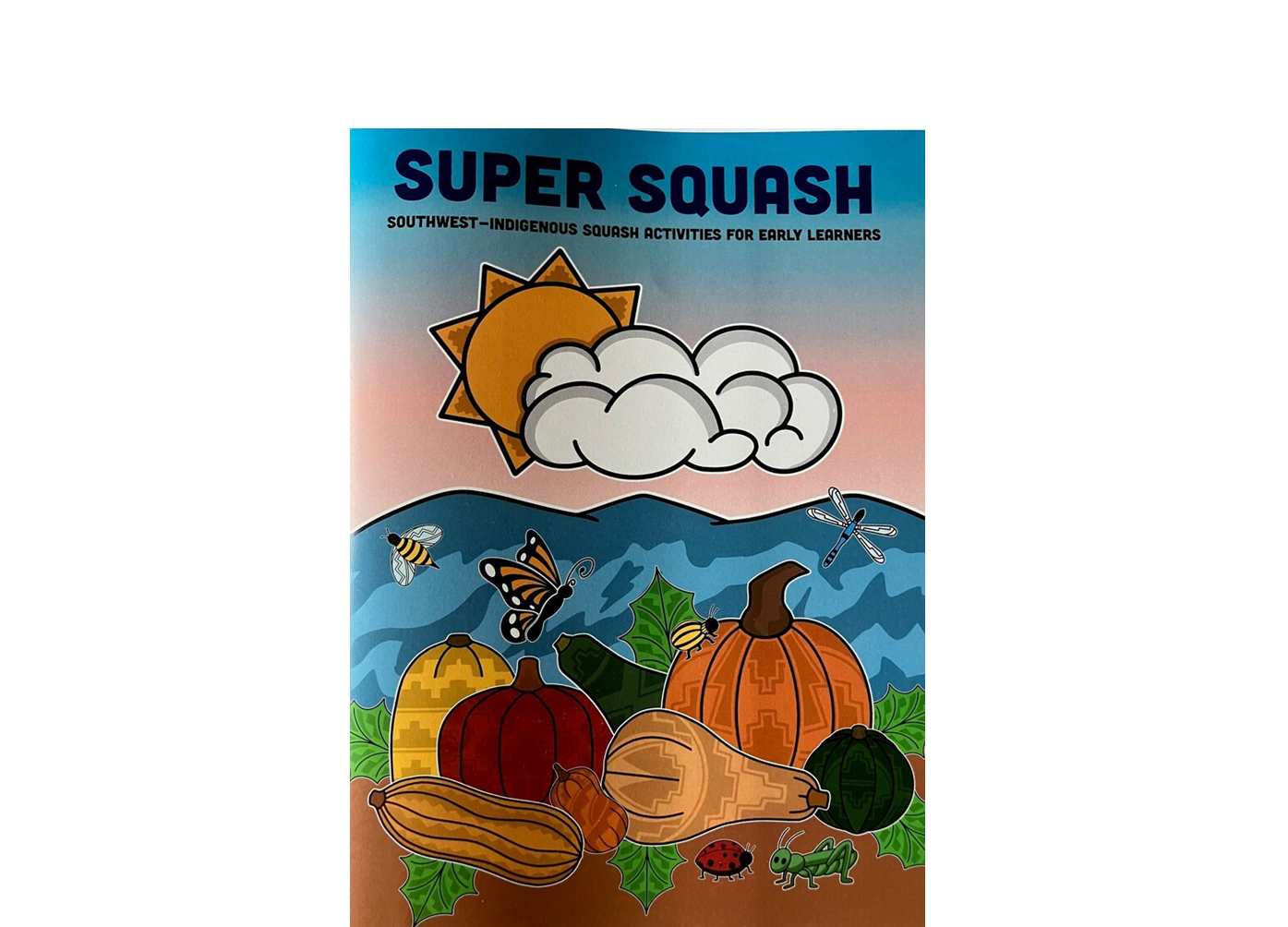
Building on the first project “Connecting with Corn,” we co-created the “Super Squash” and “Eat Your Greens” guides for vegetables that families were eating through a Community Supported Agriculture (CSA) Indigenous Farm Hub.
AFSC’s partner, the Native American Professional Parent Resources (NAPPR), works with the Indigenous Food Hub to provide bags of vegetables every week to the families they serve, and our activity guides complement the food by making vegetables fun to eat.
Following a successful pilot, two more years of flight!
Now, the AFSC New Mexico Program is excited to announce that our partnership with NAPPR will extend and expand the tribal home visitors program beyond our successful pilot year for at least two more years. Many thanks to the W.K.Kellogg Foundation for their support.
We’ve had a great start. An external evaluation of the pilot program found that it was very successful. Tribal home visitors recently welcomed a national group to New Mexico, and they invited me to share the food guides we had created in 2025. We’re also very pleased that Rebecca will continue in her role as AFSC’s partner in tribal home visits – and we’re excited about what’s next.
AFSC New Mexico
Helping kids get a “feel” for food
One of the indigenous farmers who’s been with us since the beginning of this work has a two-year-old granddaughter. The grandma asked, what if we give families not just a guide, but a food sensory kit? She noticed her granddaughter has a toy barn with farm animals and likes to have something tactile.
It turns out that in the focus group held by the evaluator, tribal home visitors had the same idea. Rather than use plastics, I suggested that we hire indigenous artisans to create the sensory kit. People loved that idea, so our indigenous partners are identifying artisans. This plan fits well with AFSC’s Just Economies work, which includes a focus on getting more income to people who do traditional crafts.
The beauty of coming together
In August 2026 we are hosting a meeting of the indigenous farmers we work with and the tribal home visitors to co-create this work together. Whenever we get together, wonderful things happen.
In December 2025, Albuquerque hosted the national Farm to Cafeteria Conference, which AFSC was invited to attend. I was out of the country, but Rebecca shared about our work and received great feedback, including from two of the indigenous farmers we’ve worked with.
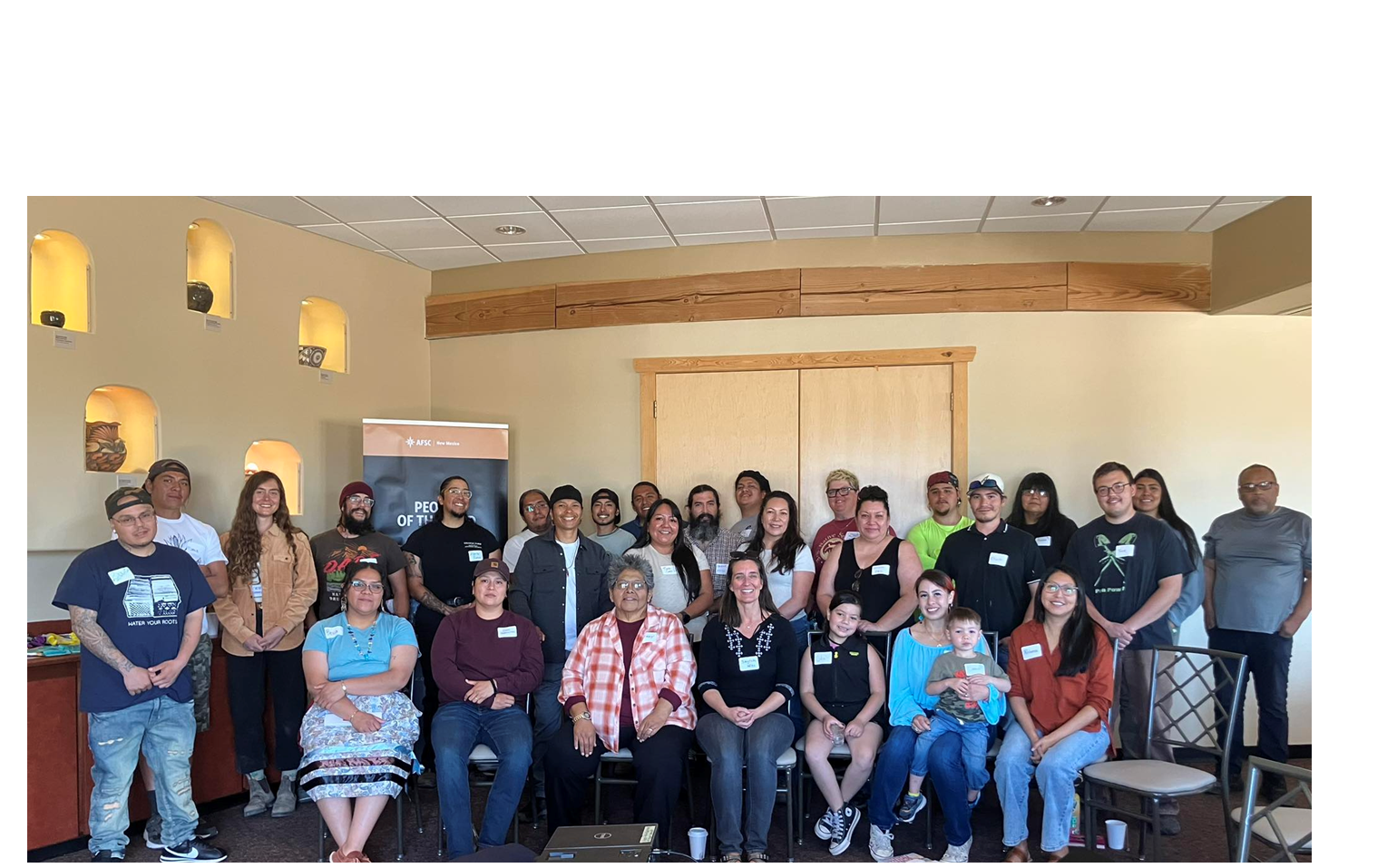
In 2026, AFSC New Mexico convened our 13th annual Farmer Gathering at the Indian Pueblo Cultural Center. Mari Simbaña
At AFSC’s annual farmer gathering in March 2026, Rebecca and I gave a workshop on the Tribal Home Visiting pilot, which the farmers didn’t know about. Half of the attendees were indigenous, which is the largest participation we’ve had from indigenous farmers in the 13-year history of our farmer gatherings.
We were thrilled at how interested the farmers were in the guides. As we passed them around, they really read through them and asked lots of great questions.
All of this is slow work and very relational. It’s also really beautiful.
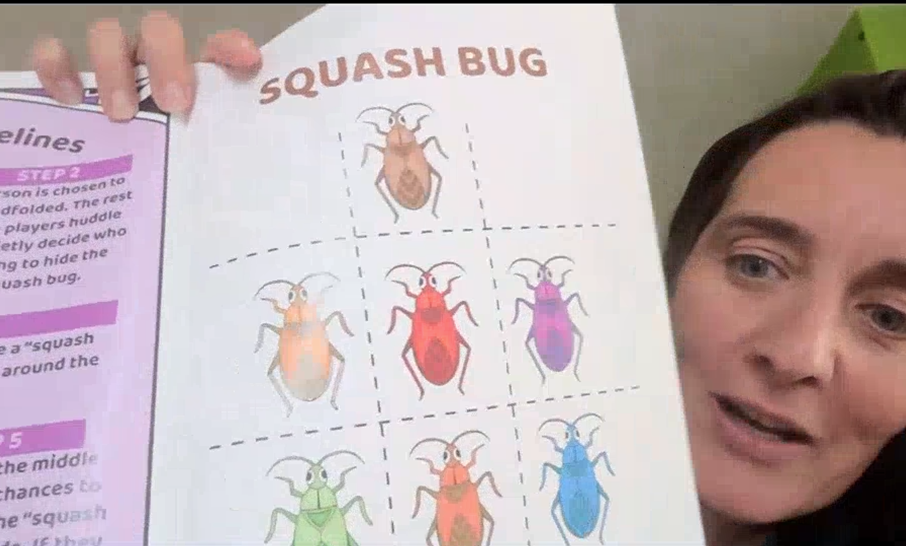
Sayrah and the Squash Bug game AFSC New Mexico
Introducing the villain! Enter the squash bug!
Many of the partners and farmers I work with have a great sense of humor.
One of our guides is called “Super Squash,” and we always use little animals to encourage the kids eat their vegetables. One of the things we all know about is the damage done by squash bugs. In my 18 years at AFSC, every time I talk with farmers, they ask about how to manage squash bugs. Do I have anything that works? Because nothing works all the time, these bugs are the bane of farmers’ existence.
So the tribal home visitors asked that the artist, Marcus Trujillo from Laguna Pueblo, make a villain of the squash bugs. He’s never been asked to do that, so it was really funny to him. They made a game called “Squash the Squash Bug.”
Back at AFSC’s annual farmer gathering, I passed around our guide and said, “There’s a squash bug villain in this.” The farmers said, “What? No way!” It was really funny.
The guides themselves are restricted to tribal use because of the knowledge in it. If someone wants a copy, they contact AFSC New Mexico at newmexico@afsc.org. We’re trusted to share it only with tribal folks.
Feeling the love
We love supporting Native families and farmers through partnerships like this. New Mexico is the Indigenous homelands of 23 federally recognized Tribes and Nations that include Pueblos, Navajo Nation, and Apache. The Southwest has a deep connection and rich culture of sustainable agriculture dating back since time immemorial among Native peoples.
And in case it’s not obvious, I love my job. I’m so grateful to do this hands-on and visionary work with AFSC.