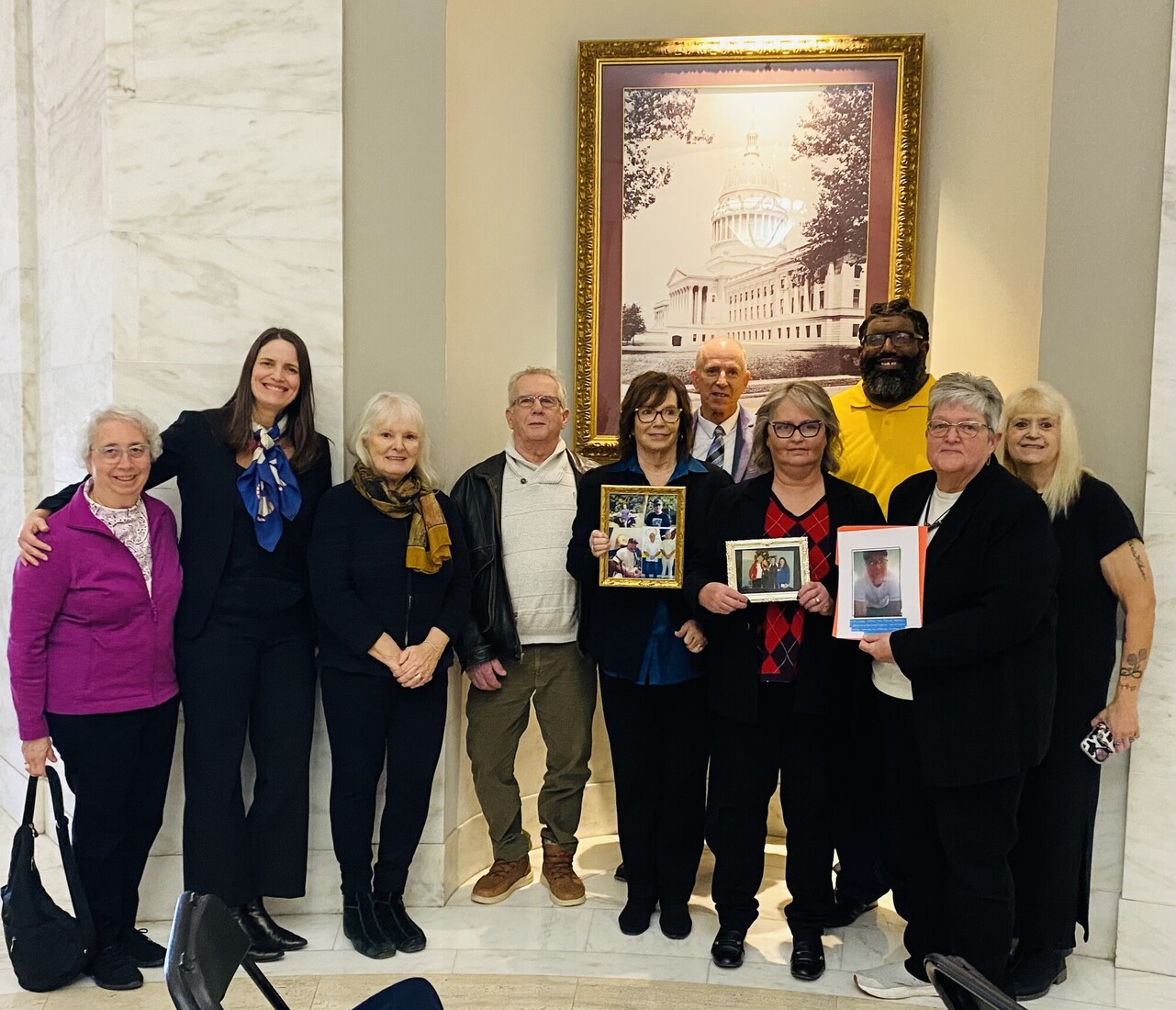
Speakers and coalition allies gather for a photo following the WV Law Reform press conference at the state capitol. Pictured, left to right: Sister Rosie Hefner, Lida Shepherd, Dionne Moyers, Roy Lister, Lisa Lister, Tim DiPiero, Teri Castle, Kenny Matthews, Bev Sharp, Lisa Hilson. Photo: Dr. Shanequa Smith
CHARLESTON, W.Va. – CHARLESTON, W.Va. – Beside photos of loved ones who are currently incarcerated in state prisons, the West Virginia Criminal Law Reform Coalition held a press conference at the WV State Capitol on Monday, January 12th to underscore the ongoing crisis in West Virginia jails, the ineffectiveness of enhanced penalties, as well as to encourage the legislature to reduce the prison population. The press conference recording can be viewed on the WV Criminal Law Reform Coalition Facebook page.
Coinciding with January’s interim meetings of the state legislature, speakers at the press conference highlighted policy solutions including second look sentencing for people serving long sentences, and medical respite for aging or sick incarcerated people.
Research supports that older people are far less likely to be charged with a new crime after release from incarceration, while the cost of caring for elderly people in prison is significant. Speakers also talked about why enhancing penalties, a stated priority for some legislators, are proven to be costly and ineffective.
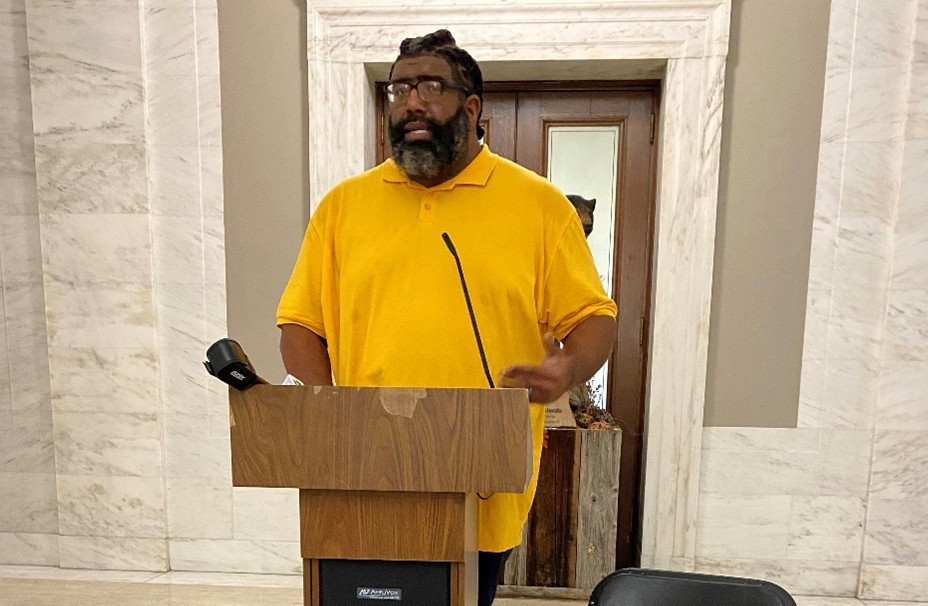
Kenny Matthews with American Friends Service Committee emceeing the WV Criminal Law Reform Coalition press conference. Photo: Lida Shepherd/AFSC
Kenny Matthews with American Friends Service Committee welcomed the press and those in attendance. Other speakers included Tim DiPiero, an attorney based in Charleston; Jonathan Spence and Teri Castle with the REACH Initiative; Seth Distefano with the WV Center on Budget and Policy; and Lisa Lister whose son is currently incarcerated.
Jonathan Spence was incarcerated for over 23 years, and now helps others as they’re released from incarceration through the WV REACH Initiative. He said on Monday:
“I am here today because I believe West Virginia has reached a moment where we must take an honest, evidence-based look at our sentencing system and ask whether it is still producing the outcomes we intended. For decades, our laws have emphasized longer and more rigid sentences, often removing the ability of courts to reconsider punishment—even after time has passed, people have changed, and risk has declined. The result is a system that continues to incarcerate people not necessarily because they are dangerous today, but because the law never allowed a second look.”
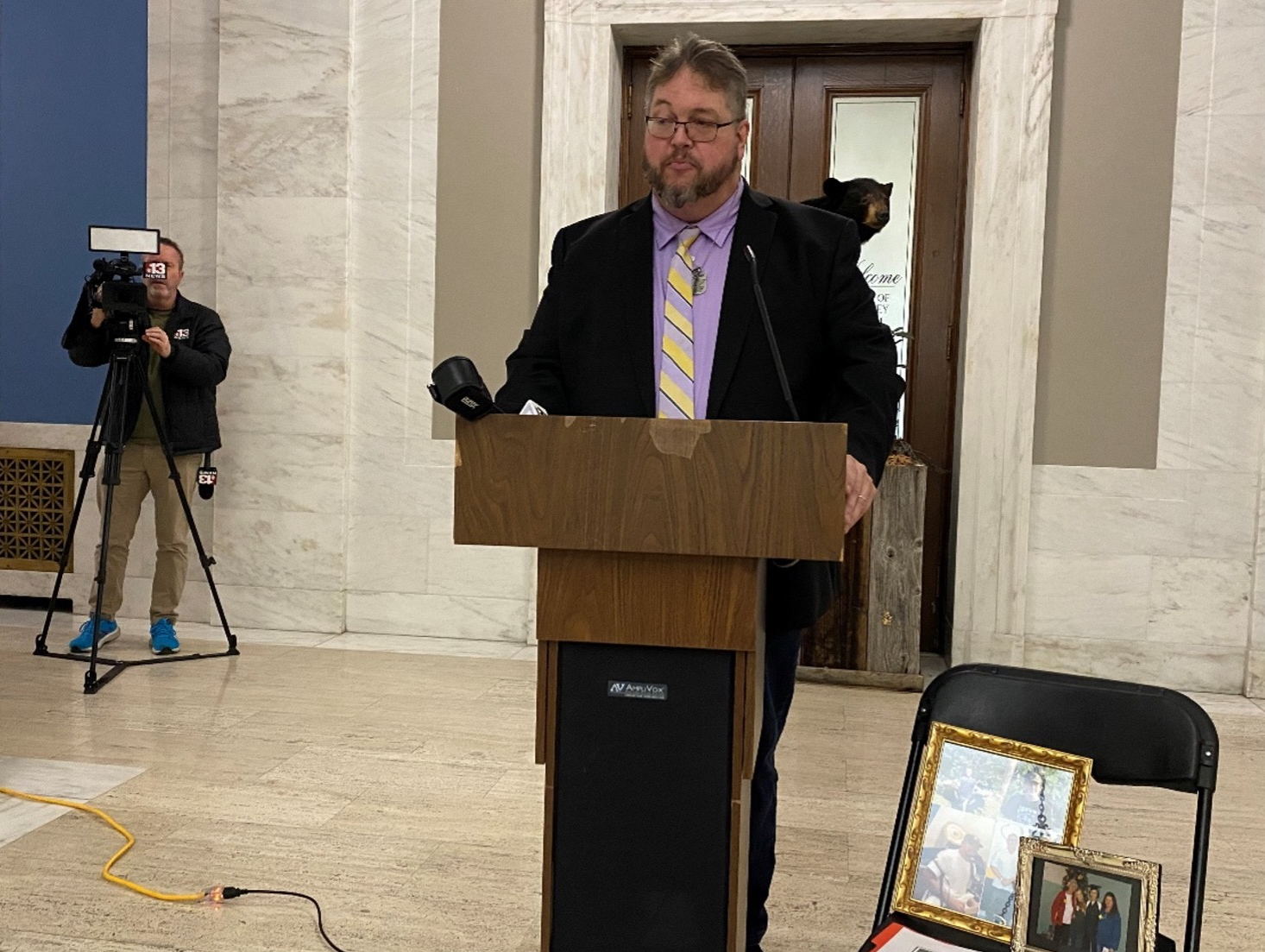
Jonathan Spence from Logan County. Photo: Lida Shepherd/AFSC
Teri Castle who also works with the WV Reach Initiative, spoke at the press conference, sharing about her experience of incarceration at Lakin Correctional Center for 16 years:
“Second look sentencing is important because people change. Rehabilitation is real. I am living proof that when people are allowed to heal, grow, and be accountable, they can return home and become assets to their communities-not burdens.”
Lisa Lister, whose son has been incarcerated in West Virginia prisons since he was a very young man, said:
“My son, Dayton "Scott" Lister, has been incarcerated for twenty years. In that time, he's earned a college degree, participated in numerous trade classes, mentored others, and became the man our justice system says it hopes to create. I believe West Virginia needs a Second Look sentencing law to recognize people like Dayton "Scott" for who they are today, not who they were decades ago.”
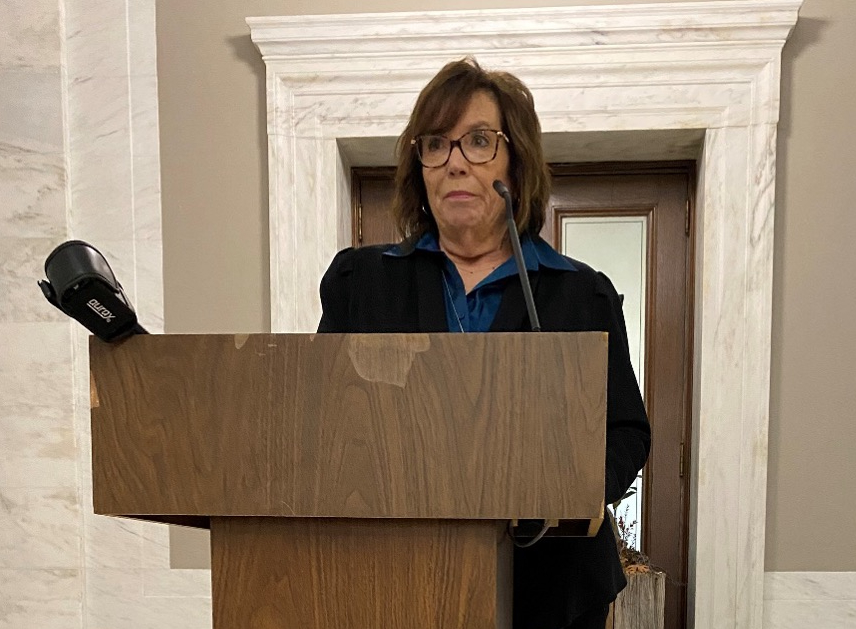
Lisa Lister from Marion County. Photo: Lida Shepherd/AFSC
The coalition will also be hosting Leading for Justice Advocacy Day on March 2nd as part of their efforts to advance second look sentencing, medical respite, and reforms to our money bail system. They encourage anyone interested to sign up for coalition updates here.
###
The West Virginia Criminal Law Reform Coalition is a group of West Virginia-based organizations partnering in pursuit of systemic changes to the state’s criminal legal system. Partners include the American Friends Service Committee, Jefferson County NAACP, NAACP-WV, WV Center on Budget and Policy, WV Council of Churches, and WV REACH Initiative.
The American Friends Service Committee (AFSC) promotes a world free of violence, inequality, and oppression. Guided by the Quaker belief in the divine Light within each person, we nurture the seeds of change and the respect for human life to fundamentally transform our societies and institutions. We work with people and partners worldwide, of all faiths and backgrounds, to meet urgent community needs, challenge injustice, and build peace.