Henry Craver/AFSC
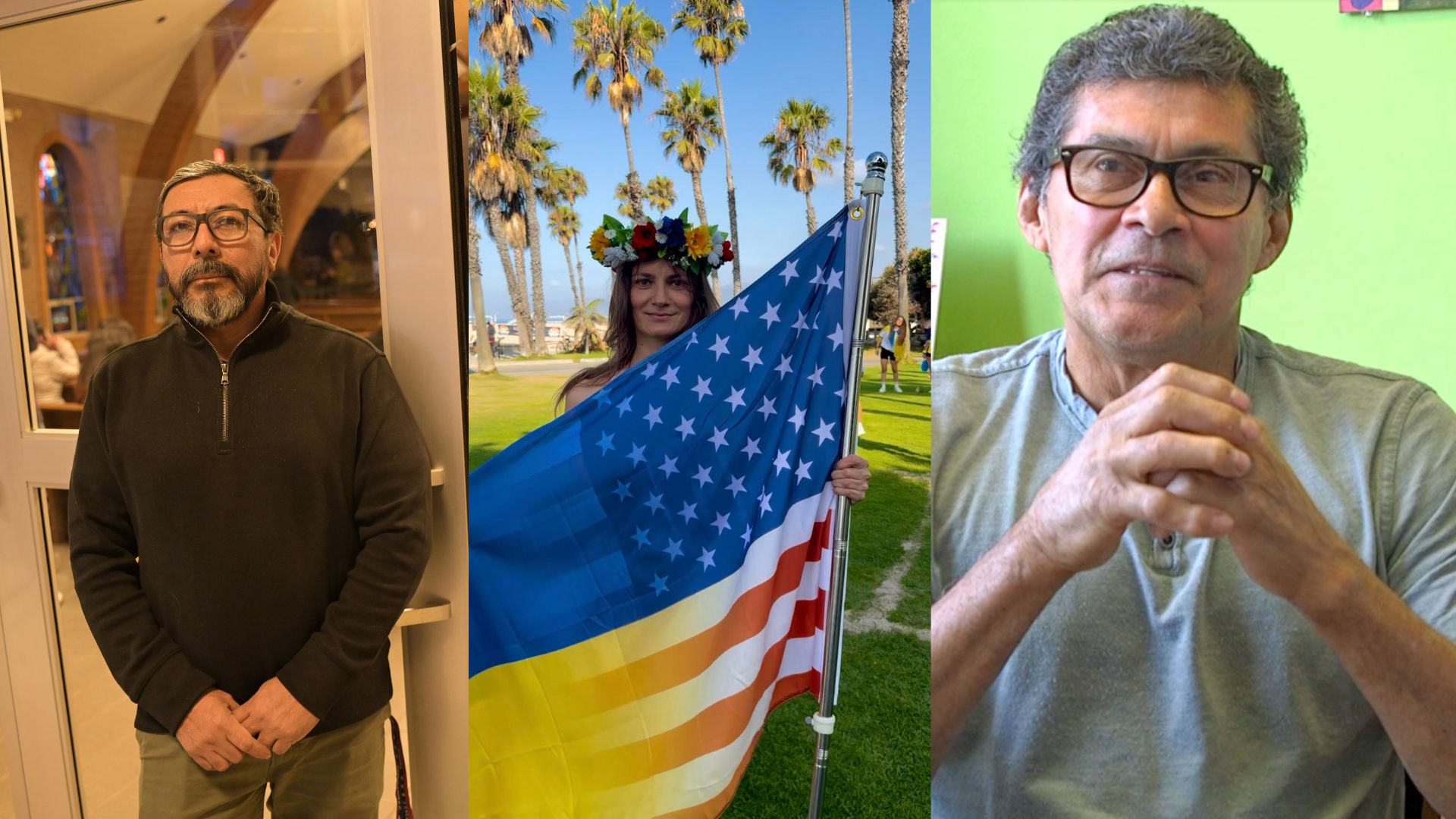
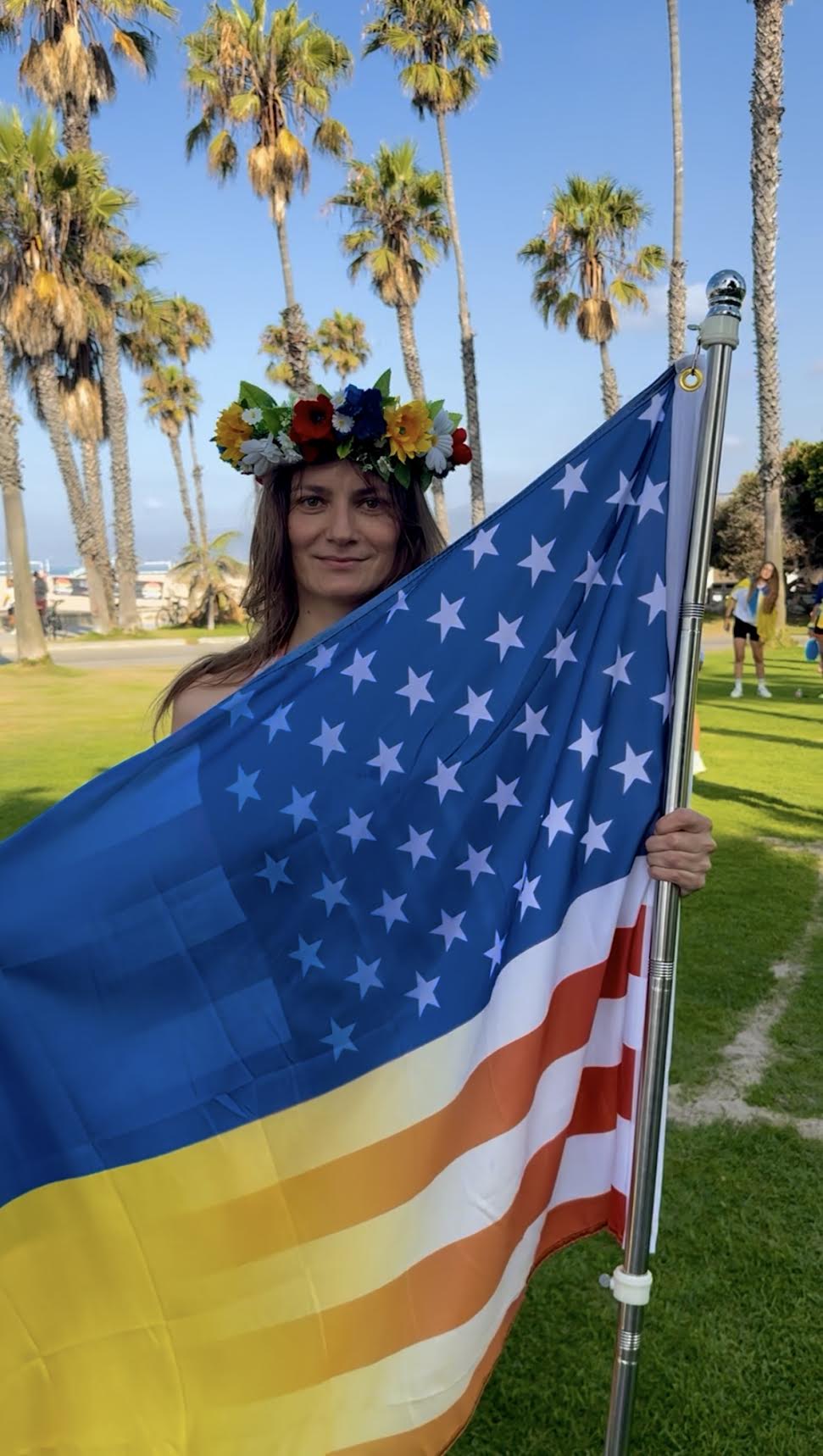
Anna came to the U.S. from Ukraine after Russia’s 2022 invasion. She left behind a full life in Odesa where she'd built successful businesses and was part of the arts community. In the U.S., she worked hard to rebuild her life. Getting TPS was “a big relief.” Now, Anna is working as a data research analyst and training to become a financial advisor while supporting her family in Ukraine.
Here she shares her story.
I was born in Crimea, Ukraine, and later my family moved to the Kherson area. But my life really began in Odesa. That is where I became an adult, living there from the age of 18 until I was 30. I had a full and vibrant life. I developed several interesting brands, including a particularly successful Kundalini Yoga one. Beyond my professional ventures, I lived for the arts—expressing myself through dance and theatre. I was educated, holding an MBA in Economics. I was a person of the world; I used to spend my winters in Latin America—Argentina and Brazil—escaping the Ukrainian cold to speak Spanish and live by my own rules.
When Russia launched their full-scale invasion, I wasn't actually in Ukraine. I was in Israel for a casting, and we were scheduled to film in Georgia until March.
In between filming days, I dedicated myself to volunteering; I managed to organize a medical division and, with the support of the Georgian government, I took essential medical supplies back to Ukraine when I decided to return after finishing the project.
I got back to Odesa in mid-March, 2022. It was the very beginning of the war, and the atmosphere was terrifying. It felt dangerous just to walk on the street because nobody knew how to react. I knew what war was intellectually, but really experiencing it is different. I was staying at the art yoga center I had built. It is located by the famous Opera House in central Odesa. The bomb alarms went off every thirty or forty minutes. I couldn’t sleep. The reality of the war was right there, outside my window, and I realized I had to leave. The rest of my family made the brave choice to stay in their homeland.
I left for Moldova, then Bulgaria, where I stayed for two weeks, still holding onto hope and waiting for my family to join me. When it became clear that they were staying put, I decided I’d go to the U.S.—a country I’d always dreamed of seeing. I didn’t have a sponsor through the “Uniting for Ukraine” program, so I had to take a rather indirect path: I traveled to Spain, then Panama. From Panama, I went to Mexico.
I think I was the only person alone at the border in Tijuana. There were mothers with three, four, five kids. There were families. And then there was me. I walked across the border.
I waited for hours. One volunteer, a guy who was really stressed out, accidentally cut my palm while we were making food. I was bleeding while waiting for the American officials. They took my passport. They checked everything—my background, my crime record, everything—for eight hours. And then they let me in.
But getting into America is only the first part. The real challenge was surviving here.
For the first six months, I was in limbo. No TPS (Temporary Protected Status), no work permit. I had savings, but you burn through cash fast in California—and I had to help my family and colleagues in Ukraine. I stayed on a friend’s sofa. Then a family from a church gave me a room for three months. I tried to make myself useful. I taught yoga, walked dogs, and made food.
Americans always say, "We support Ukraine, we pray for Ukraine." Ukrainians feel like we should always return kindness with kindness—so I’d say , "Okay, but do you want to eat?" and I’d cook borscht for them. I wanted to offer something real, not just accept their kind words and hospitality. Cooking became my way of saying “thank you” and maintaining my dignity.
Being a single Eastern European woman in the U.S. is dangerous. People assume you are desperate. Some men presented themselves as helpers, but very quickly it would become clear that they expected something in return. One "friend" even took advantage of my limited English at the time; claiming me as his "wife" on his taxes. I had no idea until the IRS contacted me much later.
I finally got my TPS in September 2022. That was a big relief, but due to an administrative error, my work permit was lost, and I had to wait another 12 months for it to be replaced. During that time, I focused on learning. I studied to become a certified nursing assistant so I could have a practical skill. I spent hours every day at the library.
The public libraries in California are a miracle to me. The Adult Literacy program became my strongest community and the ultimate tool for my transformation; like a phoenix rising from the ashes, I used their support to rebuild my voice and my future. Retired professors volunteer there to help immigrants practice English. I joined conversation groups and online classes with people from all over the world—Japan, Korea, Argentina. I treated learning like a full-time job. I read about finance and the stock market. I rebuilt myself from the inside.
Now, I’m different. I don’t teach yoga anymore. Now I focus on my brain. Despite facing years of rejections and applying for dozens of positions, I persevered. Today, I work independently from home as a data research analyst, applying my expertise to the stock market. I analyze companies. I read the news. I am training to go to college here to get my degree as a financial advisor.
My MBA in Economics from Ukraine isn't recognized here, so I have to start over. It’s okay; I’ll start over. I’m rebuilding my life step by step, learning to trust again and creating a new circle of people around me. Beyond my career, I’m focused on nurturing a family and meaningful relationships. Starting over is a journey of both the mind and the heart, and I’m finally building a foundation that is truly mine.
I see many Ukrainians here who are overwhelmed with sadness. They gather and talk about what they’ve lost, or about their sponsors. I had to stop attending these gatherings. I know their pain very well, but I can’t live inside that grief. I have a brother in Ukraine whose entire battalion was killed. He survived physically—but mentally, I’m not sure. I have nephews in Odesa and Krivoy Rog who are my world. I want to help them, and I do, but I also know that if I fall apart, I cannot help anyone.
Life in America requires a kind of constant strength. You learn quickly that no one is going to rescue you. You can feel pain, but you still have to move forward. I carry Ukraine with me everywhere I go. Whether I want to or not, I represent my country here.
I don’t cry about the war anymore. I work. I study. I believe. I build my life slowly, one step at a time. I have my own small room filled with peace and love near the ocean now. I have also met a life partner who shares my spirit, and I am deeply grateful to be building this new chapter alongside someone who truly understands the cost of resilience. I have books, routines, and a sense of direction. I still dream big, and I am putting all my strength into making those dreams a reality. I’ve realized that my journey is no longer just about surviving—it is about thriving and flourishing, both for myself and for the memory of those I have lost. And in my heart, I carry the unwavering belief that Ukraine will flourish and thrive once again.