
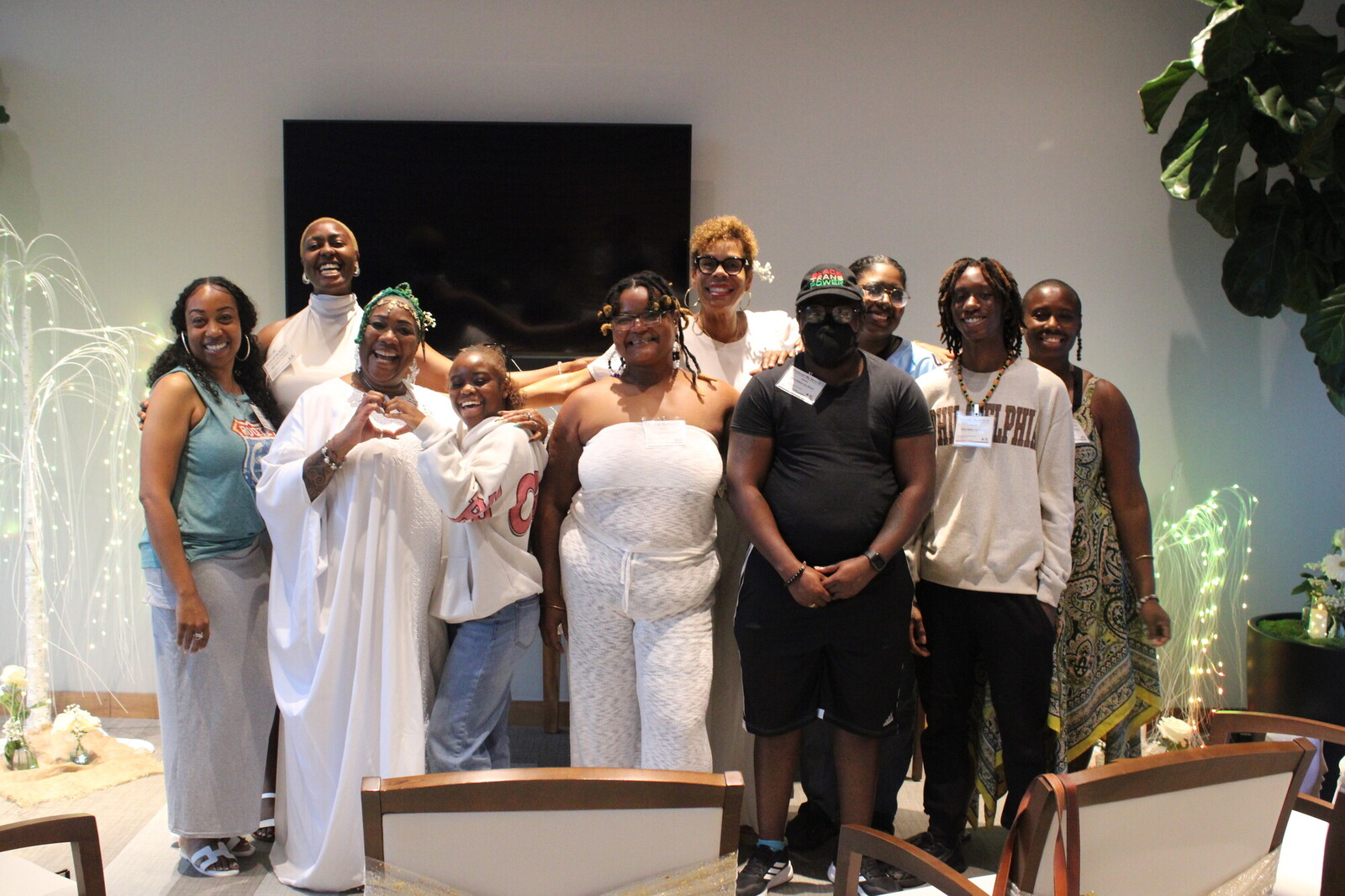
AFSC St. Louis staff and friends with the Embodied Liberators cohort Jazmine Starks
In this interview, AFSC St. Louis Program Director Barbara Gunn Lartey and Program Coordinator Alex Jones share about their creative work supporting an intergenerational group of people moving toward personal and collective liberation.
What would you like to share about AFSC’s recent work in St. Louis?
Alex – Embodied Liberation was a group of six cohort members from various generations. We prioritized not only building relationships between them and crossing those generational boundaries, but also learning how to heal ourselves and activate ourselves.
We had Movement Mondays and Thriving Thursdays for six weeks from July 27-August 31. Movement Monday covered a variety of topics thanks to our awesome co-stewards. We kicked it off with Tracy T-Spirit Stanton, who is a community healer and activist. Tracy led us in grounding ourselves in the work and community action.
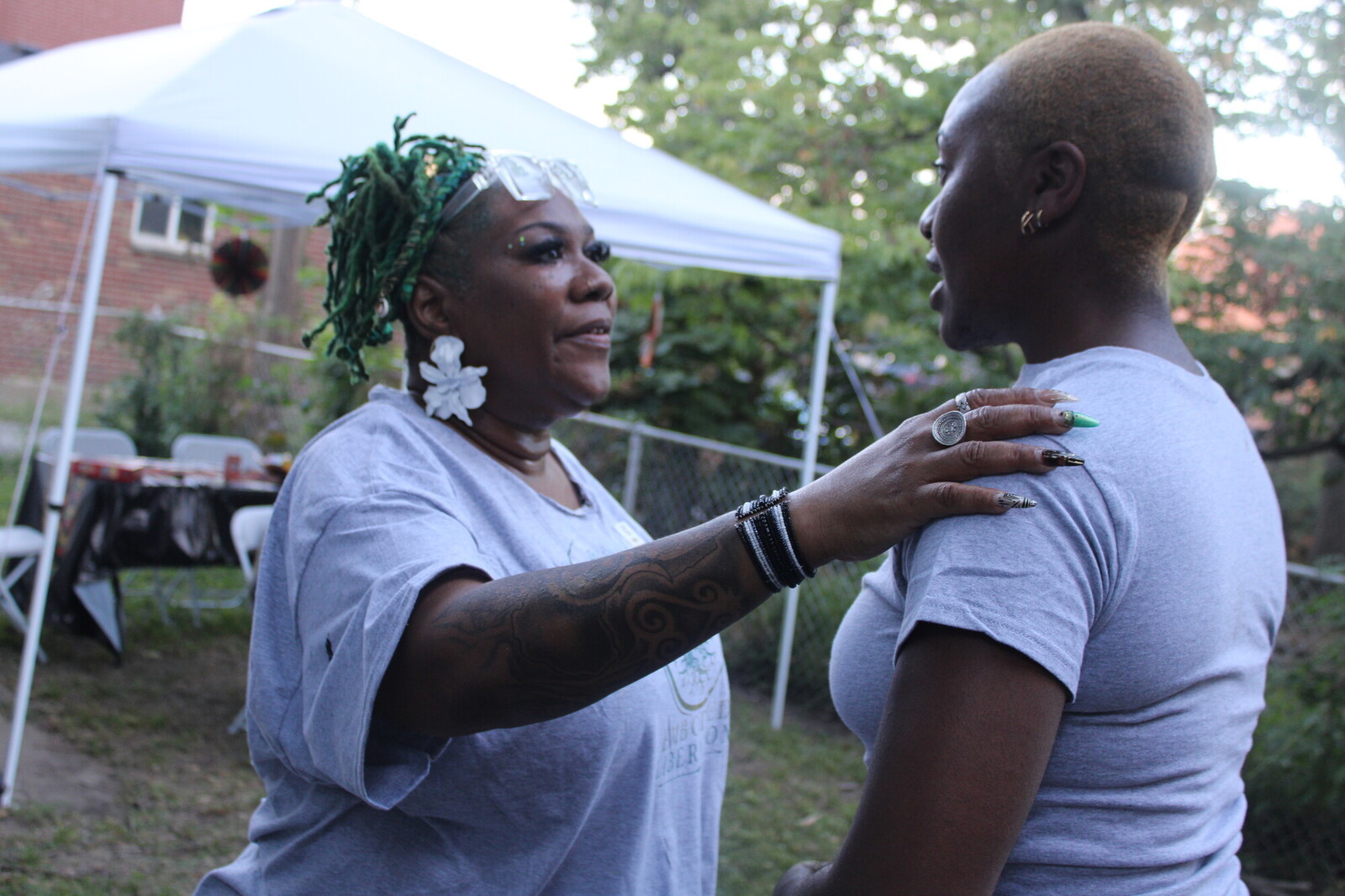
AFSC St. Louis Program Director Barbara Gunn Lartey, left, with Rose Marika Mwansa Jazmine Starks
One of our cohort members, Rose Marika Mwansa from InPower Institute, co-stewarded the next session, centering our stories and how they can propel us into acting with intention. This included rewriting stories where we may have felt victimized by certain circumstances -- and how we can heal ourselves through that.
Brittini Gray-Chiquillo from Mama Scraps co-stewarded the third Movement Monday on “Body, Power and Regulation.” Brittini’s community organization does healing praxis in the community, and she runs Black Women’s Healing Group and Initiative.
Her session focused on how we can regulate our nervous systems -- capitalism has us on this “go-go-go” mindset. As we’re being traumatized and overworked, we’re not taking care of ourselves. How do we not just take care of ourselves in the topical sense, but also in the sense of learning how to resist its influence?
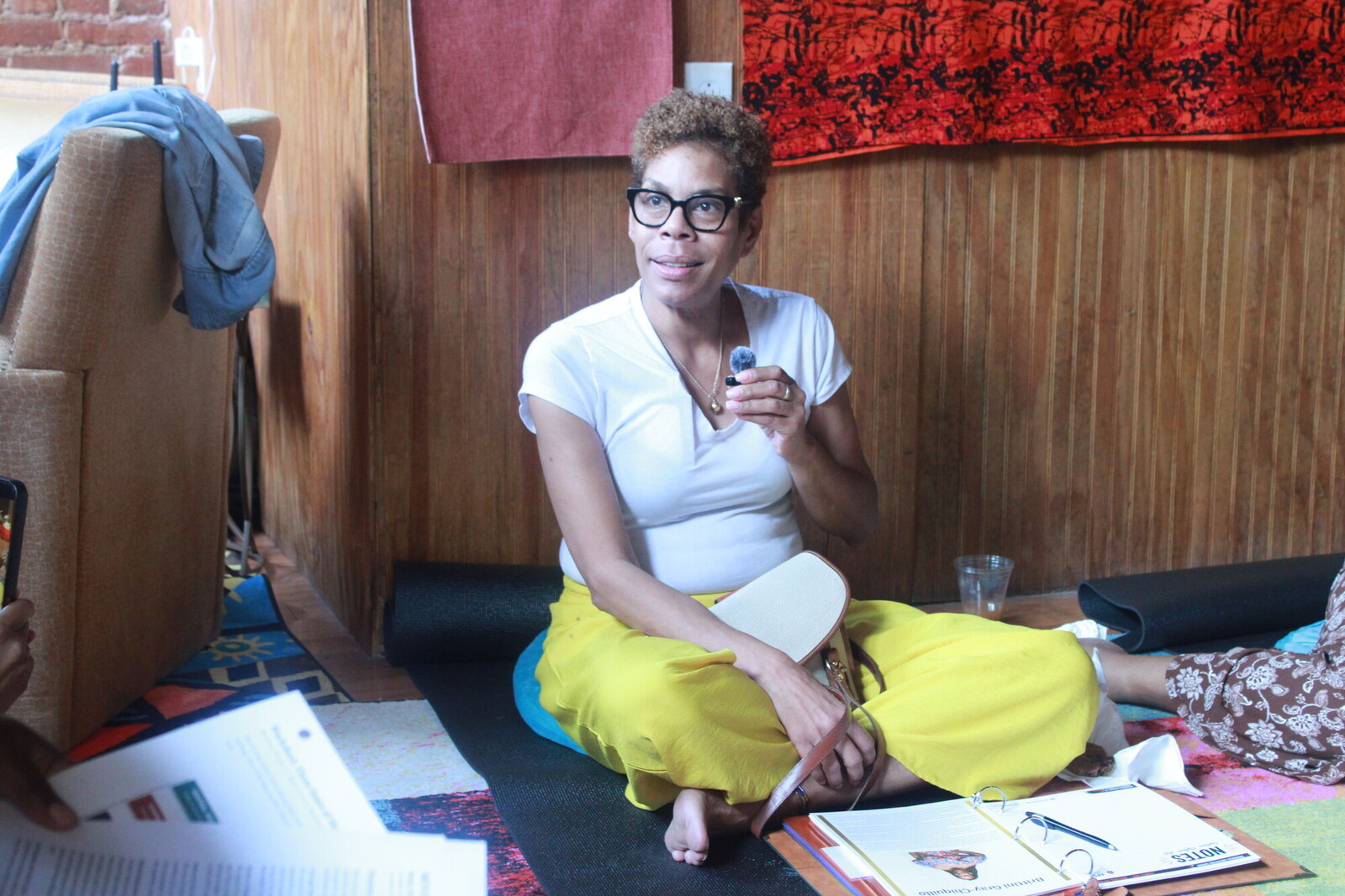
Embodied liberator Anna P. Hollins Jazmine Starks
Barbara - Another powerful moment was when Brittini discussed how important it is to recognize humanity and dignity -- and honoring and really owning ours.
There’s almost this norm that says, “Taking care of self is selfish.” There was one point where she offered all the members eye pillows or shields, and they experienced a sound bath, something most people had never done before. Where else does that happen? Unless you steal away for a retreat or something like that, how do we practice self-regulating in the midst of chaos?
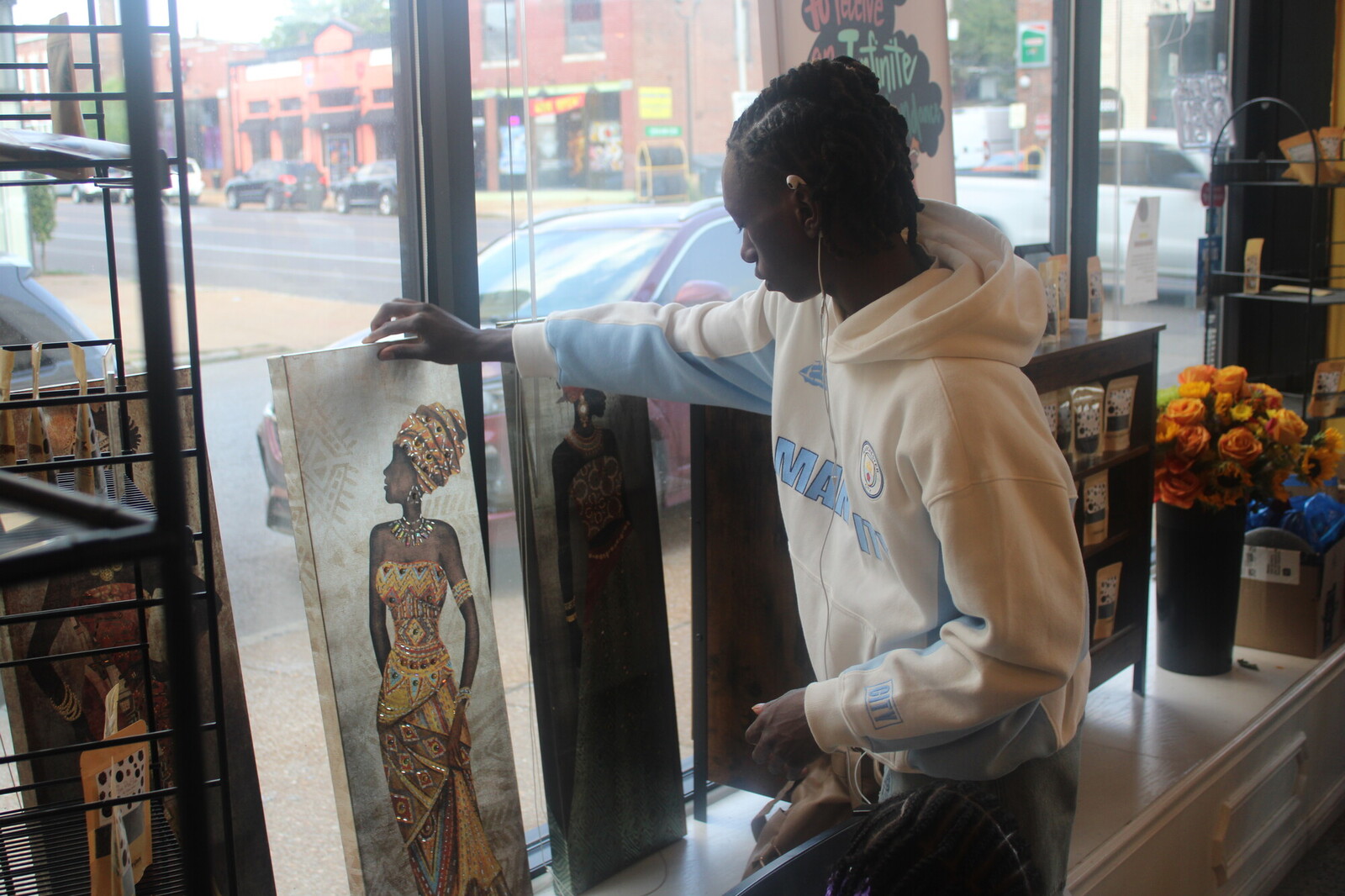
Embodied liberator Romel White Jazmine Starks
There was a moment when the caterers came back to collect their things and disrupted the space. We were in a part of St. Louis that’s “active” – I’ll put it that way. We were not in suburbia. One of our young embodied liberators, Romel, shared how their coming in and out made him feel so vulnerable.
Here you are, lying on the floor, in a room full of people you don’t really know, because this is only our third week in. And the lights are low. Romel talked about how he’d been jumped. And so when he heard people coming in and out, he tensed up, because it made him very anxious. But for some reason, he also felt equally safe. And so he didn’t scream and wasn’t startled. He didn’t remove his eye mask. He just sat there and moved through the moment.
I thought that was a really powerful demonstration of how we can feel what we feel in the moment -- and still choose something that empowers us.
We also had Mike Milton come in from the Freedom Community Center. He’s an activist and focused on how to organize communities effectively. We talked about conflict and breakdowns in community organizing and how we can effectively organize and pour back into our communities instead of having those relational breakdowns.
I found Mike’s focus on restorative practice and how that’s centered in their work to be really interesting.
Conflict tends to be resolved along cultural lines. Eurocentric cultures tend to handle conflict by saying, “I’m hurt, I’m angry, I’m sad, I’m gone.” Whereas from an African-centered perspective, which is why village councils are so important, it’s: “I’m hurt, I’m sad, I’m angry – let’s figure this out.”
Because we’ve been socialized in a supremacist society, we tend to adopt those values, but they are not of us. And that’s why a restorative lens is so important. Let’s acknowledge the harm that’s been done, and let’s figure out what to do about it. It may not change the result. It may still mean leaving a relationship or job.
It’s a process in which people feel heard and listened to. That’s why the Truth and Reconciliation Commission was so powerful in South Africa. People just wanted to know: what happened to my daddy?
There was an exercise Mike led where you paired up with someone and looked them in the eyes and asked the questions: “Who do I need to forgive?” and “Who needs to forgive me?”
Folks found it profoundly moving. There were people in the cohort for whom that was a watershed moment. They opened up and became vulnerable. There was sharing that could not have been anticipated because of that.
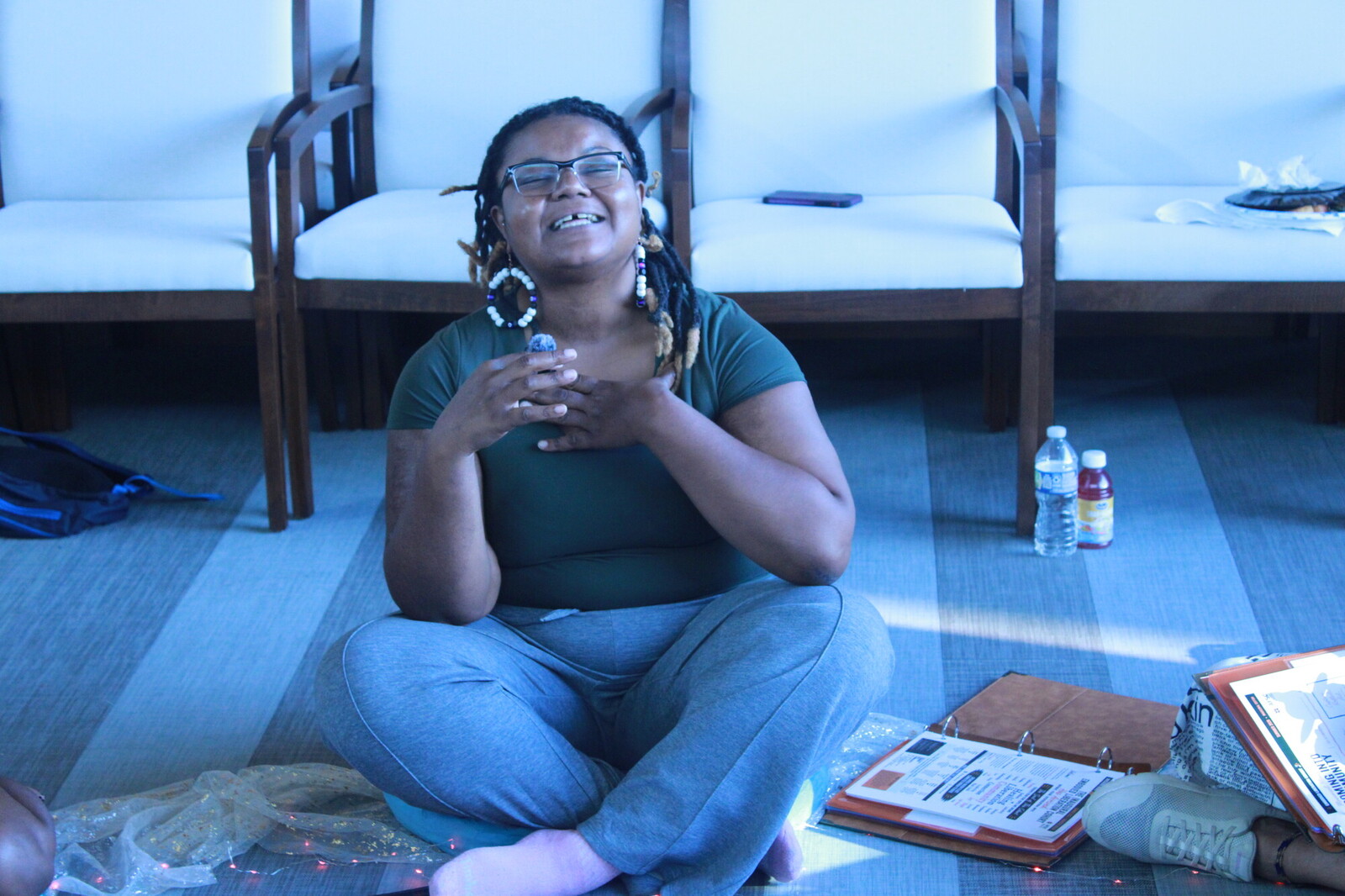
Embodied liberator Myisha Johnson Jazmine Starks
Alex –That sense of safety and belonging was definitely something that was cultivated throughout the program. We weren’t just doing relationship building. We were doing inner work in order to activate on the outside.
Something that consistently was brought back in all the sessions was, “I felt safe. I felt like I belonged here. I felt connected.” That was something all the cohort participants, all the Embodied Liberators said throughout the program.
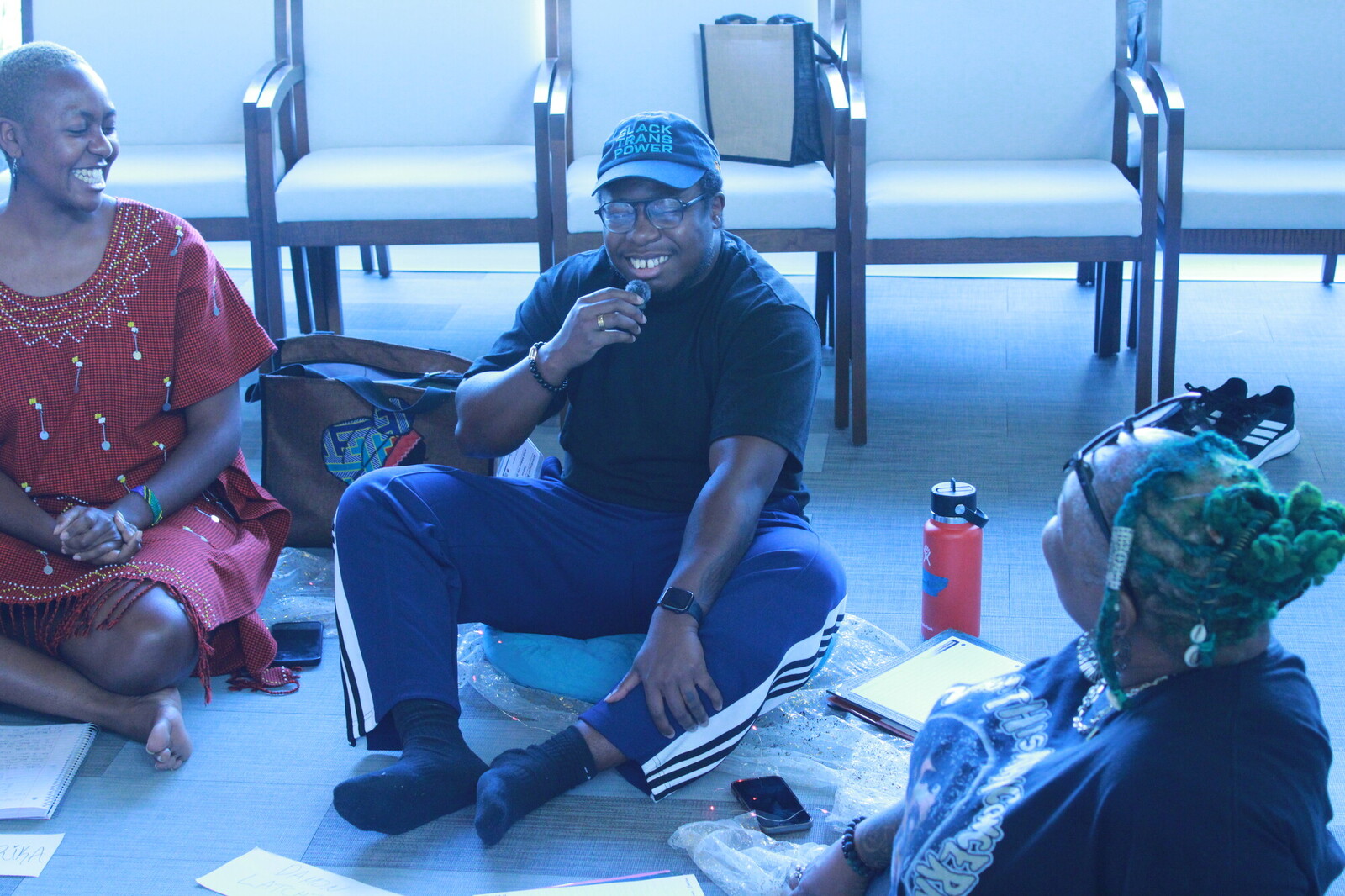
Embodied liberator Damon Latchison Jazmine Starks
Barbara – My session on the fifth Movement Monday was essentially a synthesis of the first four weeks. How do these sessions set us up to do the work? And how are we showing up in the work? Because we can’t carry this work alone. We’re not meant to.
It’s so fascinating. Prior to these sessions, we were planning and putting things together, but you never really know how it’s going to land. There was one activity where each Embodied Liberator pulled an “empowerment card.” It was to be very introspective. And I thought it would just be an activity that led to some sharing and personal reflection.
I did not know that it was going to land the way it did. So much so that the following weekend, during our Black August Weekend, a couple of the cohort members replicated the activity for the parents of one of the Embodied Liberators.
In the midst of it, we shared a reflection song, “A Place for You.” We wanted everyone to know that:
Grace has made a place for you where everything is new.
Love has made a place for you where everything is new.
Peace has made a place for you where everything is new.
I thought about the dearth of going through life not knowing, or not remembering or not being affirmed, that you, personally, have this gift. You as a person -- you you you! There is specifically a role for you in this work and in this life.
For the youth to see the older participants respond so emotionally to that was powerful. There’s nothing wrong -- and everything right -- to be reminded that you’re valuable. Finding your talents, gifts, skills, and abilities are needed. Not in an objectified way, but because of you. We need you!
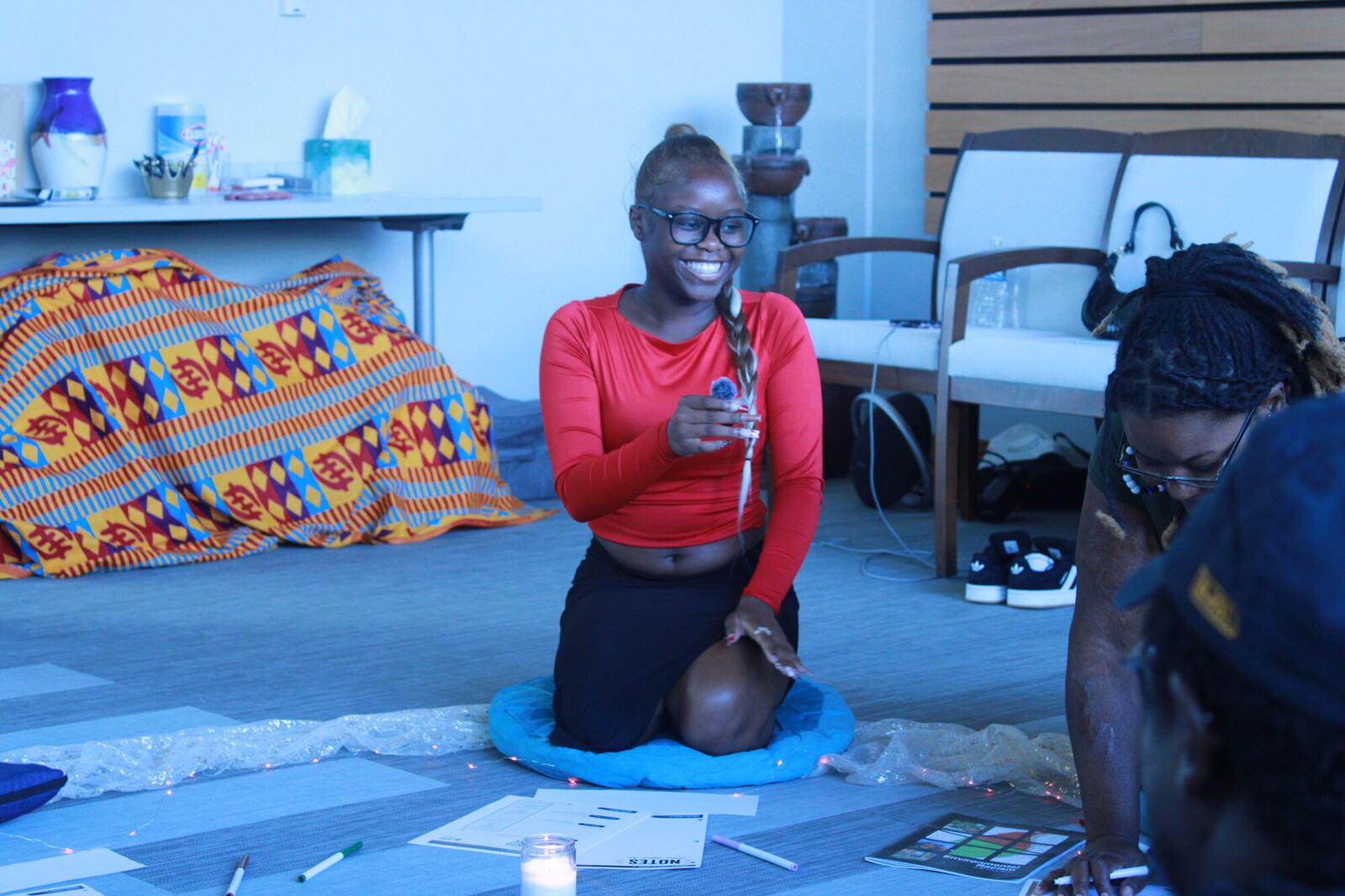
Embodied liberator Megan Williams Jazmine Starks
Alex – As an intergenerational group, we saw this continuity. “I’m experiencing, or I have experienced, what you are experiencing. And so we are connected in this way.”
We also grounded the language we’d been using throughout the program. What does “intergenerational” mean? What does “healing” mean? So we’re not just using this language that doesn’t have meaning.
Instead, we’re understanding what it means to ourselves and, by extension, what it means to the community to be using this language and to be organizing around it.
In conjunction with our Movement Mondays, we also had our Thriving Thursdays. That was an opportunity for the Embodied Liberators to reflect on and process the things that stretched them and moved them from the previous Monday.
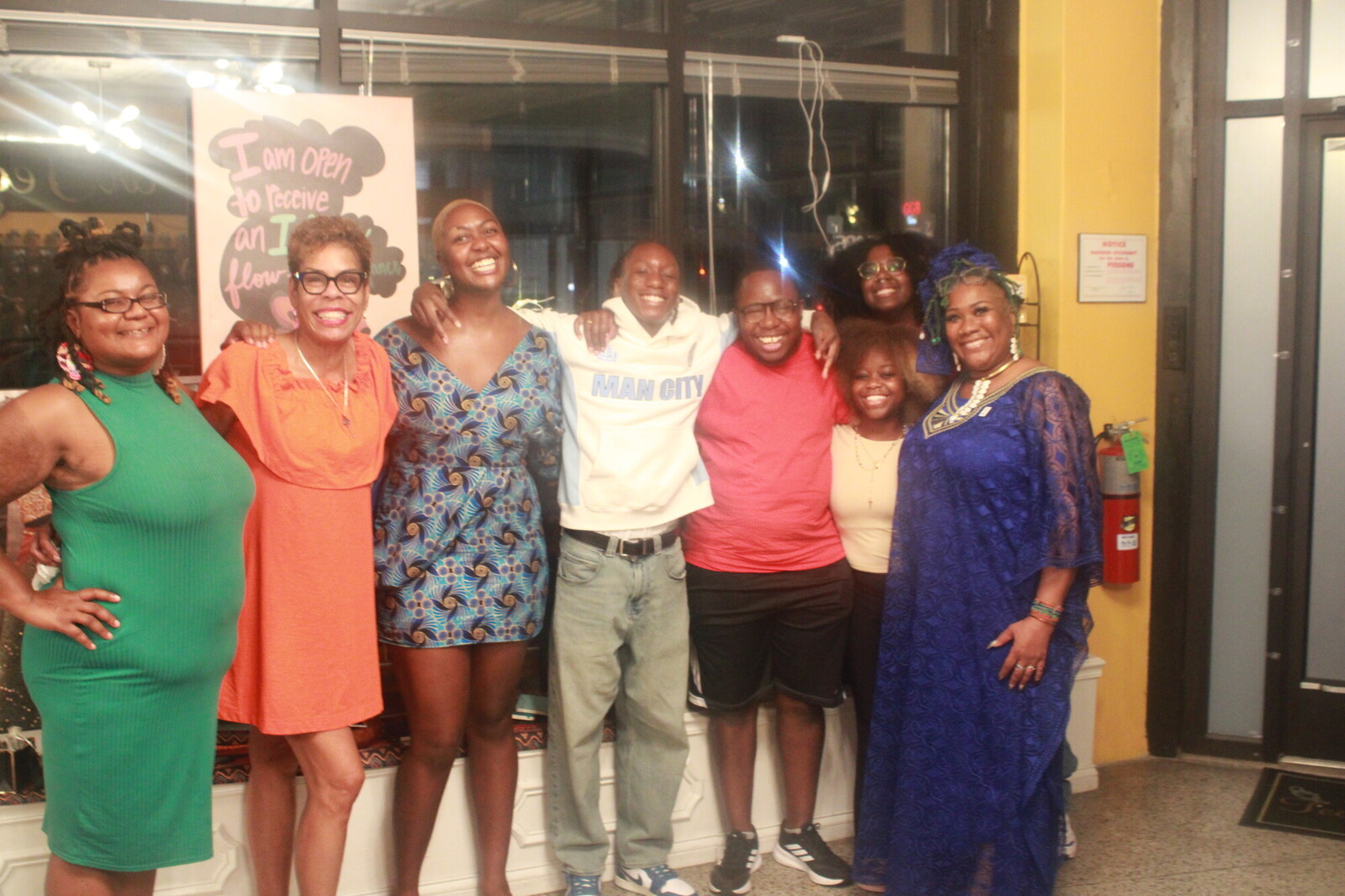
The Embodied Liberation summer cohort Jazmine Starks
The Embodied Liberation summer cohort ended with “Grounded Enough to Act: A Commissioning Celebration and High Tea Experience." From left: Myisha Johnson, Anna P. Hollins, Rose Marika Mwansa, Ramel White, Damon Latchison, Megan Williams, Alex Jones and Barbara Gunn Lartey.