
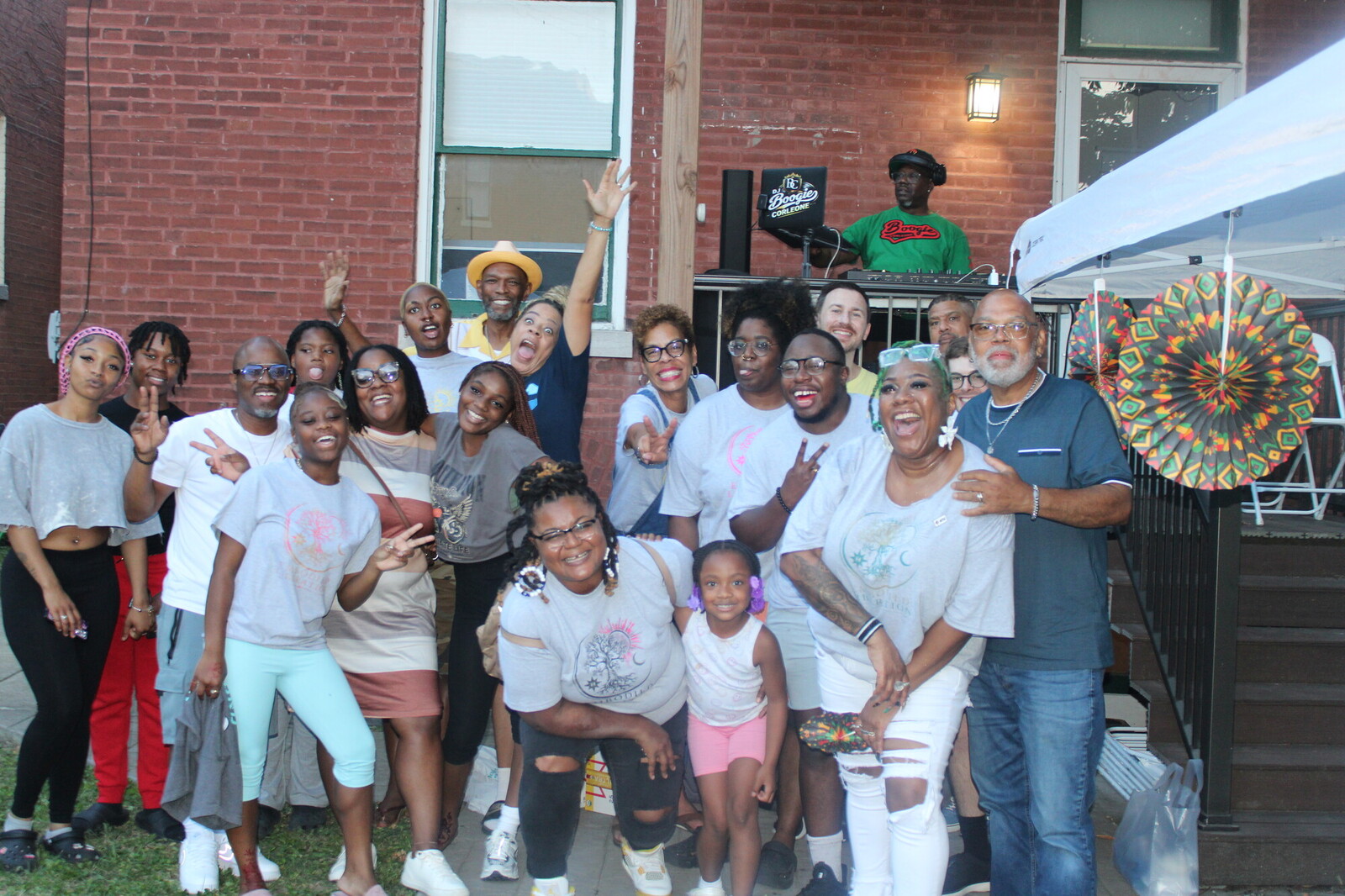
AFSC St. Louis staff, Embodied Liberators, friends and families celebrate Black August Weekend Jazmine Starks
In this interview, AFSC St. Louis Program Director Barbara Gunn Lartey and Program Coordinator Alex Jones talk about their commemoration of Black August Weekend August 29-30 and upcoming plans.
Alex - Black August is a commemoration of Black revolutionaries and activists who organized in San Quentin prison in California. It commemorates their resistance to conditions under the carceral state.
That weekend, we took the opportunity to come together to honor that spirit of fellowship and togetherness. We shared various activities. We cooked together, we stayed together, and we reflected together.
Barbara – The thought for this was, in thinking about movement spaces, whether it was civil rights or COINTELPRO, or any kind of space – how can I trust you if I don’t know you? If I’m not in community with you? What does it mean to actually use these words?
We’ve been on this journey for six weeks with our Embodied Liberators. Let’s vibe. Let’s see what it looks like to share a meal.
How do decisions get made among these six people who’ve been on a journey together? And yes, there’s been some powerful connecting. But it looks very different when you hang out beyond three or four hours.
That’s what Black August Weekend was. We set the space and the intention, inviting friends and family who joined in fellowship. It was really something to watch. As we do this work in community, it is imperative that we take time away to rest, celebrate and commemorate.
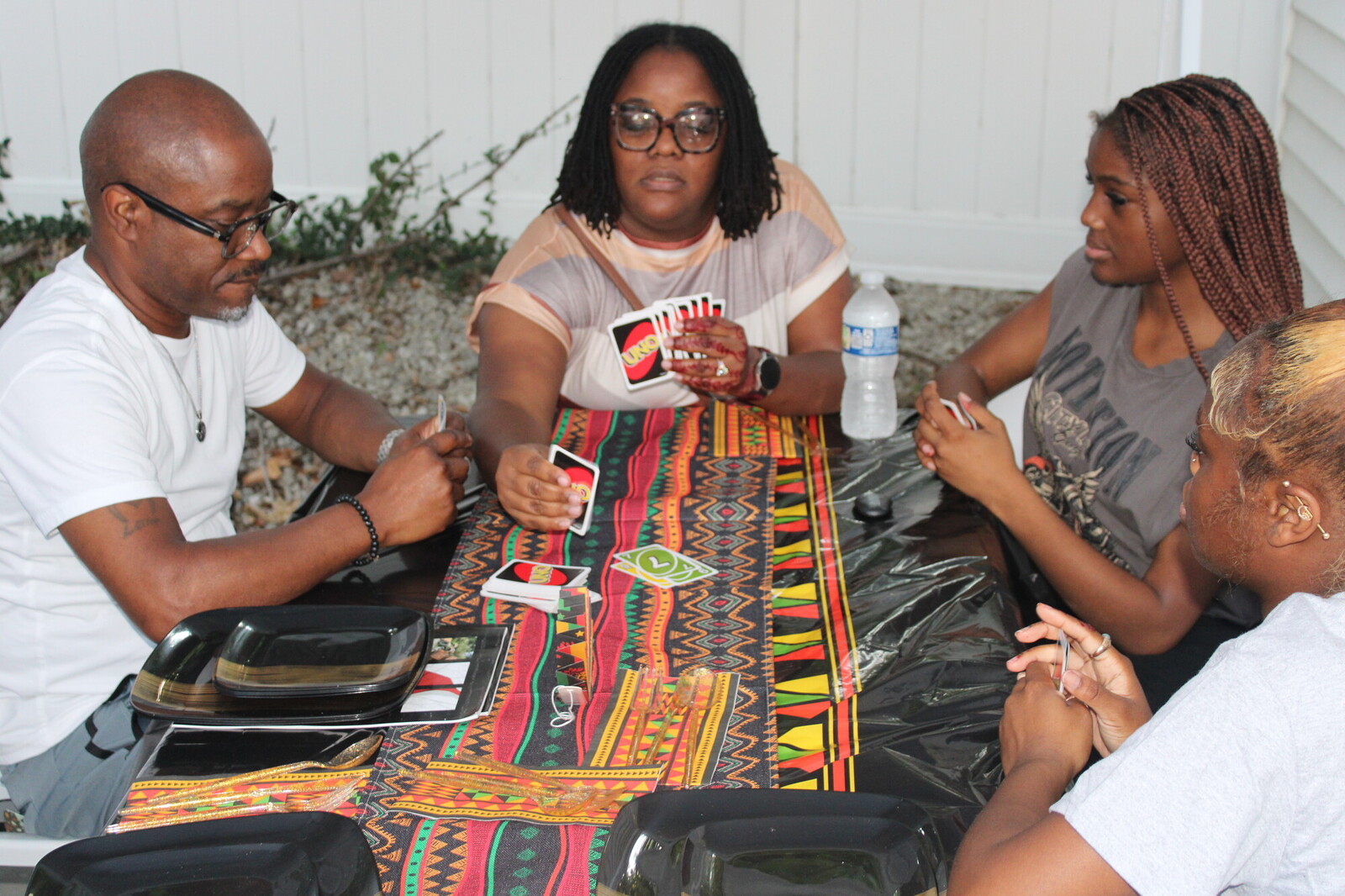
People enjoy a game of UNO at the Black August Weekend commemoration. Jazmine Starks
Alex – Looking ahead, we have an intensive in conjunction with Mass Liberation. Barbara has gone to Mass Lib before. The intention is to have a somatic healing for the cohort – to put into action the things they’ve learned over these past six weeks. And also to gain new practical skills to further their community work and activism.
With community organizing in St. Louis, you have to start with the individual activist and organizer. I think the way the Embodied Liberation work fits into the larger scheme of what we’re looking towards is you can’t help anybody if you can’t help yourself. If you don’t have the practical skills or the theory of change or the embodied knowledge – not just the words on the page. If you can’t free yourself, you can’t free anyone else.
So the Embodied Liberation program prepared these cohort members to go forward in partnership with AFSC in the direction of liberating the community by activating this knowledge in community work and activism.
One thing we’ve talked about is Bill 888 and how we can activate around organizing an intervention to repeal this law. It basically certifies kids as young as 12 to be tried as adults.
The next steps after this intensive, OK, now we act. Now we move and organize in the community and among ourselves.
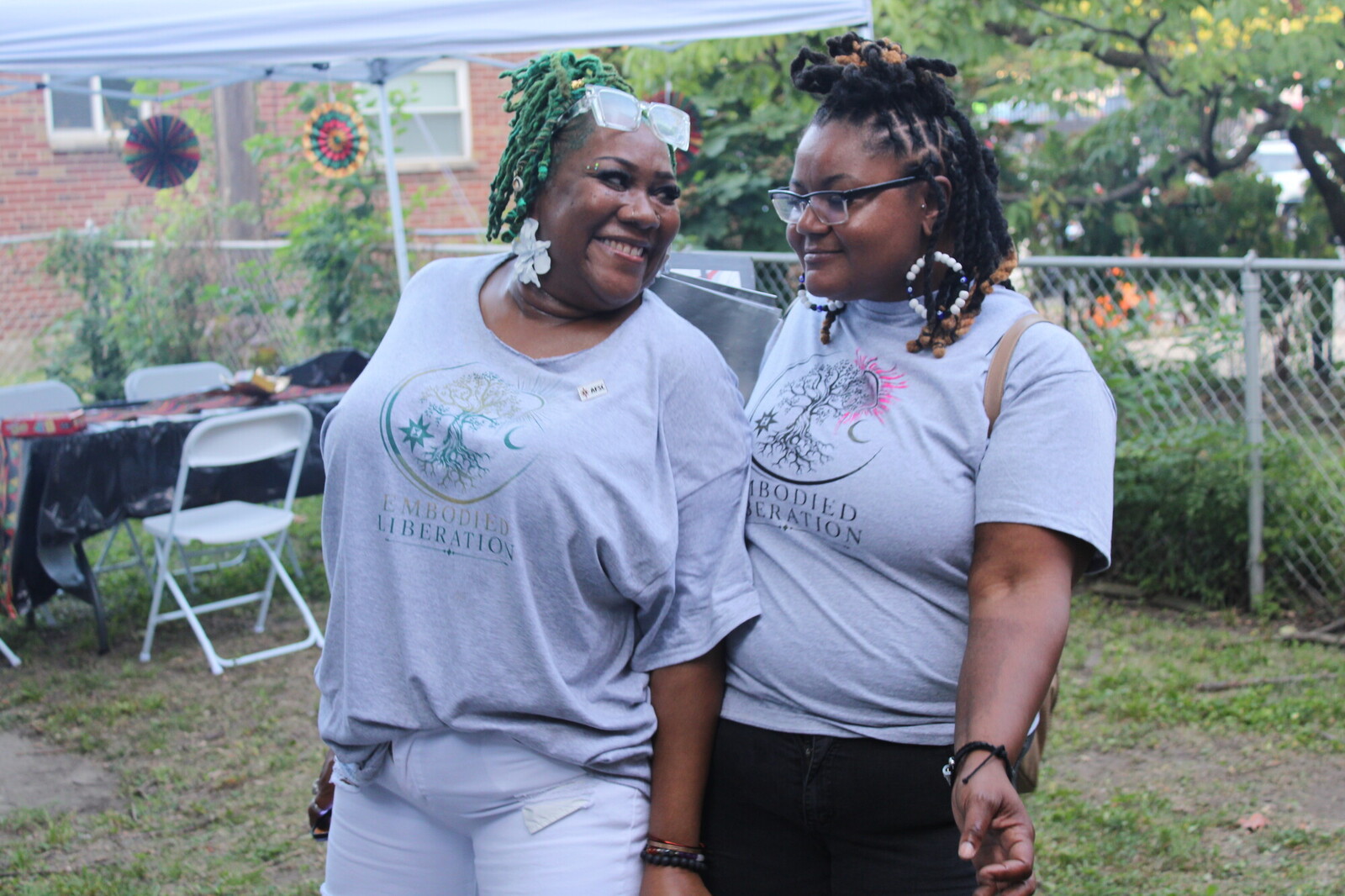
Barbara Gunn Lartey, left, shares a moment with Embodied Liberator Myisha Johnson. Jazmine Starks
Barbara – So what does this mean in terms of the larger picture? I thought about the second Thriving Thursday and the immediate impact that embodied liberation had in just a few days.
That second Movement Monday was about Roots & Story -- what are the stories we tell ourselves when we make a mistake. One of the Embodied Liberators said, because of that session, she took the initiative to ask her young adult daughter, in her 20s, for forgiveness of her parenting style.
She initially thought she was parenting the right way, but she realized that her style was causing harm. The point is, she asked for forgiveness, and it was such a tender moment.
Imagine if we have people who can navigate life a little bit differently -- if we put our ego in check or allow ourselves to be vulnerable. As Alex was describing around organizing on Bill 888, that will necessitate us being in rooms with strange bedfellows. How do we do that?
If we take a purist perspective and say, “They hurt my feelings….” If we have all that going on, how will that work for us in our body politic?
We heard this repeatedly. There was a parent of a young Embodied Liberator who called me personally to ask what I did to their child. Because something had happened between them, and her daughter said, “This is what happened, but I’m really more interested in how this made you feel. Can you tell me what you experienced so we can talk through it?”
They had never used language like that before.
We want to continue to cultivate a growing number of people who are willing to be self-reflective, honest, vulnerable and receptive to growth. Because if we don’t, we’re positioning ourselves to replicate the harms of the system we’re trying to dismantle.
We saw some immediate impact in terms of this work. As we continue to develop it, we can imagine it’s like a movement. What if our Embodied Liberation work really does become a movement within the movement?
For the Black August Weekend, Jaz Starks framed some of their still photos and had them throughout the house. And we gifted each embodied liberator with a photo of all six of them.
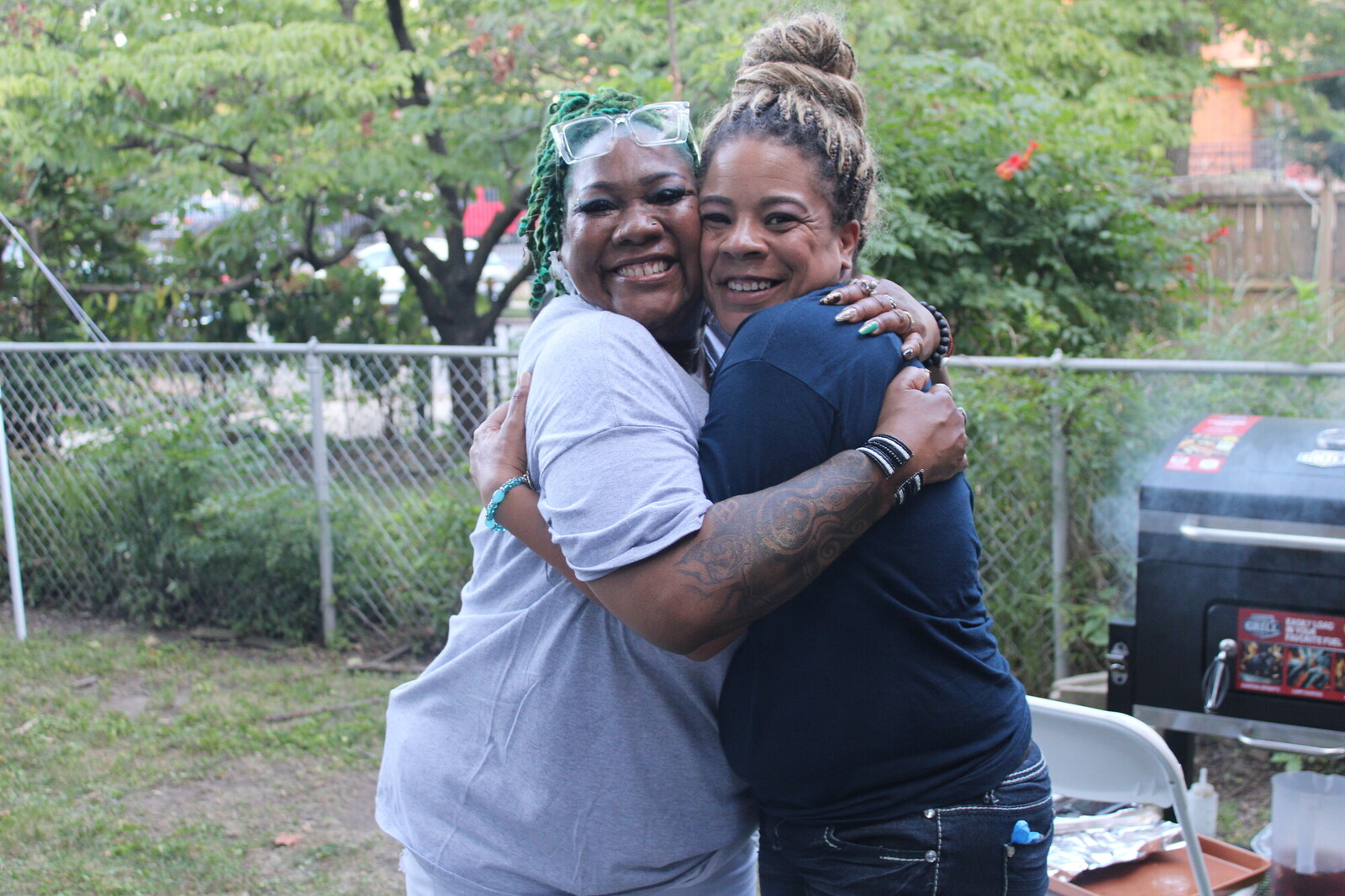
Barbara Gunn Lartey, left, shares a hug with Alexia Moore, catering parter. Jazmine Starks
There was a Festival of Nations, quite literally across the street from us. One of our community partners, Velma Bailey, was at that festival and was talking about the cohort with others. When she came back, she brought people with her who wanted to learn about the cohort.
Kee knew one of the Embodied Liberators because of their work around trans rights. They were interested in the cohort and whether they can do something with it. Organically, people are interested. I believe, at the end of the day, we truly want a community that is healed, loving and connected.
Attending the Black Intensive Groundwork (BIG) training last year was transformational for me in terms of how we as healers and lovers and changemakers – as Embodied Liberators –can show up in the world.
A lot of that experience was infused through our own work in embodied liberation. We wanted to equip this cohort with a sense of that with an eye toward a deeper, more expansive experience next spring.
We’re thinking about the Mass Liberators coming in to do this training. They’ve expressed such interest in embodied liberation and our intergenerational work that they want to lean in even further to help us build that.
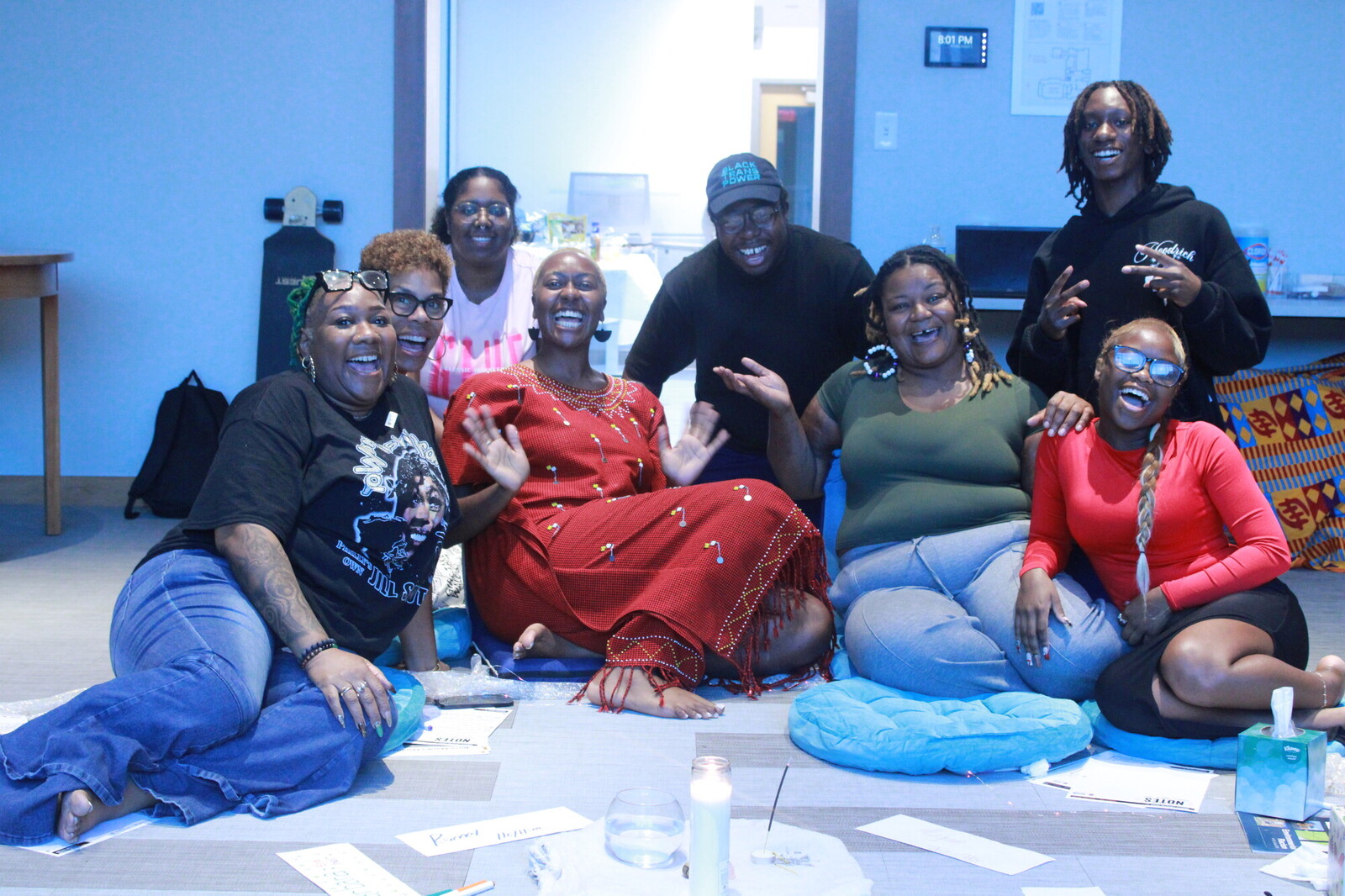
AFSC staff and the cohort of Embodied Liberators: (from left) Barbara Gunn Lartey, Anna P. Hollins, Alex Jones, Rose Marika Mwansa, Damon Latchison, Myisha Johnson, Ramel White and Megan Williams Jazmine Starks