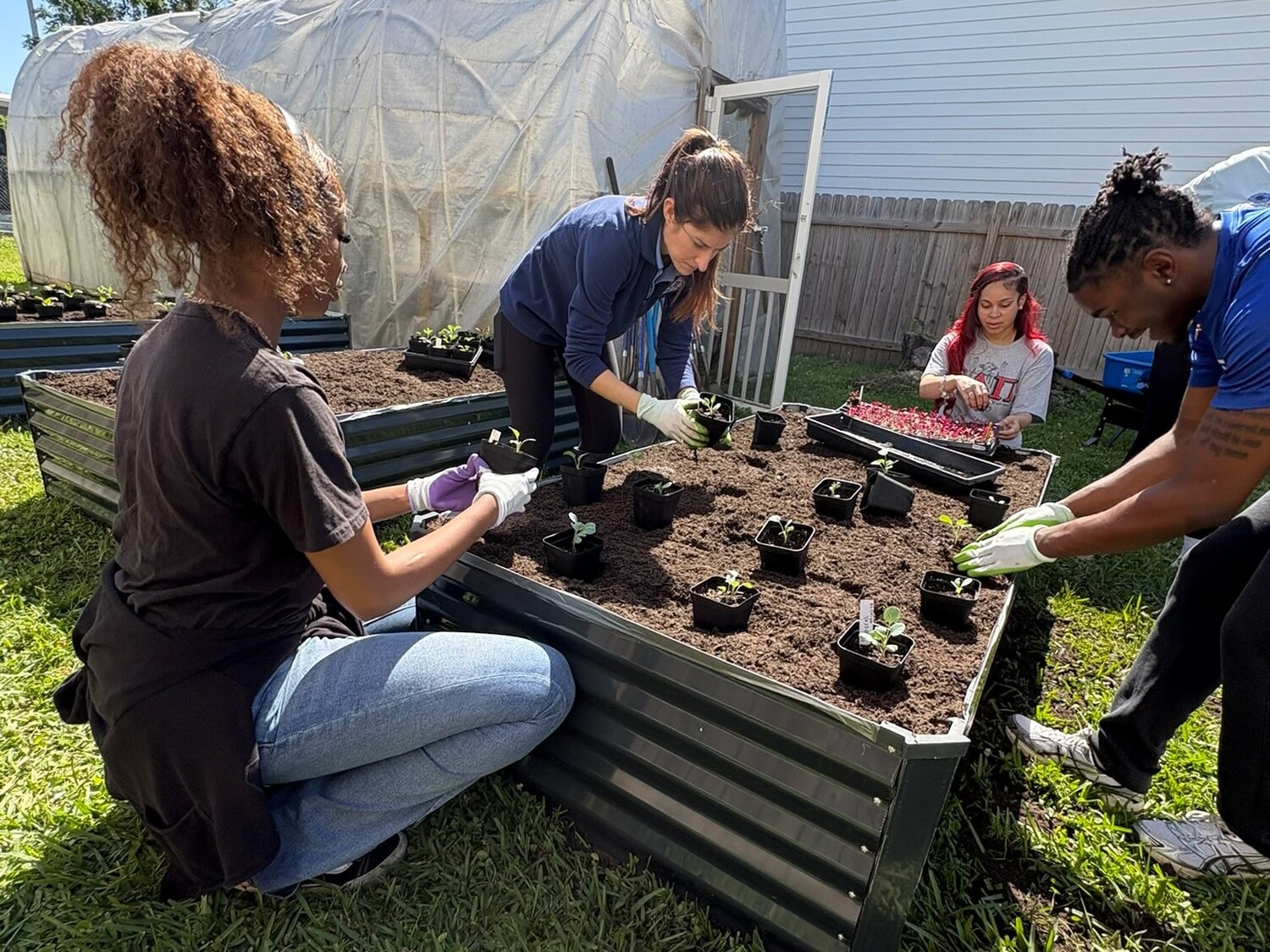
Xavier University volunteers and New Orleans District A Councilmember Aimee McCarron tend to a garden bed during a service day at Hollygrove's Forshey Street garden. Marian Minnard
When a group of elementary school students stepped into a garden in New Orleans’ Hollygrove neighborhood, their excitement was immediate. Moving beyond the four walls of their classroom, they gathered around raised beds to learn about vegetables they could grow, their nutritional value, and the importance of healthy eating. For many, it was more than a lesson—it was an opportunity to learn in community, outdoors, and in relationship to the land.
Peace by Piece New Orleans organizes and mobilizes through political education, community organizing, and urban agriculture. Based in the Hollygrove community, a historically Black neighborhood long impacted by racial and economic inequality, the program addresses food insecurity, environmental injustice, and disinvestment while cultivating local leadership and community control. The vision is clear: a self-determined community with ownership over its land, resources, and future.
That vision is not abstract. It is being built, piece by piece, across the neighborhood. There are currently five properties managed by Peace by Piece in partnership with the community and an array of project and services that give residents agency over their future.
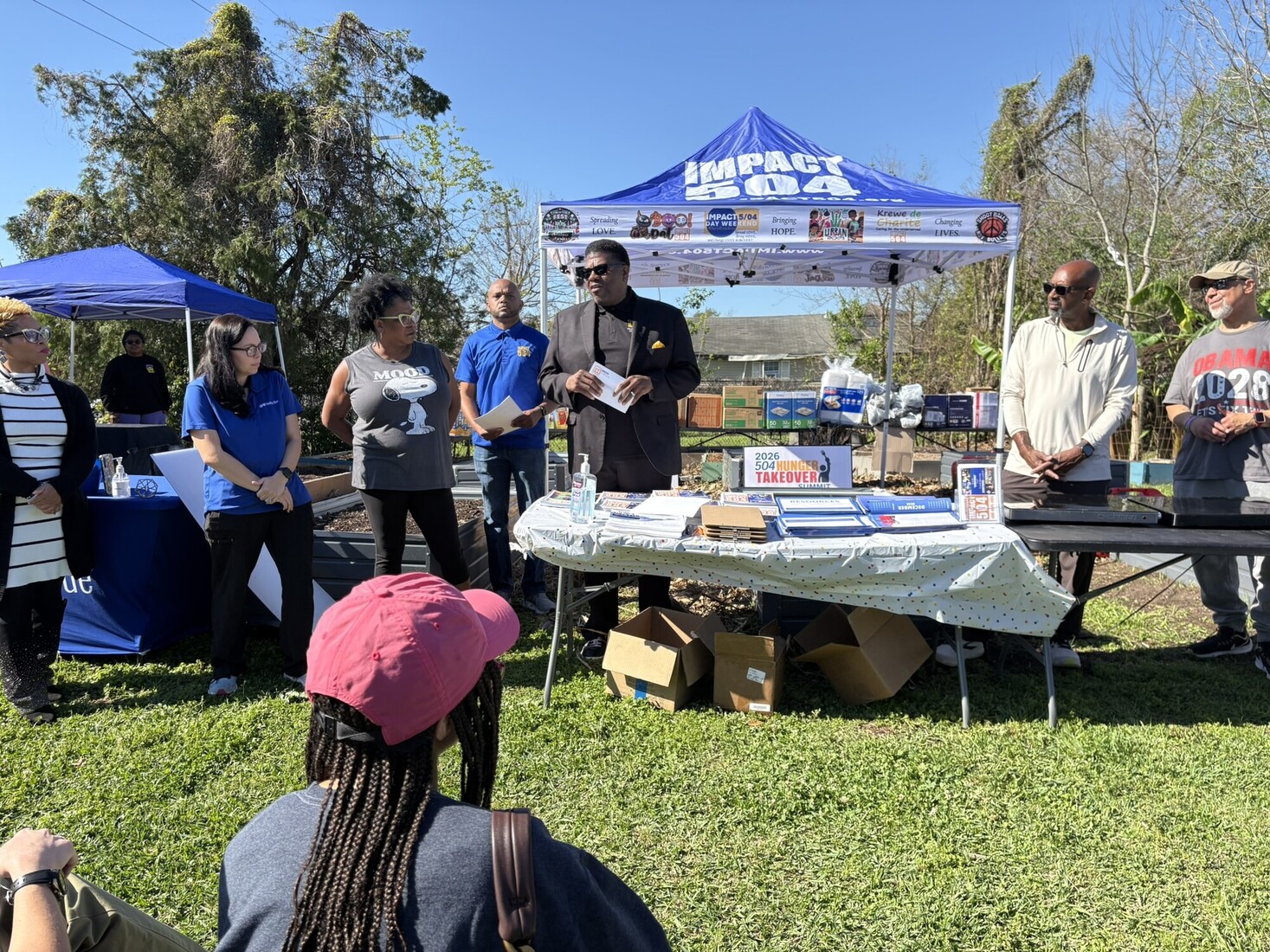
Peace by Piece staff and community members celebrate the reopening of the community fridge at Oleander Street. Blair Minnard/AFSC
At the Oleander Street property, the largest of the sites, you see a vibrant hub of activity. Garden beds stretched across the space, and a community fridge, maintained daily by a dedicated volunteer, provided consistent access to fresh food. Across the program, more than 1,700 food items have been distributed, along with over 100 hot meals prepared with community chefs. They provide both immediate care and long-term vision: meeting basic needs while building community infrastructure.
That dual approach is essential in Hollygrove. A recent household trends survey conducted by the program, based on interviews with 50 residents, revealed the depth of need and resilience in the community. Grocery shopping patterns vary widely; from once a month for low-income seniors to multiple short trips per week driven by limited cash flow and transportation. Electricity bills routinely range from $100 to $300 per month, with spikes as high as $600 during extreme weather, creating ongoing financial stress. Residents also reported inconsistent waste services, illegal dumping, and ongoing unmet needs around flood remediation and green infrastructure that directly impact neighborhood well-being.
Residents have also articulated a powerful, shared vision for the future: a cleaner, greener, safer, and more connected Hollygrove, with stronger food systems, expanded green space, intergenerational youth and elder programming, and the ability for families to remain and thrive over generations.
Peace by Piece and our partners are helping to turn that vision into reality. That transformation came into sharp focus for me at the original garden site, the place where this work began nearly a decade ago. What started as a space for growing food has evolved into something far more comprehensive. Through years of experimentation and community leadership, residents confronted a persistent challenge: flooding. Like most historically Black communities in New Orleans, Hollygrove faces significant water management issues that affect both land use and housing stability.
Through a community-led planning process, the site has been reimagined. Today, it integrates green infrastructure, including bioswales and water retention systems, that both support plant life and mitigate flooding for surrounding homes. Several neighbors who previously experienced repeated flooding will now see those impacts reduced.
Equally important, this land is now permanently under community control. Through the Hollygrove Neighbors Association and its newly established community land trust, the property will remain in community hands forever, ensuring that its benefits are shared collectively and sustained over time. This original space was never just a garden. But now it is something more, a living example of how communities can reclaim land, adapt to environmental realities, and build systems that serve collective needs, not extract from them.
What stood out most to me was both the progress and the persistence of need. I first visited Hollygrove nearly 10 years ago. The growth since then has been remarkable—land reclaimed, leadership developed, systems built. And yet, those gains have not eliminated the need for mutual aid, community care, and organizing. If anything, they highlight how necessary that work continues to be, especially in this moment.
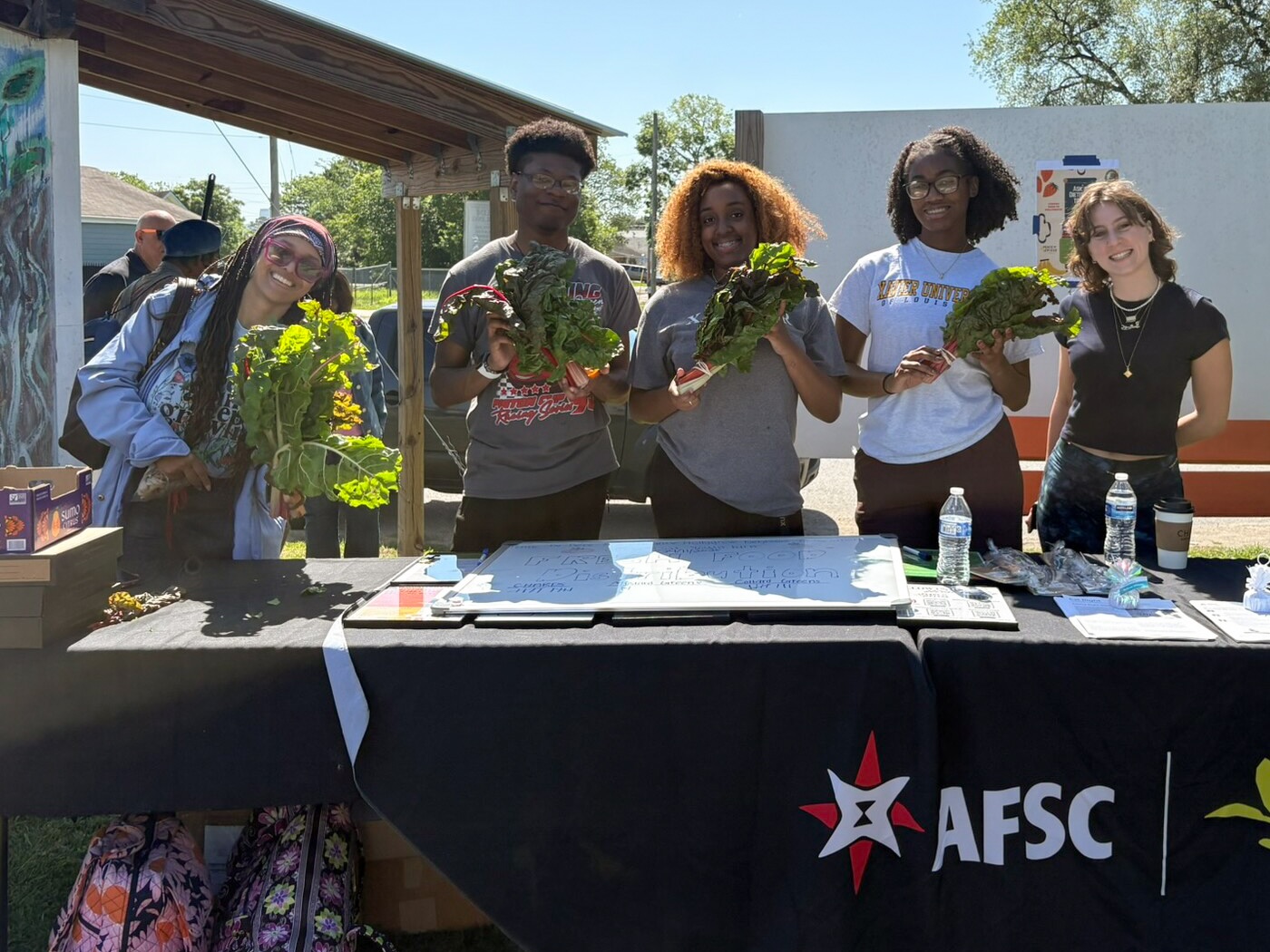
Peace by Piece staff and volunteers distribute food at Forshey Street. Marian Minnard
Peace by Piece represents what AFSC strives for at its best: long-term accompaniment, community leadership, and the development of alternatives to systems of inequality. It is a living example of the solidarity economy model that AFSC has committed to in its strategic vision—where communities build and control the resources they need to thrive.
In Hollygrove, we see what it looks like when that vision takes root. We see young people learning not only how to grow food, but how to understand agency and how to shape their future. We see land held in common rather than extracted for profit. We see infrastructure designed to sustain both people and the environment. And we see a community that, despite ongoing challenges, is building toward self-determination with clarity and purpose. Peace by Piece reminds us that transformation is not immediate—but it is possible. It is cultivated over time, grounded in relationships, and sustained by collective vision.
Learn more about AFSC's Peace by Piece New Orleans program.