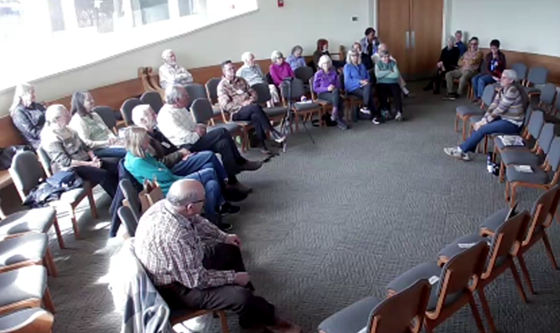
Jennifer Piper of AFSC (far right) visits with Boulder Friends Meeting.
On February 22, 2026, Jennifer Piper, Colorado Immigrant Rights Co-Program Director, shared with the Boulder Friends Meeting about AFSC’s work supporting immigrant communities. Below are excerpts. Piper describes her work as communications based. AFSC tries to ensure all our media work brings in immigrant voice analysis and experience -- something missing from a lot of coverage and debate.
AFSC Colorado today
The AFSC Colorado office has grown. Longtime staff Jordan Garcia (he/him), our Co-Program Director, focuses on organizing allies to support immigrant rights and initiatives. AFSC’s Coloradoans For Immigrant Rights (CFIR) meets twice a month on Zoom to hear updates from across the state and ideas about how to organize and be in relationship with immigrant communities.
Another longtime AFSC Colorado staff person, Gabriela Flora, has transitioned into fundraising for AFSC as a whole, meeting with supporters in the Western part of the US. She still lives in Denver.
AnnaRose Craig (they/them) joined our team last year after being a Potts Intern with us. Their work focuses on our Shut Down GEO, Aurora campaign as the coordinator. GEO is a for-profit immigrant detention center in Aurora. The federal contract will be up for renewal in October 2026.
Our newest staff person is Miriam Ordoñez Rodriguez. She’s organizing our Not1More Deportation Table in Denver, which was formed 15 years ago. That group focuses on people or their loved ones who’ve been in--or currently are in--detention or deportation proceedings. Our second Not1More chapter in Morgan County began six years ago and is staffed by Lupe Lopez, who became full-time last year.
The focus of our two Not1More Deportation Tables is for people to have mutual aid, emotional support and orientation to this giant system in which they’re caught. Often, out of that experience, people say they don’t want this to happen to anyone else in their community. AFSC supports them in organizing for policy change and bigger mutual aid efforts.
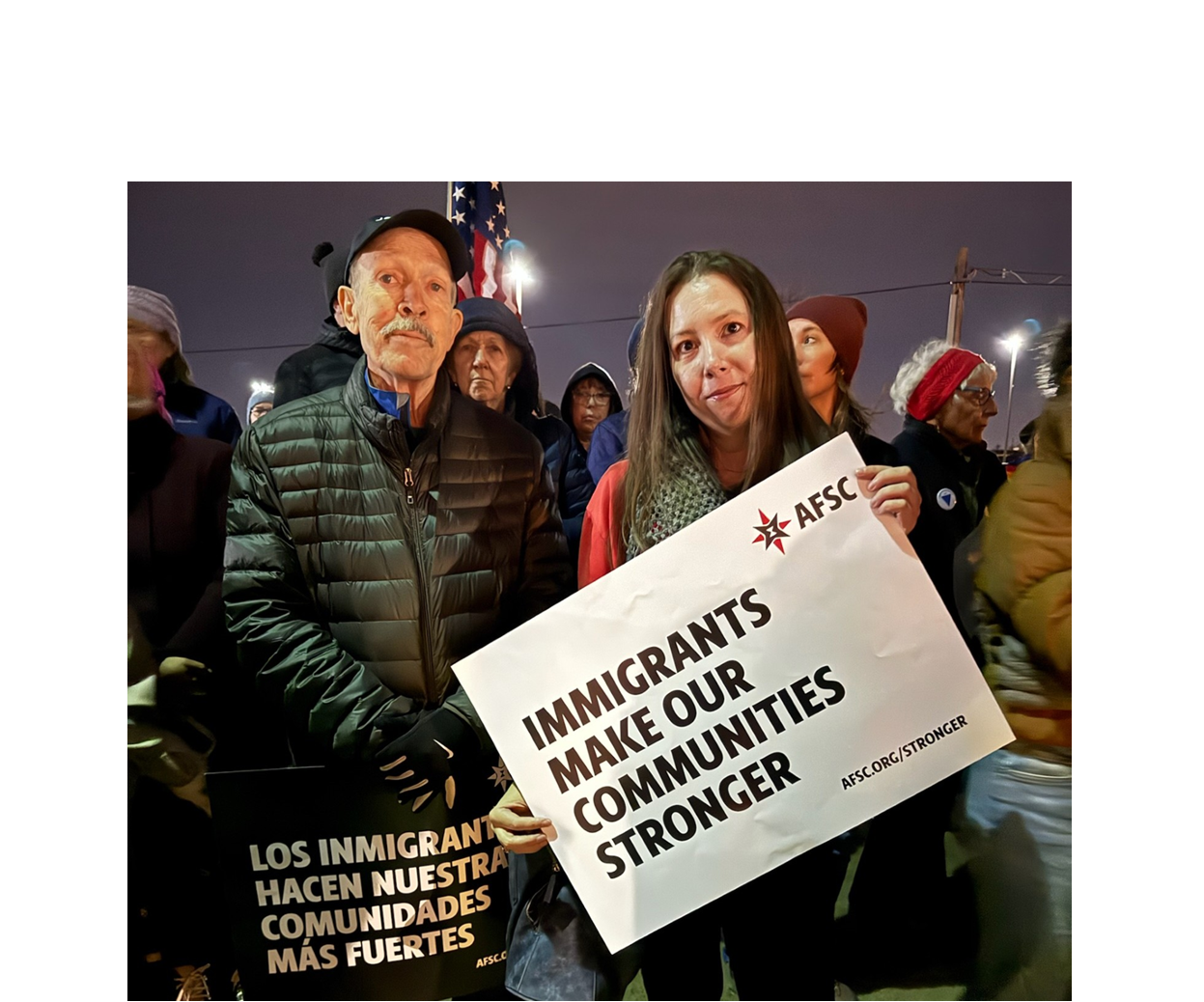
At a February 2026 vigil outside the GEO detention center in Aurora, Colorado Gabriela Flora
Shut Down GEO Campaign
The federal government takes our tax money to pay GEO to hold people in prison conditions. There are 1500 people there, and we believe it’s over capacity for the first time. The conditions have been terrible for a long time -- long before President Trump reentered office.
We have a campaign because GEO’s contract is coming up for renewal in October 2026. There’s an opportunity we rarely get to try to prevent that renewal.
The truth about this facility needs to be told, so we decided to engage the local community. We’ve done a series of door knocking in Aurora and East Denver and a community listening session in the neighborhood of GEO to see what people want instead.
Many people didn’t know what GEO was, because it looks like a warehouse. And it’s called a “processing center.” They didn’t know it was a detention facility. The campaign is quickly growing and has garnered national attention recently. To learn more, visit the Shut Down GEO coalition websiteor read our most recent report,
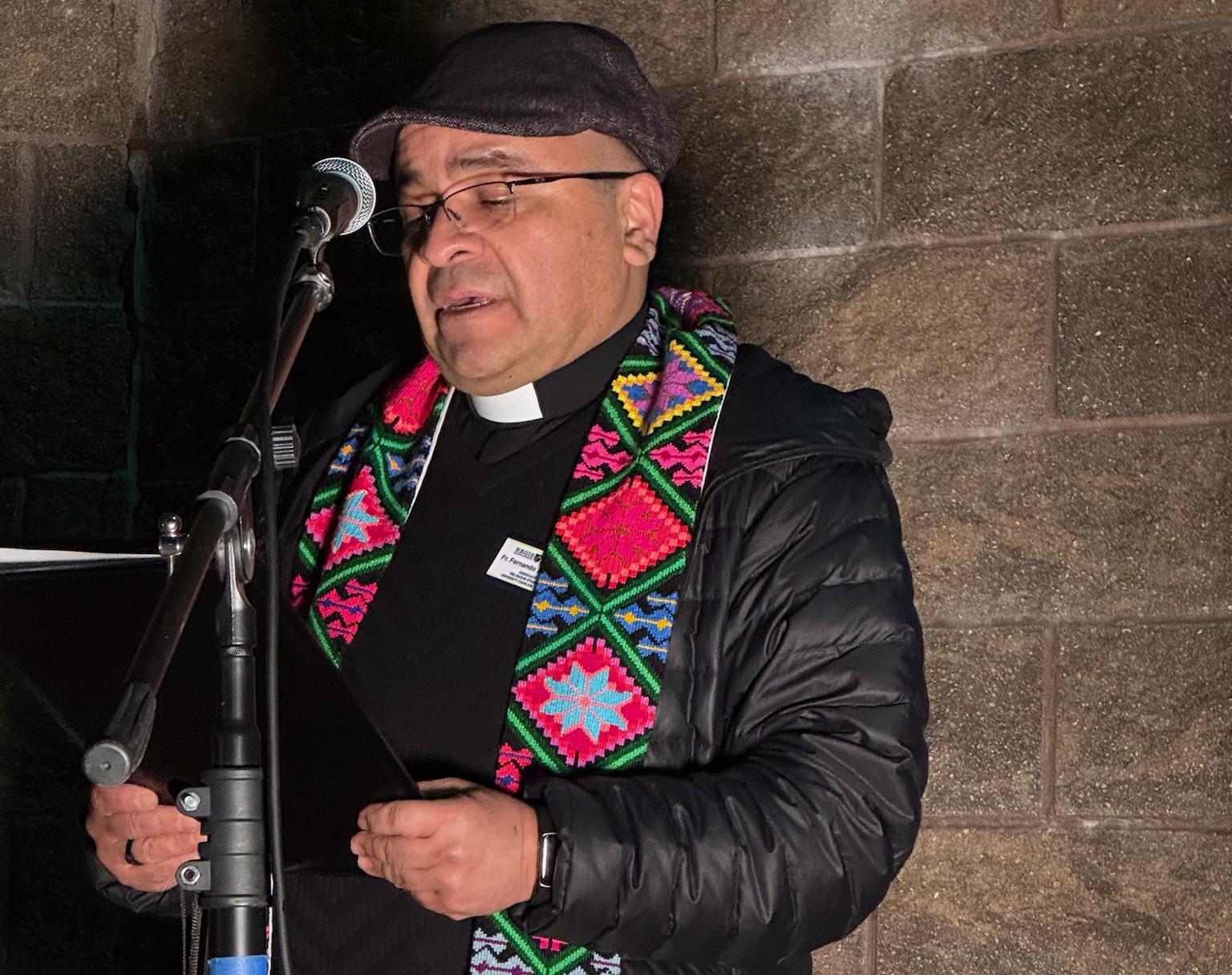
Father Fernando Álvarez Lara, SJ, an assistant professor of theology and religious studies at Regis University in Denver, speaks at the February 2026 Shut Down GEO vigil. Gabriela Flora
The current context of immigration work
There are many challenges in working for immigrant and migration justice right now. One is that the legal and federal landscape and the resources for immigration enforcement are constantly shifting. Every day there’s a new policy change that draws more people into the sights of immigration enforcement agencies, or that limits immigrants’ ability to ask for relief in court, or strips them of the status they’ve had for many years.
It’s a difficult time for our immigrant members and for allies. One thing that keeps the work strong is that so many people are getting involved. So many people are trying to be creative about how to accompany and work with their neighbors so they’re safer. The goal is to be alongside people and be in the difficulty of it – and hear from immigrants what would be most effective in creating a safer space and more connection.
Colorado Rapid Response Network
The Colorado Rapid Response Network is statewide, with 24/7 dispatchers who are bilingual volunteers. The number is 844-864-8341. When people call us when they see something, we usually get there in time to tell people their rights and to press on the ICE officials what they’re doing. In many cases when we press, ICE leaves.
I’ve been doing this work almost 25 years, and I’ve never seen ICE have a warrant from a judge. When you press on the officials, they’re surprisingly fragile. They’re such a powerful force with so many resources, but often two of us are able, with just a few questions and a cell phone, to have ICE leave our neighbors alone for that day.
We provide resources to people if they’ve had a loved one detained -- or if ICE is targeting someone and they’re not detained, we help them make a safety plan. We now have 40 new trainers on board. If you’ve been trying to get trained and haven’t been able to, ask us again.
Rapid Response work is for people who can bring a sense of groundedness to a crisis--being able to approach law enforcement in a way that’s de-escalatory and gather information. AFSC runs the dispatchers and our partner, Colorado Immigrant Rights Coalition (CIRC), runs the volunteers that go out.
Court accompaniment
AFSC staff and volunteers organize our Court Accompaniment program by training the volunteers and coordinating with those who request support to find an accompanier. Volunteers accompany people to check-ins at ICE or a court of any kind – traffic court, criminal court, or anything where you’re an immigrant and you’re worried about going alone to deal with something involving the government.
We’re there as a presence. We provide moral support for that person and communicate to authorities that this person is not alone and that they’re a part of the bigger community. We know it makes a difference in how people are treated.
Most of the people who provide accompaniment are not bilingual. Most are good at using Google Translate or apps on their phone. You’re not expected to be an expert on all of the procedures. It’s more just making sure people know they can ask questions, that you’ll stand with them.
Final thoughts
There’s a growing awareness of how punitive our immigration system is and how much it needs to change. There’s a real willingness to take risks of different types, to be with people, to accompany immigrants and keep them safer until we get different policies.
The most effective thing we can do in the US right now is expand our community. That may mean organizing your own neighbors or being ready to provide food or rides. Maybe you live in an immigrant-majority area and you can start having people over for potlucks.
Fascism tries to make us more isolated from each other. The biggest antidote, the thing that will be our greatest strength, is to know the people right where we live, to have connections within neighborhoods that are most targeted. Everything else will grow from there.
I really believe in the power of that connection and love. That’s where most of our energy over the next several months will be going. Right on our block, right where we live, the most countercultural thing we can do is know our neighbors and be vulnerable with each other. Find out what each other needs. So many of us practiced that during COVID – and we need it again today.
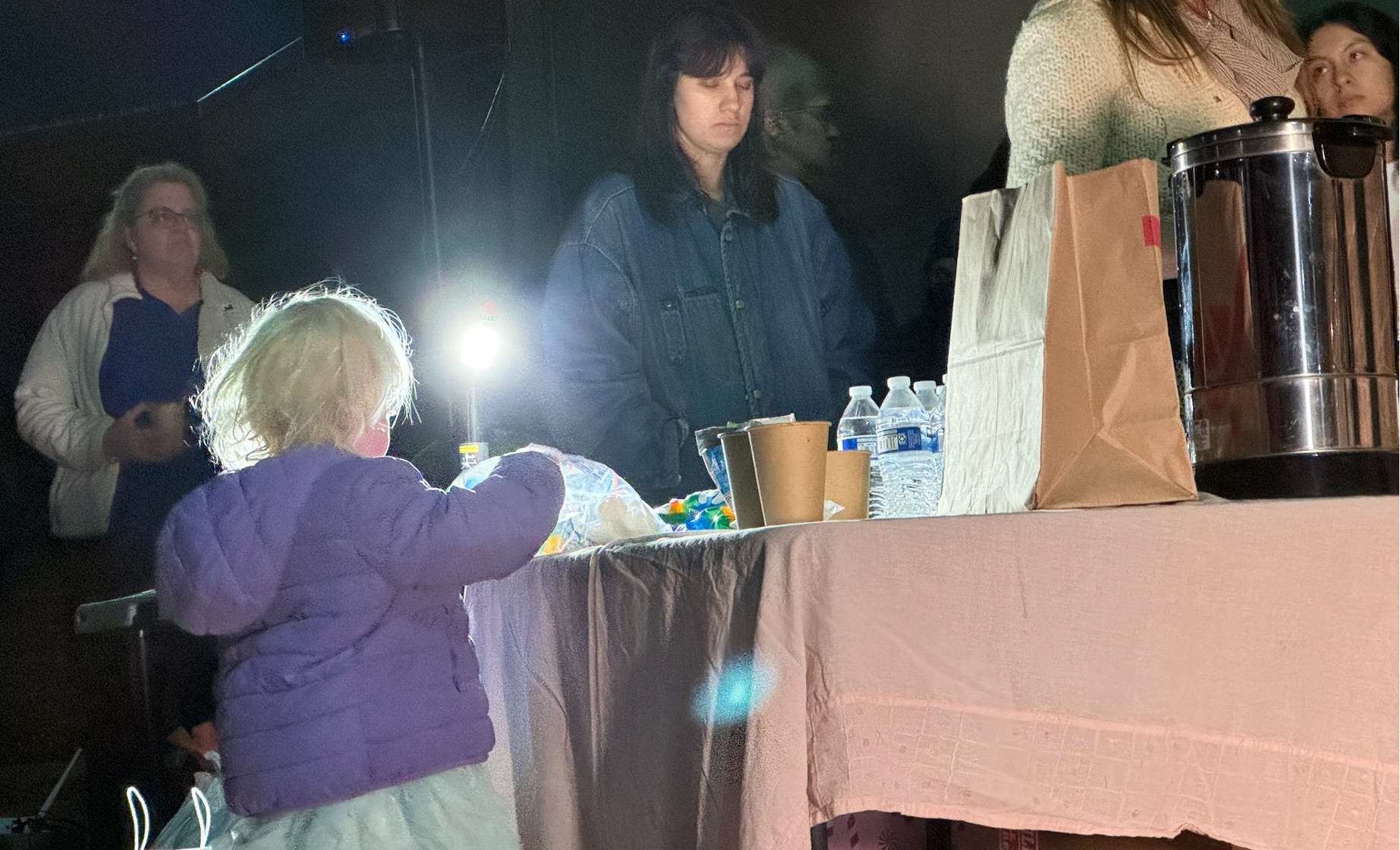
Shut Down GEO vigil participants at the refreshment table Gabriela Flora