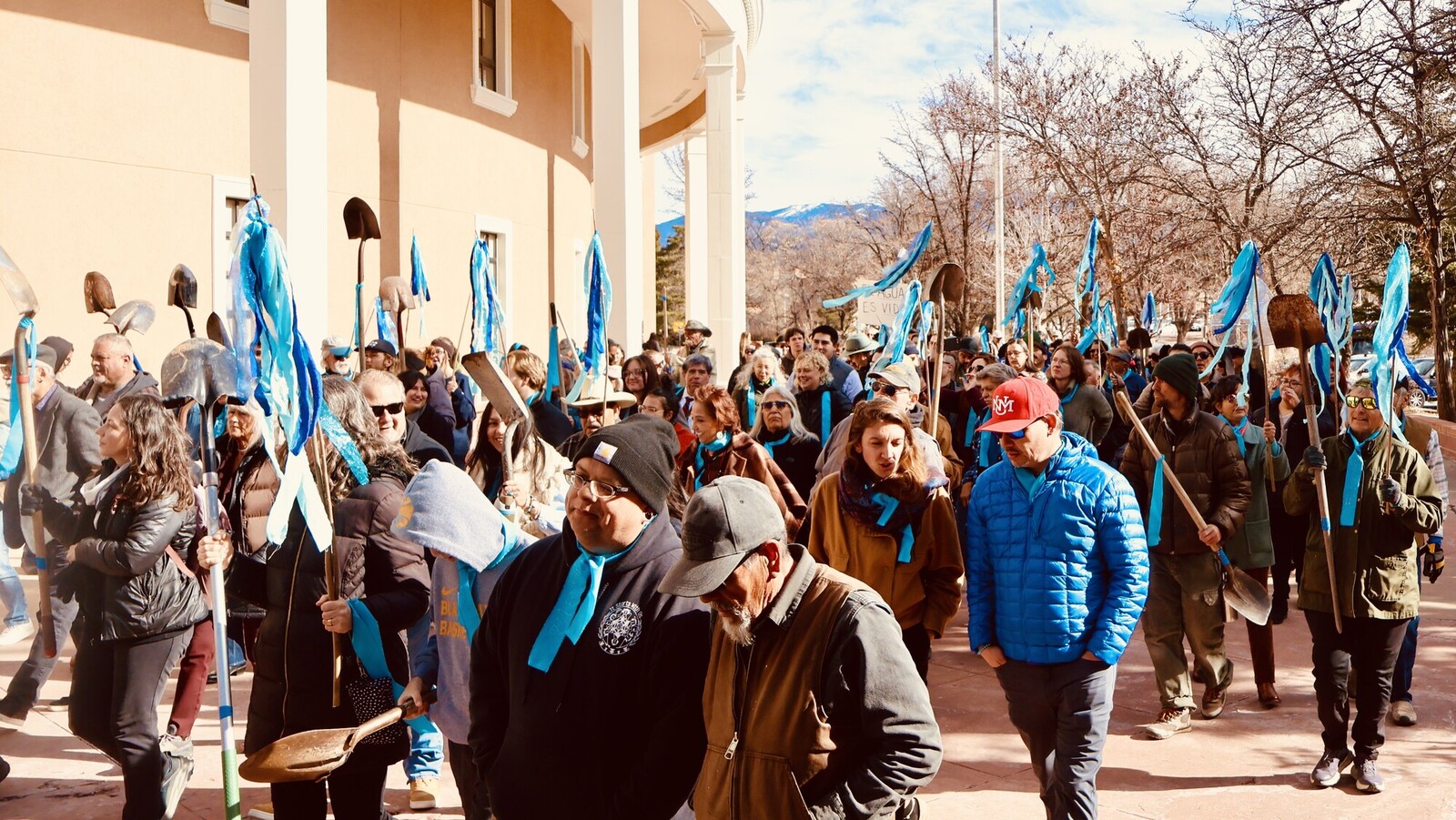
Acequia Day march around New Mexico State Capitol, known as the Roundhouse Jason Rodriguez, New Mexico Acequia Association
Acequia Day is a day at the New Mexico State Capitol, called “The Roundhouse,” to celebrate, honor and advocate for the acequias of New Mexico. It's a very inclusive event.
As New Mexico staff have shared before, acequias are more than one thing. An acequia is the physical irrigation, the water conveyance infrastructure that diverts snowmelt from the rivers and streams onto the agricultural fields. It’s also the community of people that those irrigation systems serve -- and the governments elected by the community served by the ditches
These are actually recognized political subdivisions of the state. The political constituents are known as parciantes or acequieros. A parciante is the legal term found in bylaws. Acequiero is a more contemporary word – it’s a play on words. Acequia plus querer, which is "to love" in Spanish. There's another word in our culture that means the “love of place” – querencia.
Acequia Day helps us celebrate and raise the awareness of legislators so they can see how many people are acequieros. Over 700 acequias exist in 20 of New Mexico's 33 counties.
Teaming up with Treaty Day
For the first time ever, we had Acequia Day on Treaty Day, which is the anniversary of the signing of the Treaty of Guadelupe Hildago. That’s very logical to do because because our acequia rights are guaranteed by that treaty.
People forget that New Mexico is treaty territory. Our laws, our annexation or entrance into the US, is based on that treaty. It guarantees the land rights of the land grants, known as mercedes.
This year, on Treaty Day, we teamed up with the land grants and acequias, which one speaker referred to as the holy trinity of our culture – the land, the water and the faith. The point is you don’t really need a centralized government – a Washington or a Wall Street. If you have the land, the water and your faith, that’s all you need.
Back in the colonial period, they’d say the king is in Spain, the Pope is in Rome, God is in heaven, and we’re here. All we have is each other and the faith that the land provides. We have this system that allows us take care of ourselves and our neighbors. Acequia Day is a chance to celebrate that.
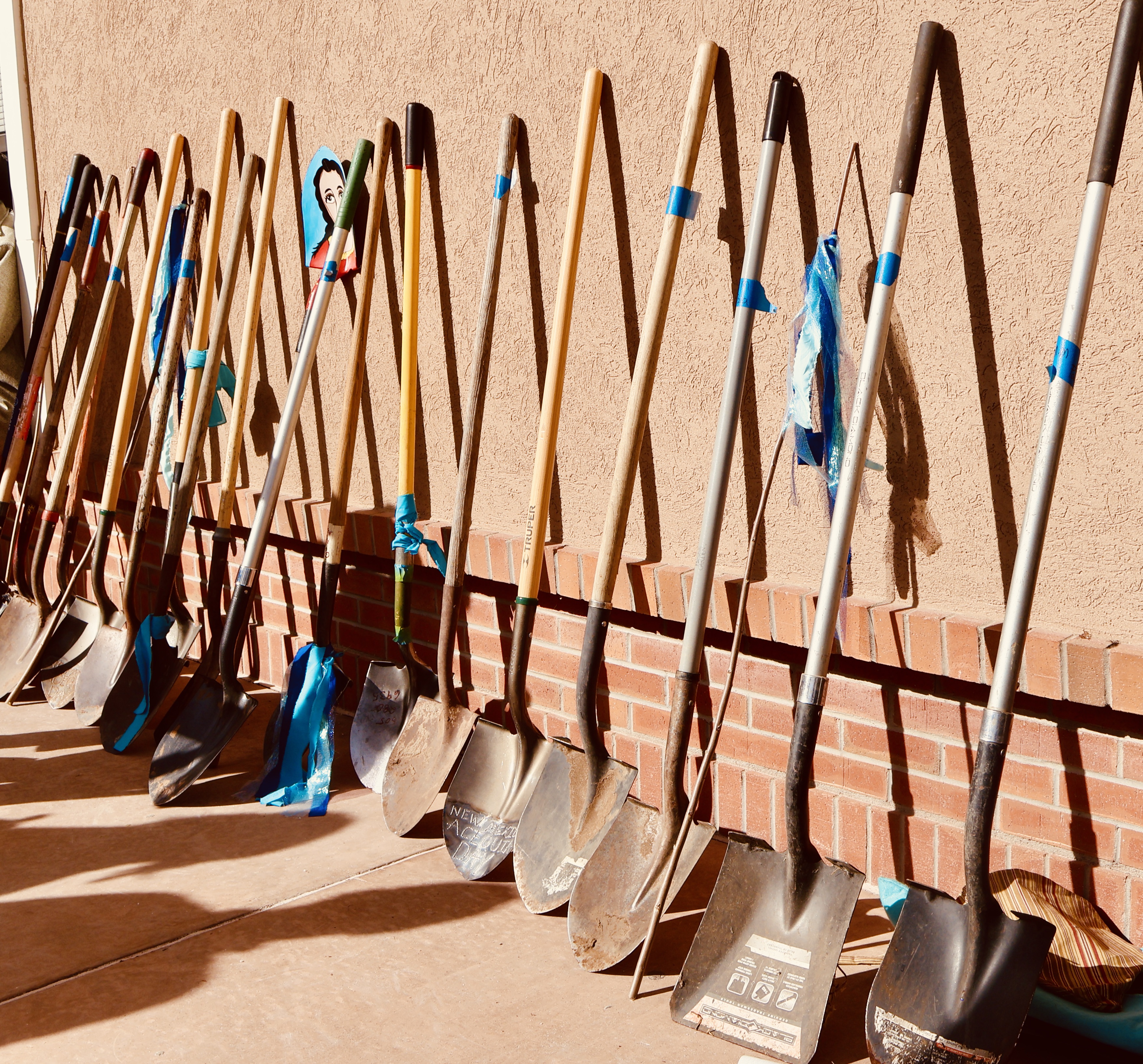
Palas (or shovels) lined up outside the Roundhouse while parciantes head inside to listen to speakers and talk to their legislators. Palas are our primary tool as acequieros, used to clean and maintain the acequias as well as to manage irrigation water on our fields. One of the chants we use often is “Pala Power!” Jason Rodriguez, New Mexico Acequia Association
Bills pending in the legislature
There are a number of bills that pertain to the acequia community – some are good, some are really bad. Acequia Day is an opportunity to come to the statehouse, meet up with others in community, gather at the seat of power, be with our neighbors, and meet with our representatives and senators to advocate on legislation.
At the state level, there’s $2.5M earmarked for acequia projects, infrastructure, and capital improvements. Yet after the recent fires and floods, an estimated $60-70M is needed to address the damages incurred. It's obvious that the acequia system is severely underfunded.
At Acequia Day, the land grant and acequia communities came together to try to pass landmark legislation to provide funding for all the various communities with a significant amount of money. Unfortunately, it doesn't look like our funding bill will pass this year, but we will keep trying.
A celebration of the foundation of New Mexico
During Acequia Day, AFSC helps out with snacks and coffee, equipment and general logistics. In past years, we’ve helped march and carry signs - to show up and show solidarity.
There’s always a lot of music, speeches and poetry. It’s an opportunity to celebrate the culture and to teach others about it.
Acequias are the foundations, the building blocks of our communities. New Mexico looks like it does because of the acequias and land grants. The makeup of our communities – the built environment and the culture – is based on these things.
A lot of people don’t realize how important they are, and not just for democracy. These are democratically-run infrastructures or public utilities. Acequias are also key for the state's hydrology.
These acequias and the watershed management of the land grants keep the land grants healthy. (The land is from the acequias up to the mountains, and the acequias are from the foothills to the river bottoms – the agricultural lands, or arable land.)
The acequias take all the runoff and distribute it across a wider area. They recharge the aquifers, which supply a lot of the water for municipalities. When those acequias aren’t running efficiently or when the water rights get transferred out of the system for development, that's a real problem.
A lot of water diversion is for resource development – oil and gas, housing, real estate development. And now with AI, there are a lot of data centers, which require a tremendous amount of water.
When that water gets pulled out of the acequias, first and foremost there’s not enough water left in the system to efficiently deliver the water. It also takes water out of the canals and out of the fields, and those aquifers cease to recharge.
Therein lies the break. There are local leaders who say it's fine if the acequias go dry, we still have these wells. But they're not acknowledging that if we stop the water from flowing, from recharging, then it's only a matter of time until these wells dry up.
And that’s desertification. Once we lose it, it won’t come back. It’s incredibly important for the survival of New Mexico.
My story
I am a parciante, an acequiero. I came to AFSC through the New Mexico Acequia Association, which is an AFSC partner. A majority of the farmers we work with are parciantes/acequieros. That’s a good chunk of our constituency, our stakeholders.
I'm proud to work with others to protect our acequias.
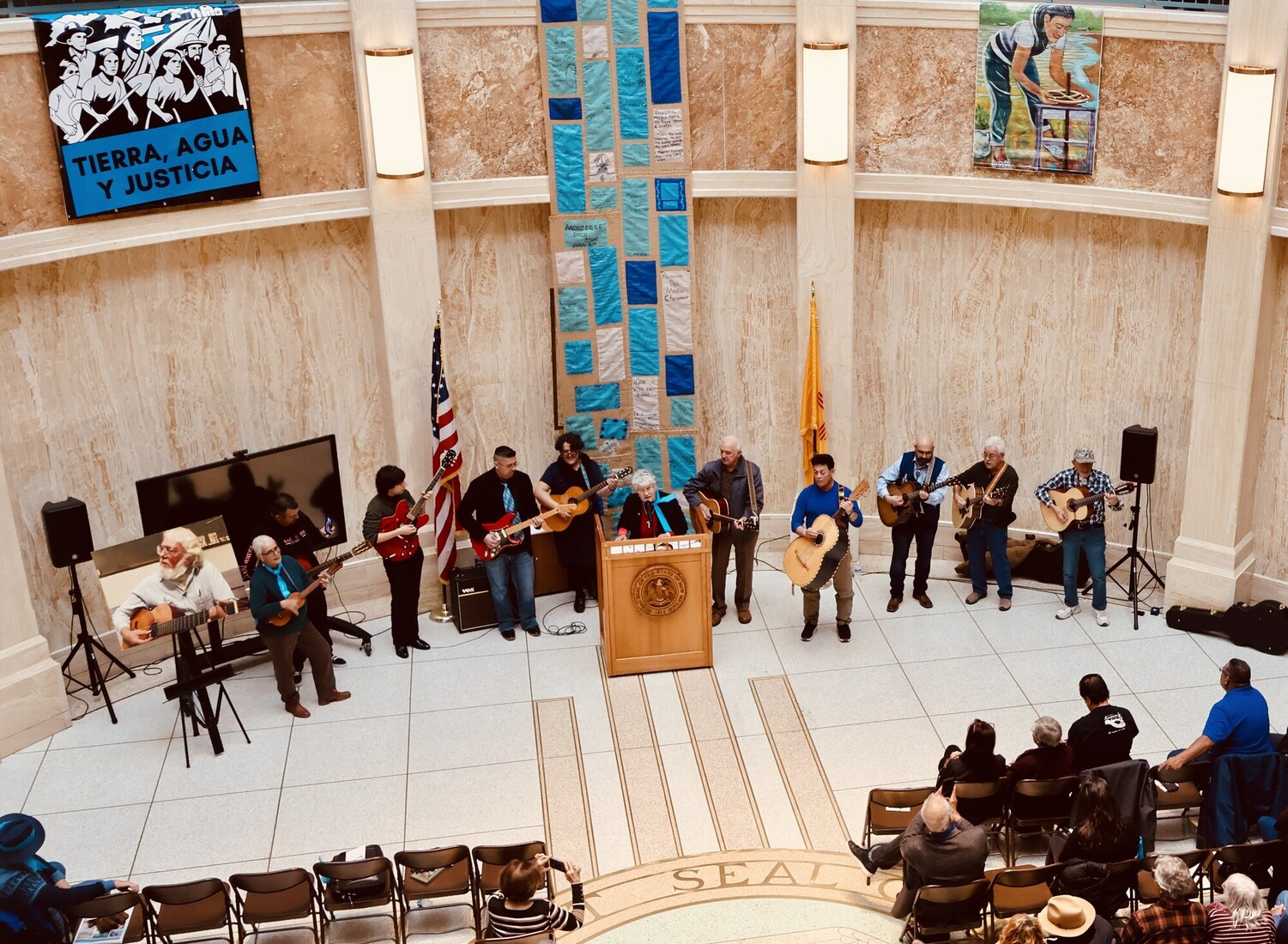
Speakers and musicians inside the capitol rotunda on Acequia Day Jason Rodriguez, New Mexico Acequia Association