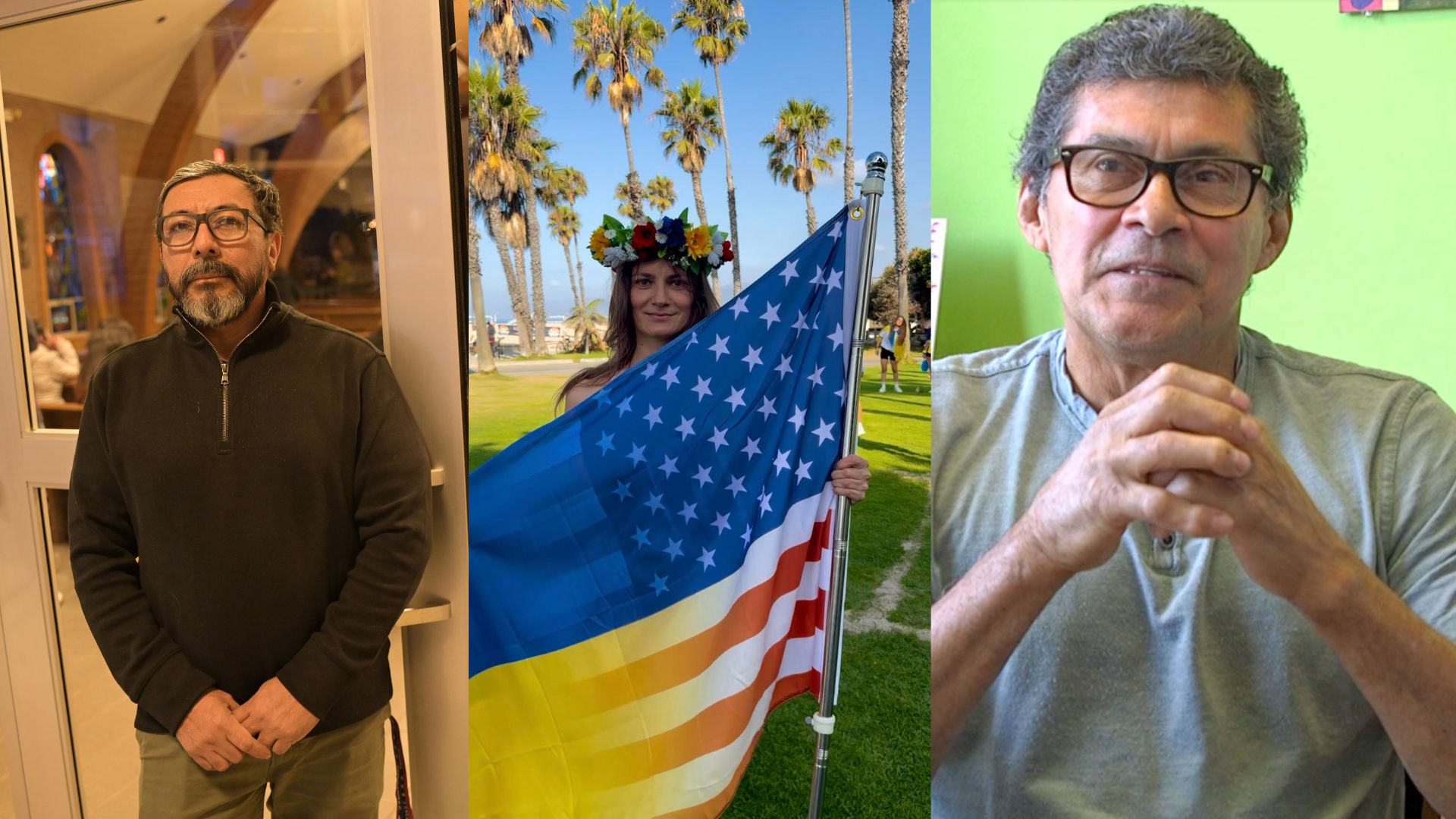
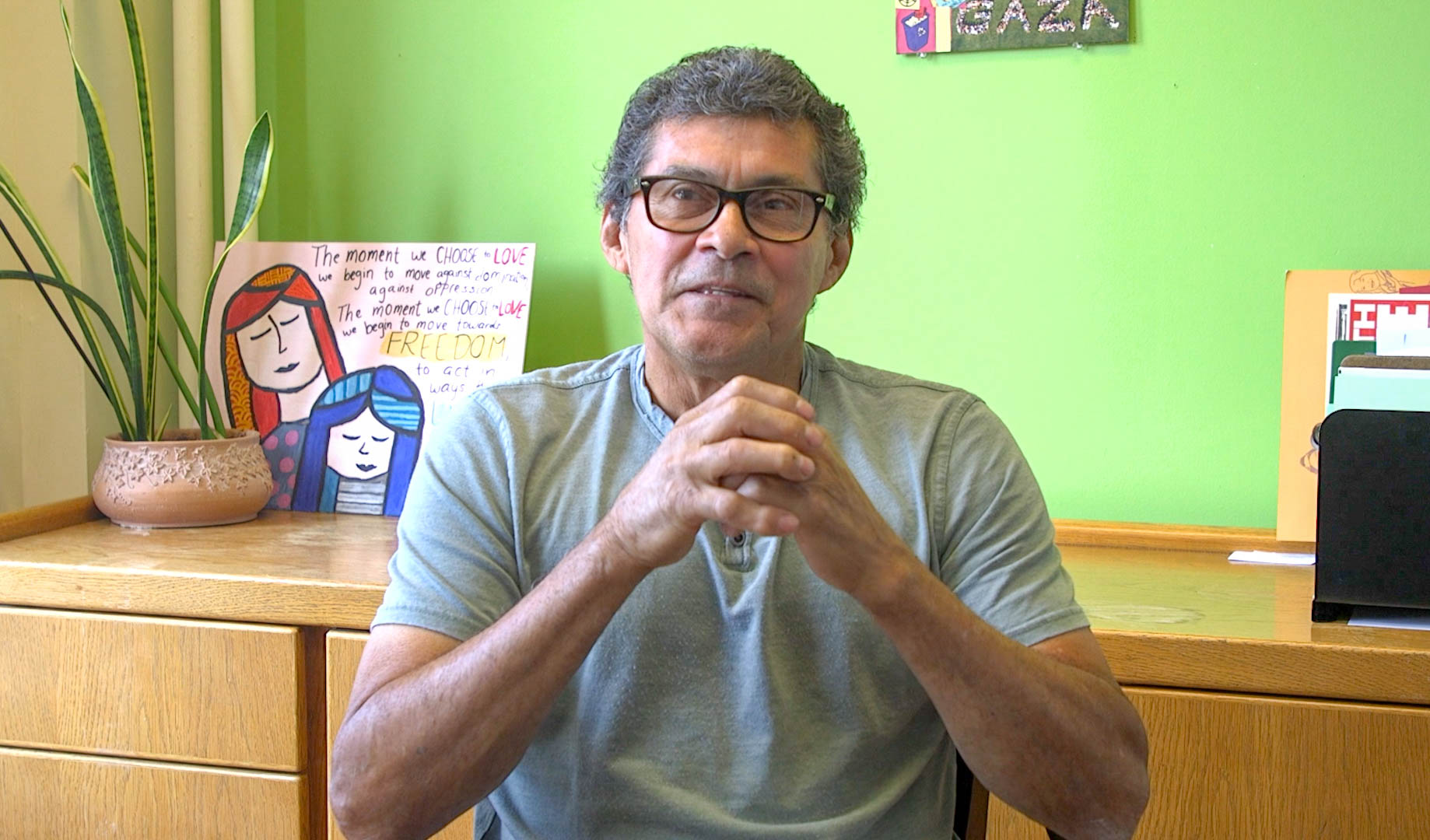
Watch this video to hear from Don Luis. Nathaniel Doubleday/AFSC
Don Luis fled civil war in El Salvador in 1995. For 30 years, he’s lived in New Jersey with Temporary Protected Status (TPS). The program protects from deportation hundreds of thousands of immigrants who have escaped war, natural disasters, or other crises. But the Trump administration is working to dismantle it. With support from AFSC, Don Luis is organizing with fellow TPS holders to defend their right to stay in the U.S. where they belong.
Here's what he shared in an interview with AFSC staff (translated from Spanish):
I arrived in this country in 1995. Moving was nothing easy—I never thought of doing it. In El Salvador, we went through a civil war for over 12 years. In that era, it was a crime just to be young. You were accused of being a guerrilla. Most of us were obligated to leave the country because there were no other alternatives to feel safe.
I had to move from El Salvador to Belize. I left my studies, and it was very difficult. I lived in Belize for a while, but the population was small, and the jobs were temporary—you worked four or five months out of the year. So, I moved to the U.S., and I've lived here for 30 years.
In 2001, there was an opportunity for the first time to have TPS. I’ve depended on that permit for all these years I’ve lived in New Jersey. We are going on three decades of struggling to maintain it.
For me, TPS has been a blessing. We have been able to come out of the shadows and work freely. It’s made it easier for us to have certain benefits that many immigrants don’t have. It gave us the opportunity to drive, to have companies, to buy a house. For some of us, the dreams we brought with us have become reality.
But we are on a loose rope. We don’t know when they’ll take it away from us. And that is very uncomfortable.
Every period of time when TPS is going to be cancelled, we are always in panic. We’re thinking: Are we going to have to go back into hiding? What’s going to happen?
Our countries of origin are not in the conditions to receive us and be able to start making a life there. Here in the U.S., we've built our lives. TPS has given us a way to feel stable, but only for a short period. We have to renew our permits every 18 months, and it goes by so fast. Then you feel like you’re almost losing control because you don’t sleep. You're thinking: Am I going to lose my job? What’s going to happen to my family? It terrifies you.
Losing TPS would affect everything, in every sense. It would affect family support. We wouldn't have a driver's license, we wouldn’t have any kind of benefits. We’d be completely in limbo. Those of us who currently have TPS would face abandonment and struggle. We are very vulnerable when we don't have documents to claim anything. Day laborers could face abuse from employers. You’re forced to work for whatever they pay you because you have no right to complain. The possibility of an employer calling immigration and turning you in so they don’t have to pay you is already happening. That’s what's happening in this country.
This is why I organize. I’ve always been someone who knows that understanding the laws is one of the most important things—knowing what laws might benefit me, where I can go to seek protection. I got very involved in learning which laws can protect me in this country and which ones can harm me. And I got involved in the work to defend the TPS program.
I’ve been to many demonstrations in many places. Being part of a good TPS community has been very important. We’ve been able to overcome difficult times where they’ve almost kicked us out. Even though we’re hard workers, contributing all our taxes and trying to do the best we can to remain without any legal problems, we’ve been persecuted by immigration laws without there being a reason. In the last five years, we’ve been criminalized in a way that is so terrible. All of that has put fear in the TPS community—not just from my country, but in all the countries involved in this protected status.
I’ve worked hard to inform the TPS community and all those I've known for years who don't have any status. The struggle is long. You have to walk a lot, distribute flyers, hold meetings—all in order to let them know what's happening.
Outside of all this organizing work, there are many people spreading misinformation and fear—intimidating the community more than helping it grow stronger. But I will continue to advocate for the TPS community and for those who don’t have the privilege of having this permit, to bring them good information that will be of great benefit.
The American Friends Service Committee has been essential to this work. I started coming to AFSC years ago. I came here and studied for several hours, many hours—coming from Red Bank every Saturday to receive a four-hour training program. This helped me learn more about community communication.
I visited other states where I was invited to participate in other training programs. It brought me closer to the community, and I learned a lot about people’s suffering. You grow stronger every time you help someone. You feel good knowing that you’ve put something into each person’s life so they can try to defend their rights.
I'm not just thinking about TPS holders. Every immigrant in this country has the right to have their rights respected and to be given the opportunity to have legal status. TPS holders and non-TPS holders—we play such an important part in the national economy of this country. We have been monitored all these years. We have had to go year after year for fingerprints. We have had to pay permits. There is nothing to hide there.
We deserve to be given the privilege of having our residency. All of us who’ve worked, who’ve struggled, who’ve lived well and done things right in this country—we deserve the opportunity to be legal and not be criminalized.
We are Americans. All Latinos who live on this American continent are Americans. A wire fence shouldn’t determine our rights. We have the right to be here.