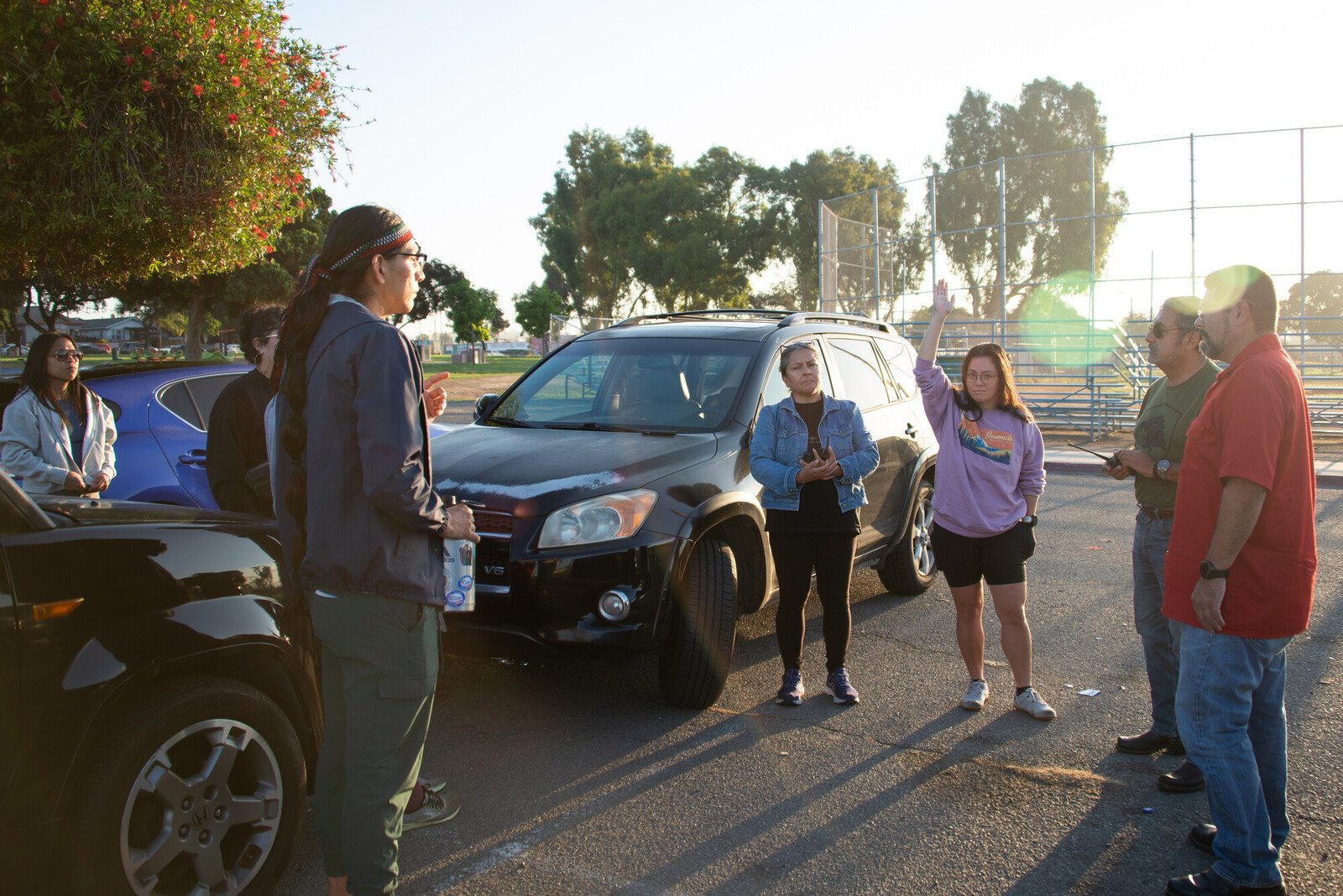
AFSC staff and community members prepare to patrol a neighborhood for ICE and Border Patrol activity. Nathaniel Doubleday/AFSC
We all deserve to live in safety and peace—wherever we were born, wherever our journeys have taken us, wherever we call home.
But today, the Trump administration is working to undermine these values. Since taking office, the administration has detained and deported hundreds of thousands of immigrants. It has violently separated loved ones, deployed armed federal agents into neighborhoods, and created a culture of fear. These impacts are being felt in the U.S. and beyond.
But communities are refusing to accept this cruelty as normal. They are organizing. They are protecting one another. They are building power. AFSC is proud to stand alongside them. Here, four of our staff members share what that work looks like on the ground.
In San Diego, neighbors watch out for each other.
It’s just past 6 a.m. in Barrio Logan, a working-class Mexican neighborhood in San Diego. We’re on our usual volunteer patrol. We spot a white Ford Explorer with deeply tinted windows. Small lights inside hint it may be a government vehicle. Two figures sit in the front seats.
They’re ICE agents.
Within seconds, we radio other volunteers. “White Ford Explorer. Turning onto Ocean View, heading south on 32nd Street.” We start live-streaming on the patrol network’s Facebook page. Hundreds of thousands of followers are alerted. By the time the vehicle realizes it has been spotted, the community has already been warned. That morning, the SUV drives away without making any arrests.
This is the work of community patrols organized by Union del Barrio. AFSC’s U.S.-Mexico Border Program has supported this volunteer network for years. The patrols began in 1992 as part of a growing movement against police brutality. Over time, they expanded to monitor immigration enforcement. Today, these patrols operate in more than a dozen San Diego neighborhoods. Trained volunteers drive through their communities several days a week, often in the early morning hours when federal agents are most likely to operate.
AFSC provides the network with crucial support: bullhorns, GoPro cameras, and training. Our staff are long-term members who patrol at least twice a week. Many more community members serve as eyes and ears. These volunteers call a hotline when they spot enforcement nearby. Knowing there may be an operation in their area helps local residents make informed decisions. That includes deciding whether to stay home, have someone else take their children to school, or whether to adjust their routines.
The patrols have also prompted important changes at the local level. When volunteers spotted ICE entering a local elementary school last fall, they broadcast warnings to the public. Agents left without making arrests. And the incident led the school district to implement new protections and notify parents directly about ICE activity.
These patrols work because of something technology cannot replace: knowing and caring for our neighbors. Everyone has a role to play. Everyone can participate.
This is how we reclaim our neighborhoods and protect each other. It starts with rebuilding the social fabric of communities that have been under assault for so long.
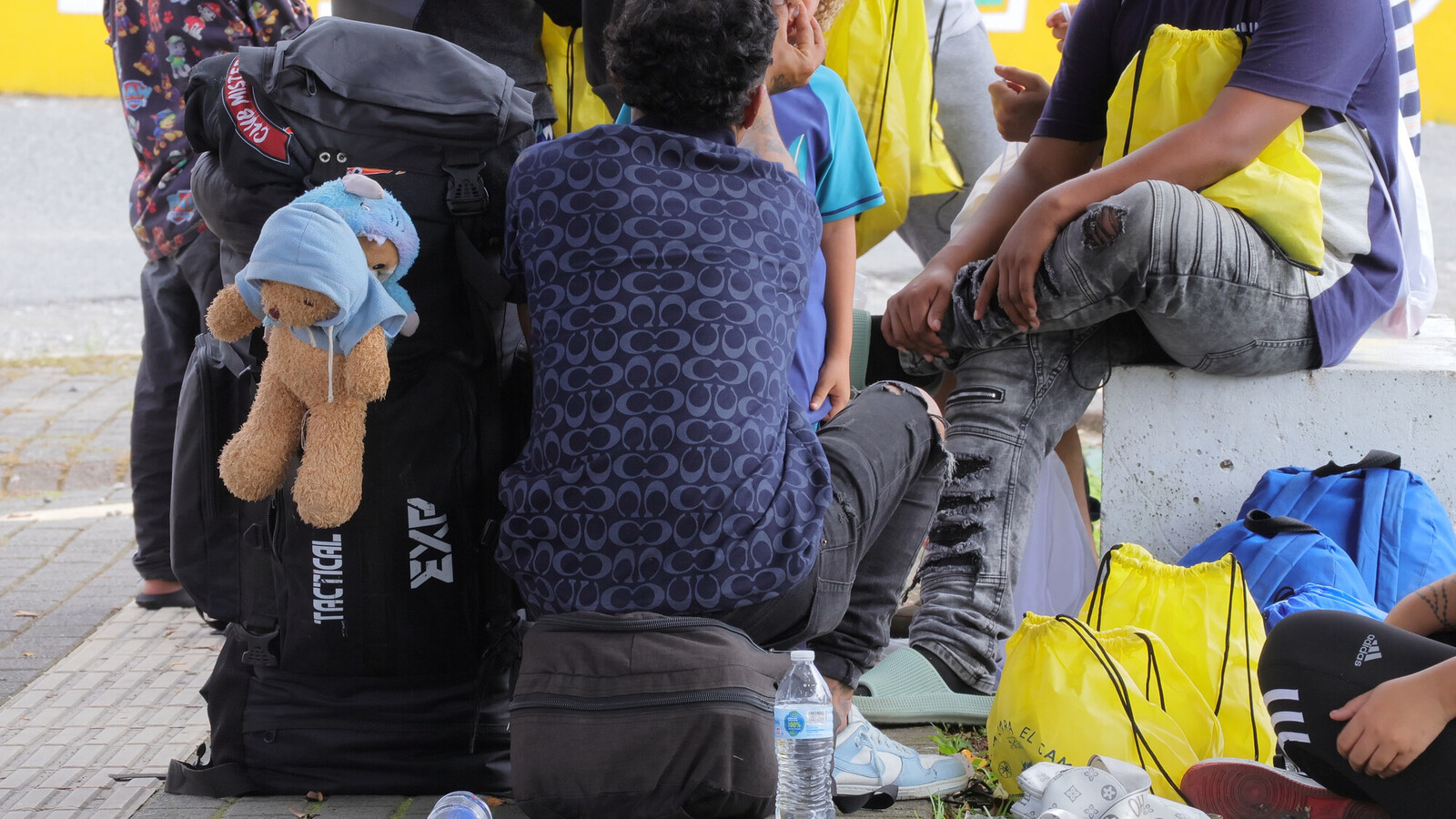
Migrants outside of a church in Costa Rica, where AFSC has provided humanitarian aid. Photo: Rodrigo Henríquez
In Latin America, migrants find aid and dignity.
Last year, I met a father from Afghanistan who was trying to migrate to the U.S. with his family. He had been traveling north from Honduras with his pregnant wife and 5-year-old daughter. They had been robbed and lost everything. Yet they chose to keep moving toward safety, toward somewhere they could live in peace.
Stories like theirs are why AFSC launched an emergency response to the humanitarian crisis facing migrants across Latin America. As the Trump administration has ramped up deportations in the U.S. and closed pathways to legal status, more people have been caught in impossible situations. Many are stranded midway through their journey. Others have been deported to countries they left many years ago, where they have no support.
Over six months, AFSC partnered with a dozen organizations across Mexico, Guatemala, Costa Rica, and El Salvador to reach more than 3,228 people. We provided food and other vital humanitarian aid, psychosocial support, and Know Your Rights trainings.
As one partner in El Salvador told us: “Beyond the material objects, these gestures are seen as signs of humanity, warmth, and closeness. People feel that we truly care.”
Alongside that support, we helped partners do something many had never done before: document migrants’ experience. We interviewed 364 migrants across the region. More than half of them had lived in the U.S. for over six years. Many had left behind children, jobs, and communities they had built over decades.
Their stories revealed patterns of violence, detention, and displacement that demand a policy response. We turned those findings into a report calling on governments to end detention, restore asylum protections, and address the root causes of why
people are forced to migrate. We’ve shared the report with allies, international human rights bodies, and members of Congress.
People have migrated for thousands of years. The question was never whether people will move. It’s whether we—as a global community—will build humane systems that protect them. With support from people like you, AFSC is showing that another approach is possible.
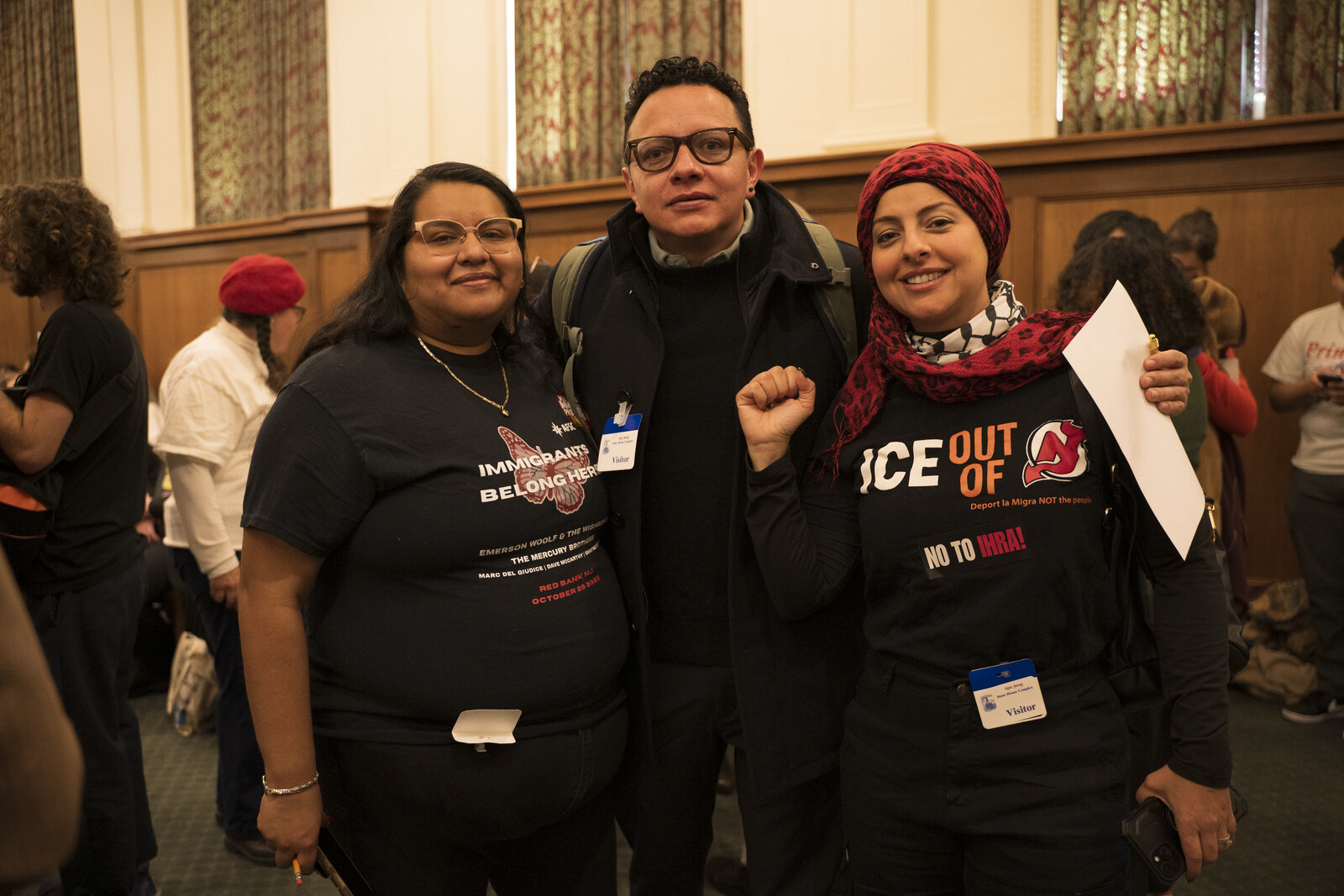
AFSC staff and partners advocate at the New Jersey State House for more protections for immigrants. Photo: Henry Craver/AFSC
In New Jersey, a hard-won victory for immigrant communities.
In the first weeks of 2026, the New Jersey State House hummed with an energy we hadn’t felt in years. Hearing rooms were packed. Survivor advocates, legal service providers, faith leaders, and immigrant community members lined up to tell legislators what we’d been saying for six years: New Jersey needs to protect its immigrant communities in law, not just policy.
That distinction matters. In 2018, AFSC and partners had successfully advocated for the Immigrant Trust Directive. The policy limits how local law enforcement can cooperate with federal immigration enforcement. But a directive can be withdrawn overnight. In a state where one in four residents is an immigrant and more than 500,000 are undocumented, we needed something that would last.
So we kept organizing. For six years, AFSC and more than 50 partner organizations in the New Jersey Alliance for Immigrant Justice met with legislators and held community listening sessions. We brought directly impacted people to Trenton to share their stories.
“What really mattered to us was ensuring that the voices of those people directly impacted by immigrant enforcement were represented at the table,” says immigrant rights organizer Itzel Hernandez. “Our job was to make sure residents were aware this was happening and that they were comfortable speaking with legislators.”
That work paid off. In January, the legislature passed three bills that would enshrine into law more protections for immigrants in New Jersey. Then-Gov. Phil Murphy signed one of those bills into law.
Under the Safe Communities Act, armed federal agents are now barred from schools, hospitals, and courthouses.
That makes New Jersey safer for everyone. It helps ensure children can attend schools, patients can seek medical care, and survivors can access justice without fear.
Amended versions of the bill were later signed into law by the new governor, Mikie Sherrill. This was a real step forward, though the final versions of those measures fell short of providing the critical protections we had demanded.
But we are not done yet. We are still meeting with legislators, building coalitions, and making sure people most affected are heard by lawmakers.
Piece by piece. Bill by bill. Testimony by testimony. That’s how we build power and protect our communities.