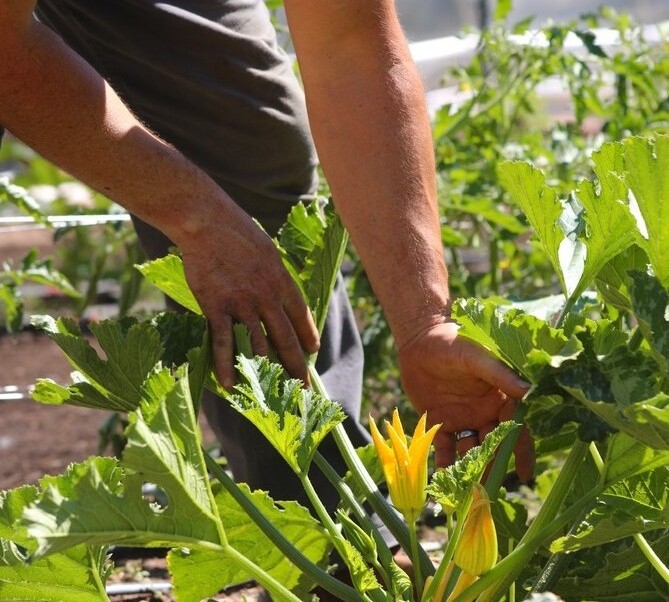
Photo: Anni Hanna
All people deserve access to the resources they need to thrive. This is why the right to food is considered a human right. Yet today, more than 1 in 7 people in the United States face food insecurity.
Between rising grocery prices and recent cuts to anti-hunger programs, hunger is likely to grow in the coming years. To make matters worse, the Trump administration has eliminated yearly reporting on hunger. This means that many of those suffering from a lack of food won’t even be counted.
The law that shapes food access
In the U.S., the right to food is closely tied to a law known as the “Farm Bill.” This is a massive package of legislation meant to be passed once every five years. It contains billions of dollars for anti-hunger programs, support for farmers, sustainable agriculture, rural development, conservation programs, and more.
Congress has fallen behind in its duty to pass a new version of the law. The last new Farm Bill was passed in 2018, and this version has been extended multiple times since.
That could change soon. The Republican majority on the House Agriculture Committee recently released their proposal for a 2026 Farm Bill, thus beginning a new debate over what our national priorities should be regarding food and farming. AFSC believes in the need for a just Farm Bill that works toward ending hunger, invests in sustainable agriculture, supports small family farms rather than corporate monopolies, protects our environment, and makes nutritious food available to all.
The current proposal offered by House Republicans falls far short of these goals. But Congress still has several opportunities to improve it. The House will soon begin “mark-up” edits to the bill in committee, where changes can be made. The Senate may also release its own proposal. That version would likely be more bipartisan, given the Senate Republicans’ need for Democratic support to reach 60 votes.
Congress should take these opportunities to create a Farm Bill that serves the needs of working families and small farmers, not the massive polluting companies that currently control our food system.

Cuts to food aid must be reversed
The largest failure of the latest Farm Bill proposal is that it does nothing to undo any of the recent damage to U.S. anti-hunger programs. Many of the changes that usually come through the Farm Bill were instead pushed through in last year’s reconciliation law, the so-called “One Big Beautiful Bill Act” (OBBBA). That law included a historically large cut of $186 billion to the Supplemental Nutrition Assistance Program (SNAP, formerly known as the Food Stamp Program).
Through reduced coverage, limits on the growth of benefits, new paperwork requirements, and increased cost burdens on state governments, the OBBBA will leave millions of people with less food aid. At the same time, the law increased the agricultural subsidies that disproportionately benefit large, corporate-owned farms. Those at the top gained while low-income people and family farmers lost out.
SNAP is one of the federal government’s most important programs. It helps to feed 42 million people every year, reduce poverty and crime, improve health, stabilize the economy, and boost the performance of children in school. SNAP benefits were already insufficient before this most recent round of cuts; slashing them will only cause further harm.
The House Republicans’ Farm Bill proposal does nothing to reverse these SNAP cuts. This should be a complete non-starter for Congress. The Farm Bill has traditionally passed with wide bipartisan support because it contained policies that benefitted both low-income people and the agricultural industry. By cutting SNAP benefits and boosting corporate subsidies through a separate law, Republicans broke this long-running compromise deal. If the Farm Bill does nothing to address growing hunger, Democratic members of Congress no longer have any reason to vote for it.
Congress should undo as much of the OBBBA’s damage to SNAP as possible, and ideally find ways to further improve the program. That includes increased benefits, fewer administrative burdens, and ending exclusions that block certain groups from receiving benefits– including people with former drug convictions, people in U.S. territories like Puerto Rico, and legal residents. Congress should also demand that the Department of Agriculture reinstate its Household Food Security Report, a critical measure of hunger that will only become more important in coming years.
A bad deal for the environment, too
Environmental issues are also at stake in this year’s Farm Bill debate. A provision that shields pesticide manufacturers from state labeling laws has drawn criticism from both environmentalists and the “Make America Healthy Again” movement. Part of the funding for conservation efforts has been redirected. Title IX of the bill includes policies that would block the growth of solar farms, a move which would raise energy costs, increase pollution, and deprive farmers of a source of income. The bill would also allow the federal government to overturn state laws regulating animal welfare on farms, namely California’s Proposition 12.
The House proposal does contain a few good ideas: it includes support for regional food systems, improvements to the GusNIP program that helps SNAP recipients afford healthy foods, and a few other worthwhile reforms. But these policies are not enough to justify support for the current proposal and its failures on hunger and the environment.
What you can do
As the debate around the Farm Bill heats up, it is important to contact our members of Congress and tell them that the current proposal is unacceptable.
Members of the House Agriculture Committee should use the mark-up process to demand major changes to the bill, most importantly restoring SNAP benefits and removing anti-environmental provisions. Other members of Congress should make it clear that they will not vote for the bill without these changes. Unless these problems can be addressed, there is no reason to settle for an inadequate Farm Bill.