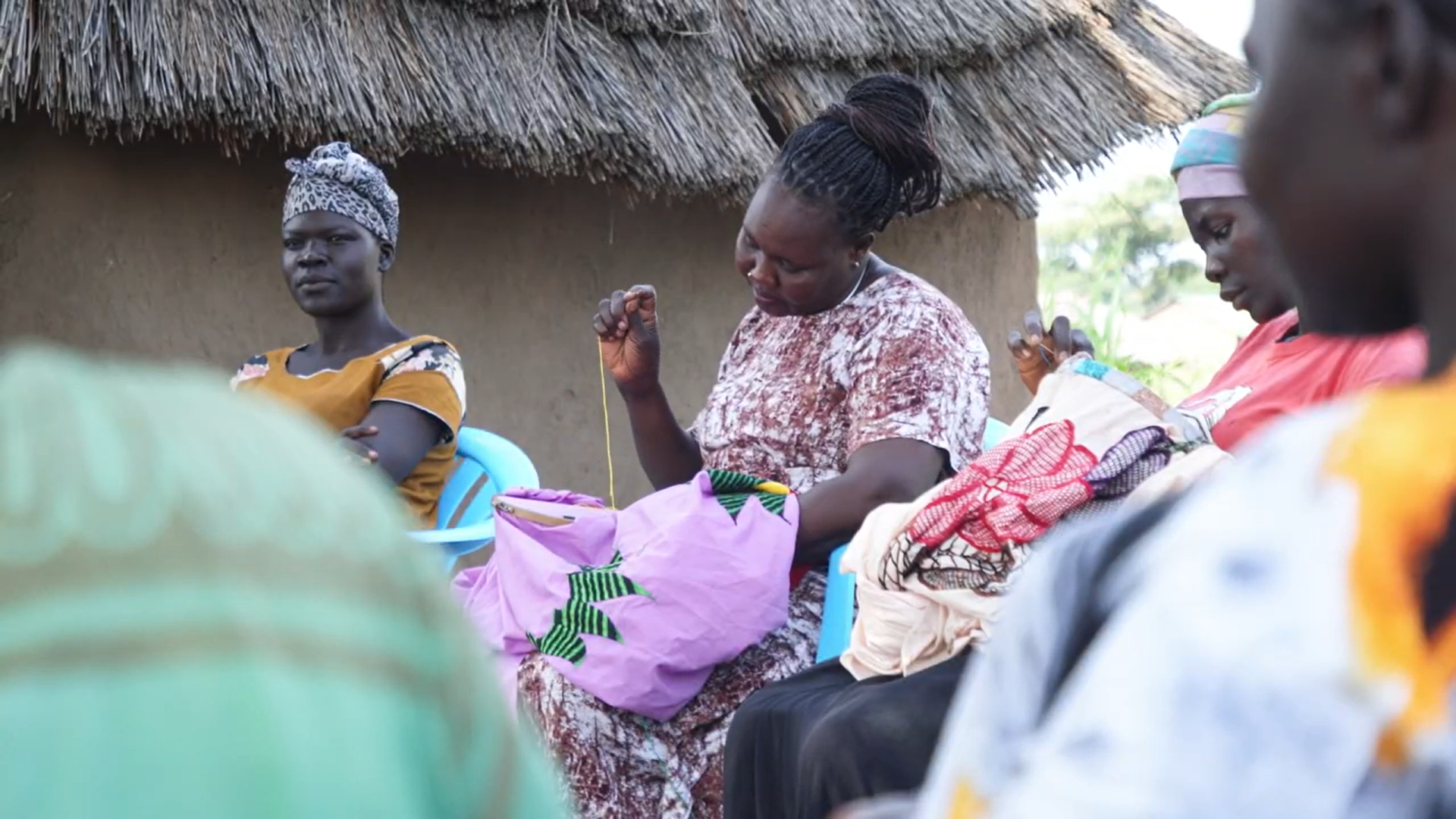
In South Sudan, women work to heal from trauma while learning skills, like embroidery, to generate income.
Amina* is a young Somali woman who arrived in Dadaab, Kenya in 2011. The sprawling refugee complex is one of the largest in the world. It’s home to hundreds of thousands of people—mostly from Somalia—who have fled war, famine, and persecution.
After witnessing her brother abducted by militia, Amina suffered recurring nightmares and flashbacks. She felt deep sadness and struggled to trust others. For years, she carried that weight alone.
Then, through counseling with AFSC partner Refugee Consortium of Kenya, Amina began to process her grief. She developed coping skills and began to reconnect with her community. “Nobody had helped me talk about this before,” she said. “I feel so relieved.”
Since 2013, AFSC and our partners have provided counseling and trauma healing to more than 2,300 refugees in Dadaab. For many like Amina, the support has helped them find their footing and begin rebuilding their lives.
In South Sudan, communities are taking similar steps toward healing. The world’s youngest country is one where 84% of people need humanitarian support. An estimated 65% of women have experienced gender based violence, most before turning 18. Mental health services are scarce. And stigma prevents candid conversations while inhibiting survivors from seeking services.
In 2019, AFSC partnered with local organizations to identify community members already committed to peacebuilding. Since then, young people, faith leaders, people with disabilities, and others have received training to process their own trauma and help others. They have also learned to train additional community members in trauma healing support. There has been a powerful ripple effect, and more than 2,000 peacebuilders have been reached.
Women are at the center of this work. Many are sole providers for their families. Alongside their healing, they participate in savings groups and income-generating activities, like embroidery. That helps them gain financial independence. “Through the healing group and the saving initiative, I am independent and taking care of my children,” said Monika*, a peacebuilder and mother of five.
Decades of civil war in Somalia have left many carrying deep trauma. In Mogadishu, young people are trained to peacefully resolve disputes in schools and universities before conflicts escalate. Elsewhere, survivors process trauma through poetry, storytelling, and theater. Other AFSC-supported programs equip youth to address community challenges. For example, youth work alongside elders and advocate for policy change.
Across South Sudan and Somalia, people are proving that healing is possible. They are also demonstrating that peace begins with each of us, and that we all have a role to play in community transformation.
* Names are pseudonyms