
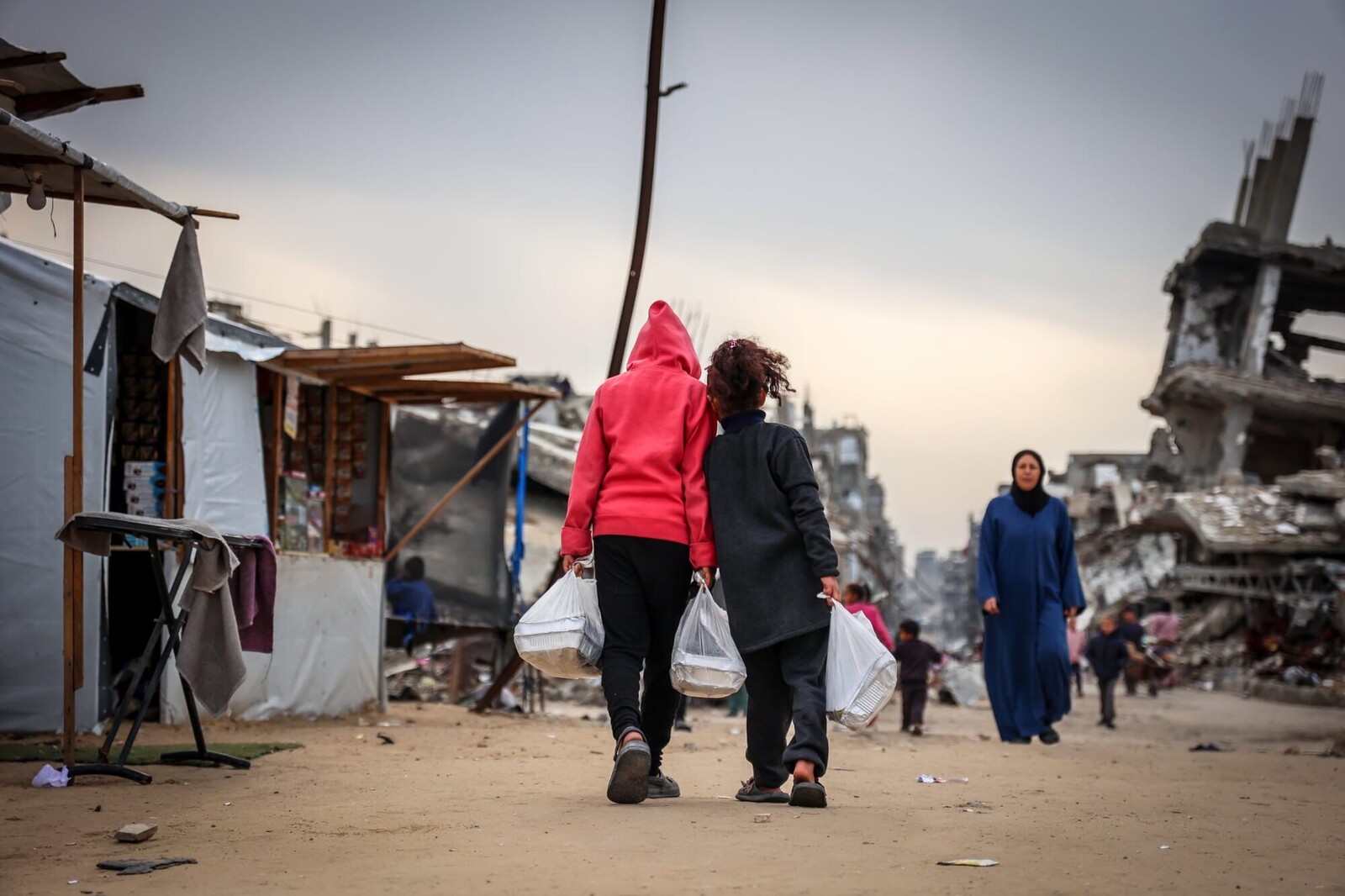
Photo: Amjad Al Fayoumi
For Palestinian families in Gaza, putting food on the table remains a daily struggle. More than three years into Israel’s genocide in Gaza, repeated displacement and severe restrictions on humanitarian aid have left many families dependent on food assistance to survive.
Recent funding cuts and renewed disruptions to commercial goods entering Gaza have made a dire situation worse.
Last month, the World Food Programme (WFP) announced that funding shortages would force it to cut food assistance in Gaza by about one-third, leaving around 500,000 Palestinians without support. Food rations have also been reduced, while an estimated 1.4 million people in Gaza still face acute food insecurity.
At the same time, restrictions on the entry of goods into Gaza continue to disrupt local markets. Recent closures and interruptions in commercial shipments have driven up food prices and caused shortages of basic items, including fresh vegetables. Many families have lost their jobs, homes, and income. For them, even food that is in the markets is often out of reach.
These conditions also make it harder for humanitarian organizations like AFSC to do their work.
Our team in Gaza faces significant difficulties in buying food from local markets. When crossings close or goods are blocked, the supply and price of essential items can change rapidly. This makes it hard to plan distributions, buy enough food, and ensure that limited resources can reach as many families as possible.
Still, we remain committed to providing food to displaced Palestinians. Over the past year, our team has distributed fresh vegetables to more than 61,000 people, helping families access nutritious food that many can no longer afford.
Our work with local farmers has also been an important part of this effort. By supporting farmers and buying locally grown vegetables whenever possible, we provide families with food while also helping sustain agricultural livelihoods in Gaza.
We are now planning more distributions of fresh vegetables to families in need. But rising prices and uncertainty in local markets continue to affect what we can buy and how we can distribute it. Our team will keep adapting to the supplies available and to the changing needs of communities.
These cuts to international food assistance come at a time when Palestinians in Gaza need more support, not less. Many families still have no stable income, no functioning economy to depend on, and no guarantee that basic food will remain available or affordable.
While our team continues its efforts, humanitarian organizations cannot address this crisis alone. Preventing further harm requires sustained funding, reliable access to essential supplies, and an end to restrictions on the entry of humanitarian and commercial goods into Gaza.
Until then, AFSC will keep working alongside Palestinian communities, local farmers, and partners to provide help wherever we can.
