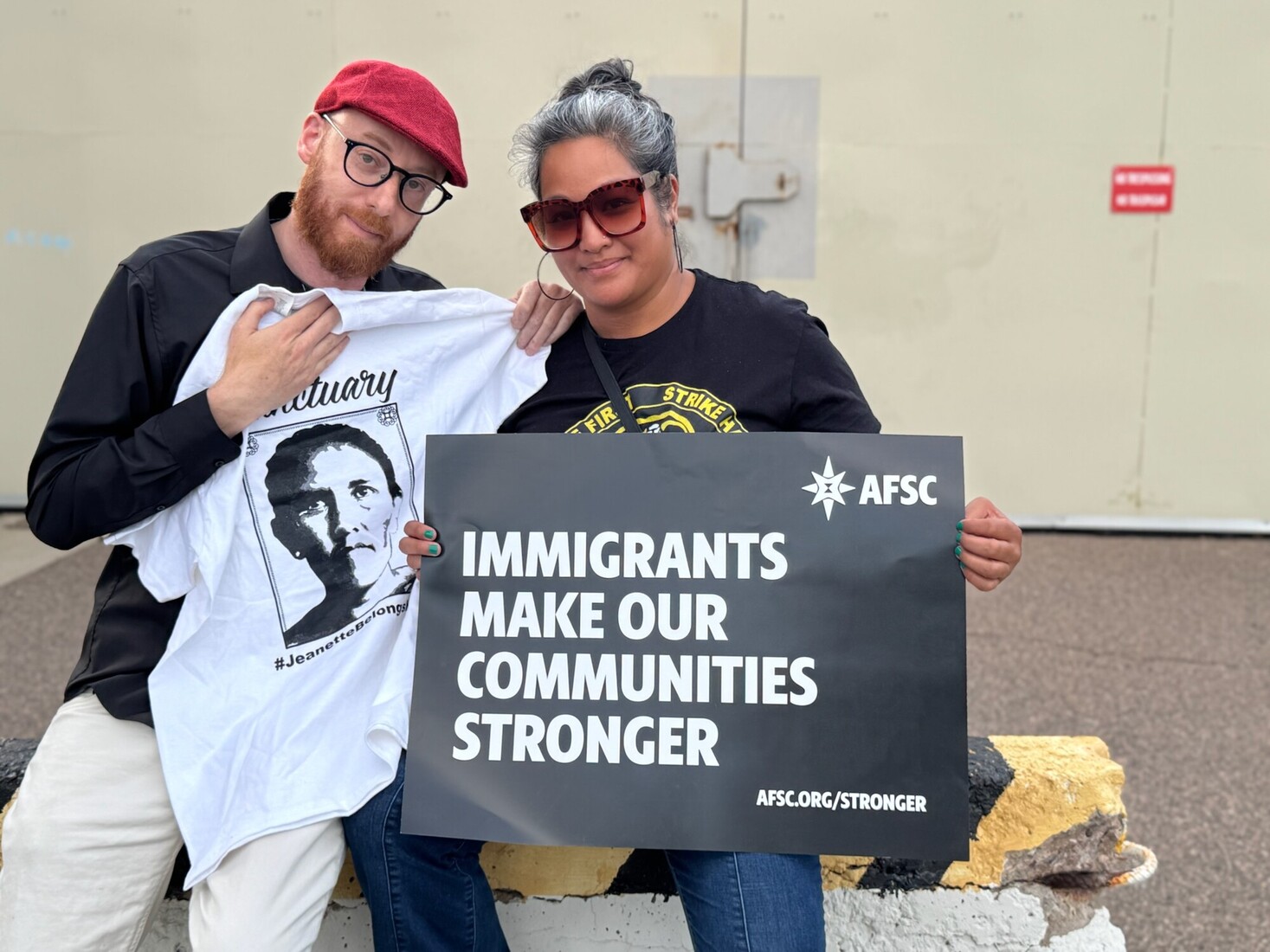

Fort Morgan, Colorado, is a small agricultural town of about 11,500 people. Many families first came as refugees resettled from Somalia and other countries in Africa. Others have arrived more recently from Mexico, Guatemala, and other Latin American countries. Many now work in meatpacking plants, dairy farms, and sugar beet fields.
Immigrant families and longtime residents see each other at school pickup, at church, in the grocery store aisle. They are neighbors who have come to trust and care for each other.
“Nos estamos tratando como familia, como amigos (We treat each other like family, like friends),” says Guadalupe Lopez, AFSC Colorado immigrant rights organizer and Fort Morgan resident.
As ICE raids have risen under the Trump administration, that connection is a critical part of how community members are learning to protect one another.
With support from AFSC, residents are training to join Colorado's statewide Rapid Response Network. Every day, the network fields calls to its 24-hour hotline about ICE activity in communities around the state.
In these trainings, volunteers learn how to monitor ICE activity, respond to hotline calls, and verify whether a report is real. If it is, they make sure people at the scene know their rights. If someone is detained by ICE, volunteers connect their loved ones with legal resources and other services.
Their efforts help their fellow community members understand what’s really happening so they can make informed decisions—and can help calm fears before rumors spread.
Watch the video to hear more from Fort Morgan community members.