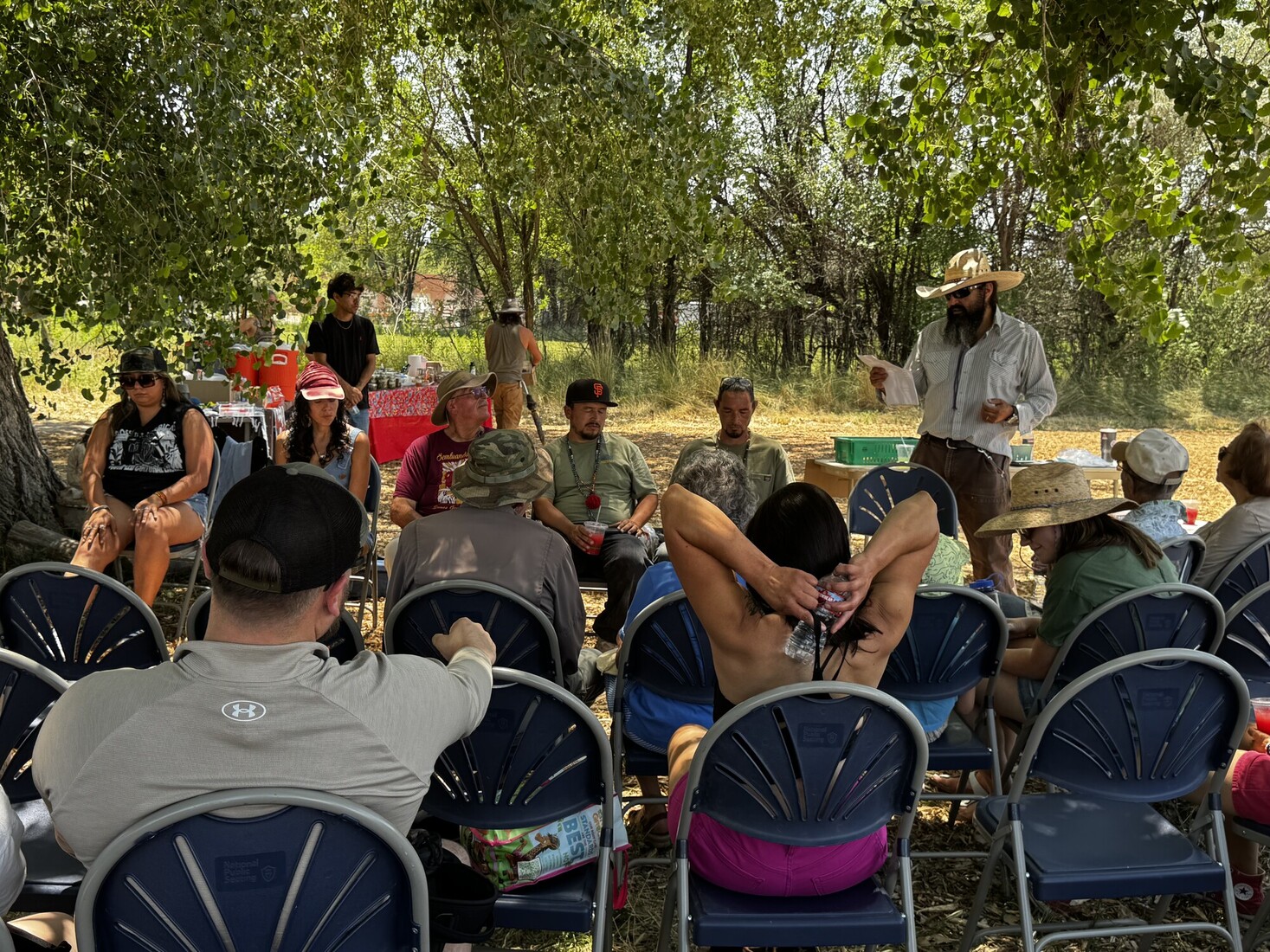
Patrick Jaramillo of AFSC New Mexico moderates a panel on sustainability at the 2026 Garlic Festival. Jen Siverman
Please tell us about the Garlic Festival.
The Garlic Festival this year was a wonderful event. It was held in July on the Sostenga Farm, which is on the campus of Northern New Mexico College.
People who know the AFSC New Mexico Program will remember that AFSC’s farmer training program was based on the Sostenga Farm for several years. We’ve always supported this festival.
For various reasons, this was the first festival since 2018. The festival was sponsored by AFSC NM, the New Mexico Acequia Association, Greenroots Institute (which is AFSC alum Don Bustos’s organization), Los Jardines Institute (which is one of AFSC’s close partners), Muy Chingon, the Rodale Institute, Earth LAWS, and Seeds in Common.
Between 150 to 200 people attended the intergenerational festival. Youth groups offered teachings and sold agua frescas, or water sweetened with fruit or flowers. There were farmers selling local produce, including honey, and there were vendors selling remedios. traditional medicines made from herbs.
There was a lot of music – and, of course, a lot of garlic tasting. It was wonderful to be joined by AFSC colleagues.
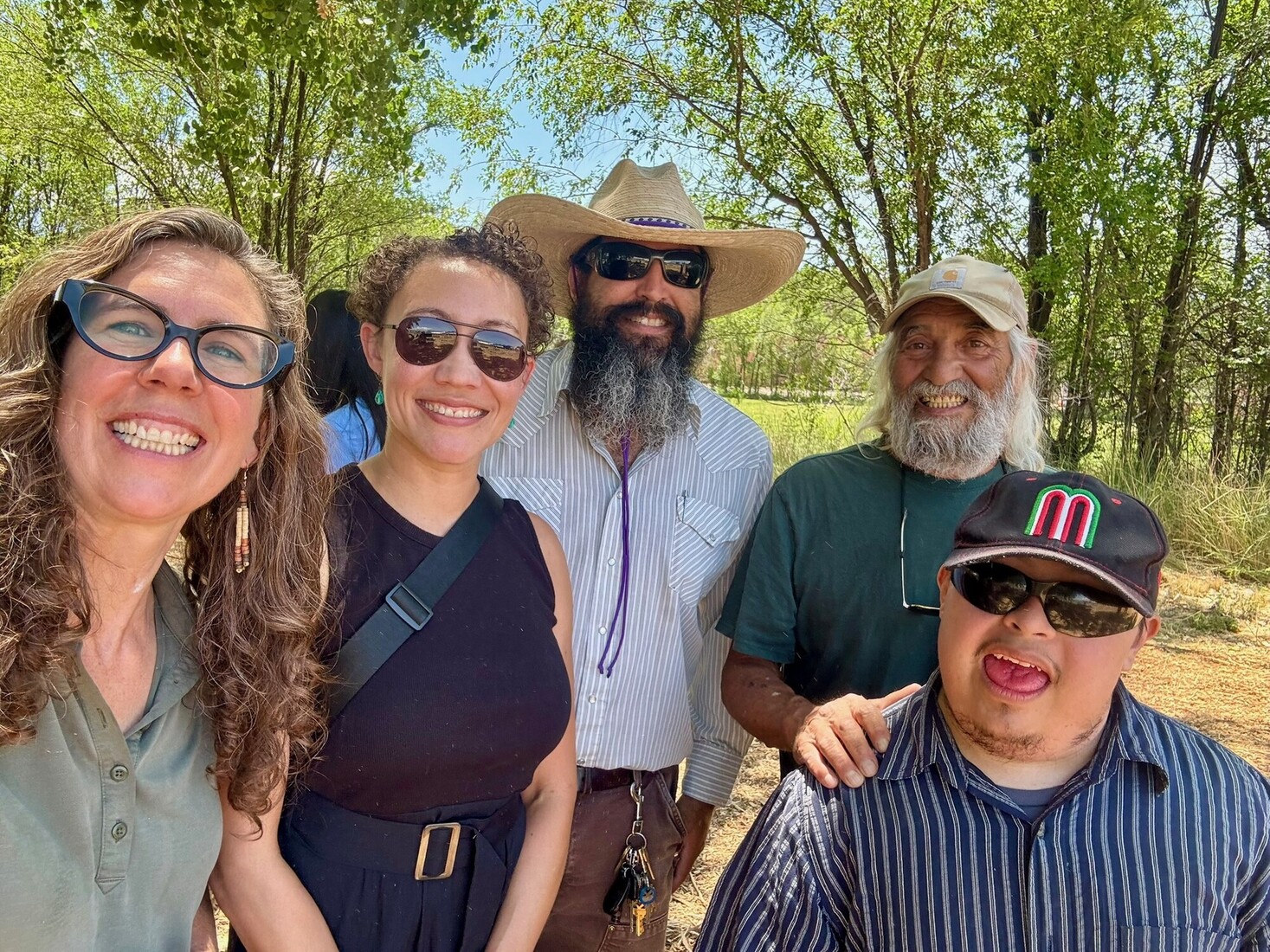
From left, AFSC staff Gabriela Flora and Erika Gable of AFSC’s Leadership Gifts team join Patrick Jaramillo, AFSC alum Don Bustos (who worked for AFSC from 2008-2016), and Don’s son at the Garlic Festival. Gabriela Flora
What else happens at the Festival?
The first purpose of the festival is to harvest the garlic. We do it as a community event, and we make it a contest. There are prizes for the top three teams that harvest the most garlic.
There were also workshops, including one by a local garlic farmer. She grows only garlic because of the amount she grows and the way she processes it. She sells it fresh and also does value-added, increasing the garlic’s appeal. She did a workshop on storing different types of garlic, both hard-neck and soft-neck.
In the afternoon, I hosted a panel on sustainability. This is timely given what we’re up against. That’s another reason we celebrate garlic -- it’s a low-intensity crop with high value. But it’s also sustainable – it’s generally drought tolerant.
And garlic has medicinal value. There’s a saying in Spanish: “The garlic is king of the kitchen.” And so many people love garlic and onions. I’ve heard other cooks say, “Even before I know what I’m going to make for dinner, I’m already chopping garlic and onions.”
On my panel, we had a person who’s doing multi-agency watershed restoration through their acequia association, working with non-profits and government agencies.
Another person is doing indigenous, small-scale restoration. From an indigenous perspective, they call it “planting water,” in that you’re reviving the landscape and bringing these old springs back to life. So my panel was about sustainability, various ways of coping, and changing techniques and practices.
What role do community organizations play?
The Garlic Festival is a real community effort. The college supports Sostenga Farm for the opportunities the farm brings to the college and students, but organizing the festival falls on the community organizations.
For me, the Garlic Festival has always been an expression of the community celebrating what we hold in common. It is a grassroots expression of the community’s desire to keep coming together, to learn and celebrate. And it was really a good time.
In these crazy times, it’s not every day you feel really good about the world. But that day at the Garlic Festival was really good.
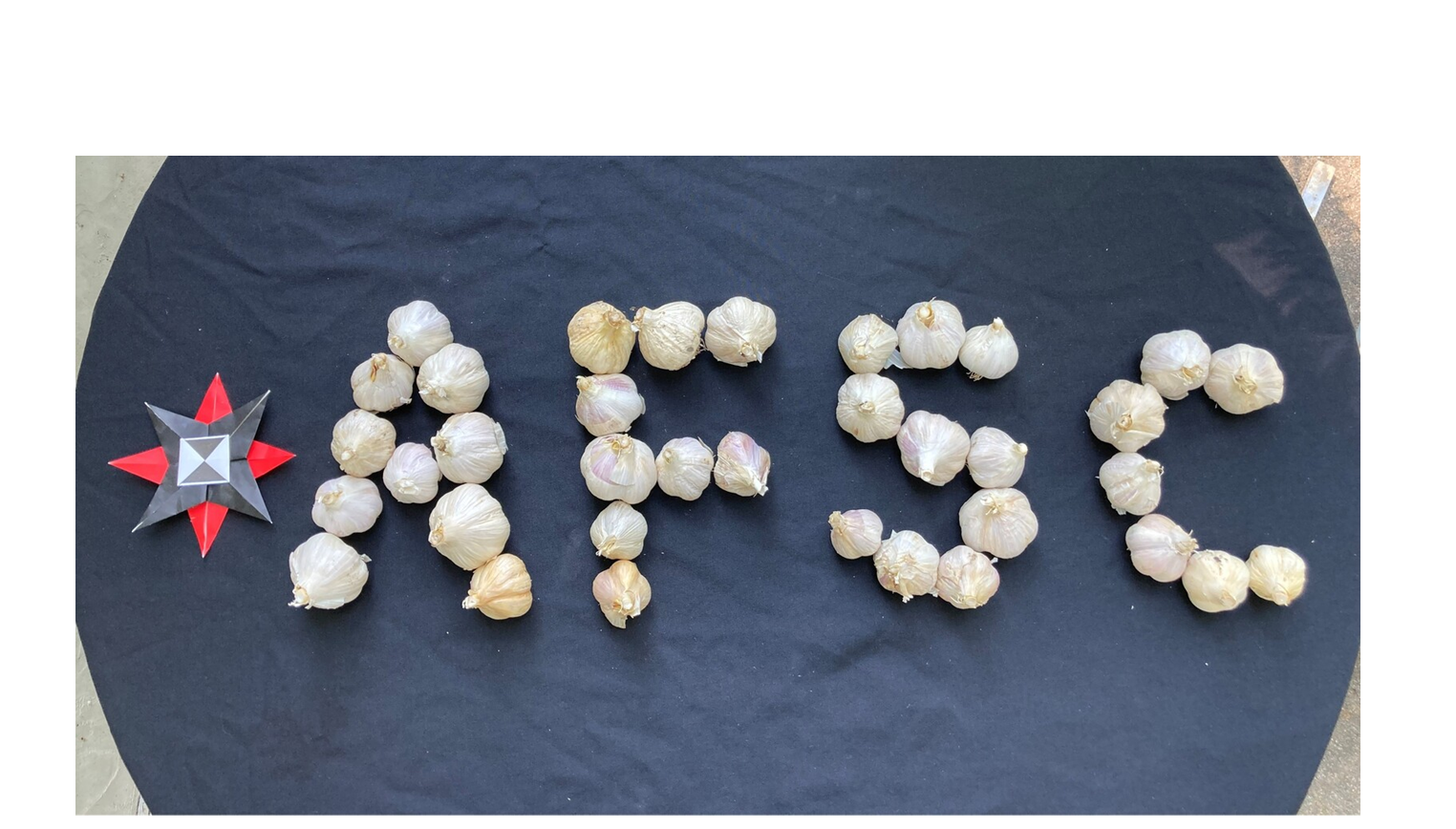
Just for fun, 36 heads of garlic got together recently to recreate AFSC’s logo. Quakers are into the SPICES, right? Jon Krieg