
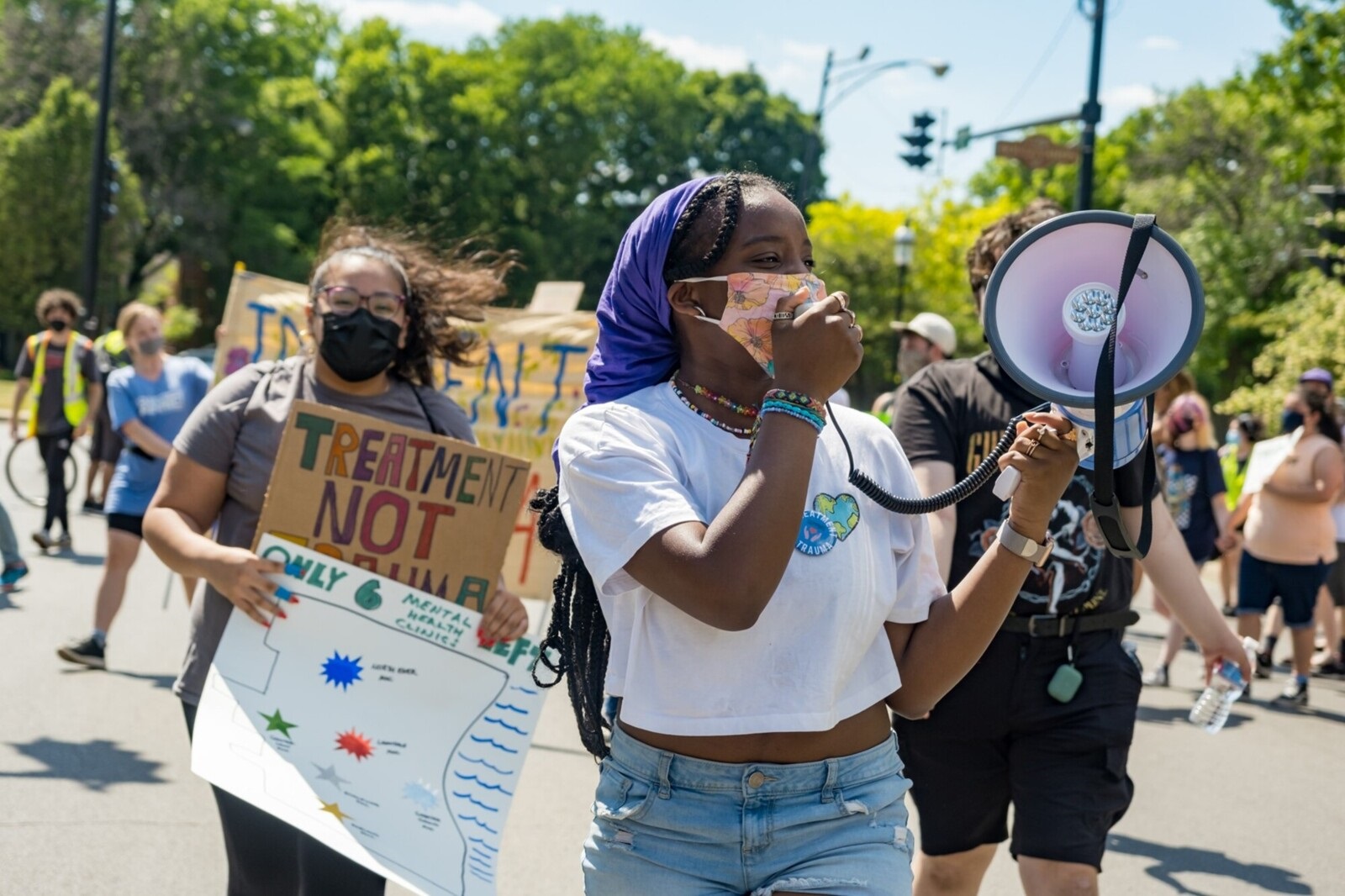
In Chicago, young people call on the city to divest from policing and invest in mental health services. Sarah-Ji / @loveandstrugglephotos
The Treatment Not Trauma campaign has seen two important wins recently. The first involves the expansion of the Mobile Crisis Response Teams – or care vans -- from pilot projects in certain wards to citywide. They now can operate across the city. If someone sees someone else in crisis, they can call and have a van respond.
We also won expanded care program hours, more than doubling the care vans’ hours, now 8 am to 10 pm. Mental health crises can happen at any hour. We’re hoping to expand to 24 hours but need to organize more and overcome some barriers to win that funding.
We ask people who see a mental health crisis to call 911 and ask for a nonviolent response. We’re doing a lot of public education so people will know what they need to specifically ask for, but it’s still up to the dispatcher. Currently there are eight vans dispatched without police.
AFSC Chi Peace works on the political education wing of Treatment Not Trauma, helping people understand how to call for care. We also provide information on the ongoing struggle for mental health care in Chicago.
We host monthly membership meetings of existing and new members. Through citywide canvases, we update people on the campaign and plug them into one of Treatment Not Trauma’s committees. These include Research, Communications, Political Education, and Political Legislation. The latter is building an ordinance that provides more funding for TNT.
The Political Education Committee collects stories about how the care vans are helping people. One person recently wrote in a Signal chat that she saw a care van outside her building recently. She’s been working on expanding public mental health care infrastructure for decades, so she was heartened to see a person in crisis getting the help they needed. This all happened through the power of political organizing.
AFSC understands the importance of personal stories -- that’s a vital way to win aldermanic support. Our next goals include 24/7 non-police crisis response and the reopening of all public mental health centers. We need crisis centers across the city that are staffed by unionized community health workers and are locally accountable.
Learn more the expansion of Mobile Crisis Response Teams across Chicago and the addition of more hours of service. Here’s the sign-up form to get involved.