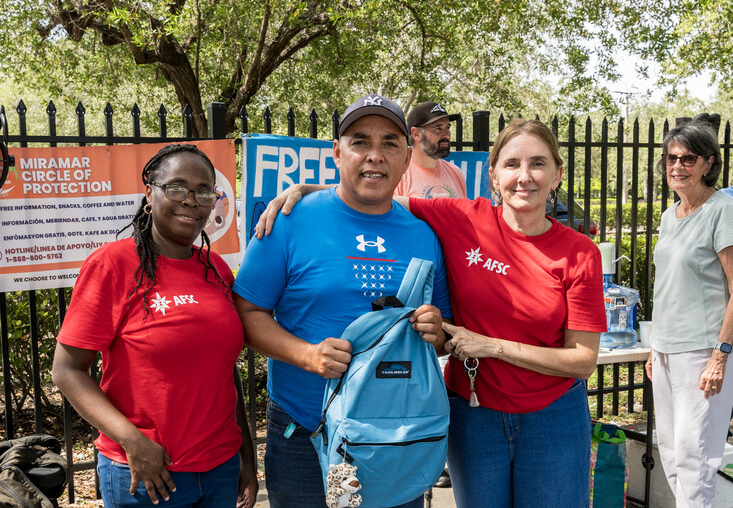
AFSC staff and volunteers offer water, food, and Know Your Rights information outside the ICE facility in Miramar, Florida, every Wednesday. Adam Barkan
Immigrants come to the United States for many reasons. For religious freedom. For economic opportunity. For family reunification. And to escape persecution and tyranny.
People born outside the U.S. have always been vital members of our communities. They are loved ones, friends, neighbors, business owners, workers, and community leaders. And they contribute in every part of our society, from farm country to vibrant cities bursting with creativity.
There is no United States without immigrants. But they aren’t always treated with the dignity and respect they deserve. Anti-immigrant sentiment has long plagued this country—and the detention and deportation system built on decades of unjust laws has massively expanded with a recent influx of billions of dollars.
AFSC and our supporters are resisting this agenda of cruelty. By mobilizing. By providing resources to help keep our neighbors safe. And by demonstrating that the strongest communities are the ones that come together to support one another. Here, we spotlight successes in three states.
Florida: Supporting immigrants outside an ICE facility
Miramar is a south Florida city that prides itself on being an idyllic place to live. It is also the site of an ICE facility where immigrants’ futures are often decided. All people, regardless of their status, deserve compassion and respect. This is not what many experience when navigating the U.S. immigration system.
Hundreds of people in Miramar wait hours for their appointments. The conditions are brutal. Long lines. Intense heat. Until a few years ago, there was no shade. People often fainted while waiting to meet with ICE agents.
When President Trump took office in early 2017, the Miramar Circle of Protection Coalition was formed. The goal was to stand with immigrants and affirm their dignity. The efforts worked. The facility added an outside shade structure. Fans were installed. Air-conditioned restrooms were installed in the parking lot.
But much more is needed. That’s why our Circle of Protection is at the facility every Wednesday. AFSC’s Maria Bilbao leads this work with up to 10 volunteers.
We have a table across the street from the facility in a shady spot. We offer water, coffee, homemade pasteles, and clothing. We also serve as a resource hub and provide Know Your Rights information. We share contacts for legal services and referrals to the statewide support hotline that tracks detentions. We also record license plates of cars abandoned by people who had ICE appointments and never returned. We follow up with their loved ones and assist in locating them.
Every Wednesday that AFSC staff and volunteers set up their tables at Miramar, they show us the world that we’re working toward. They transform an unwelcoming place into a space where people can find the support and compassion we all deserve.
AFSC Oregon
Oregon: New laws limit ICE
In the first year of President Trump’s second term, a surge of Immigration and Customs Enforcement (ICE) agents arrived in Oregon. Emboldened agents began arresting and detaining immigrants. They showed up at preschools. In hospital parking lots. And they ripped families
apart, traumatizing children separated from their parents.
As the federal agency terrorized communities, those same communities acted. And AFSC’s Project Voice team in Oregon swung into action to support them. This
program is rooted in community-based organizing. We train immigrants and allies to safely respond to ICE raids. We also offer an important counterweight to the administration’s anti-immigrant agenda and narratives.
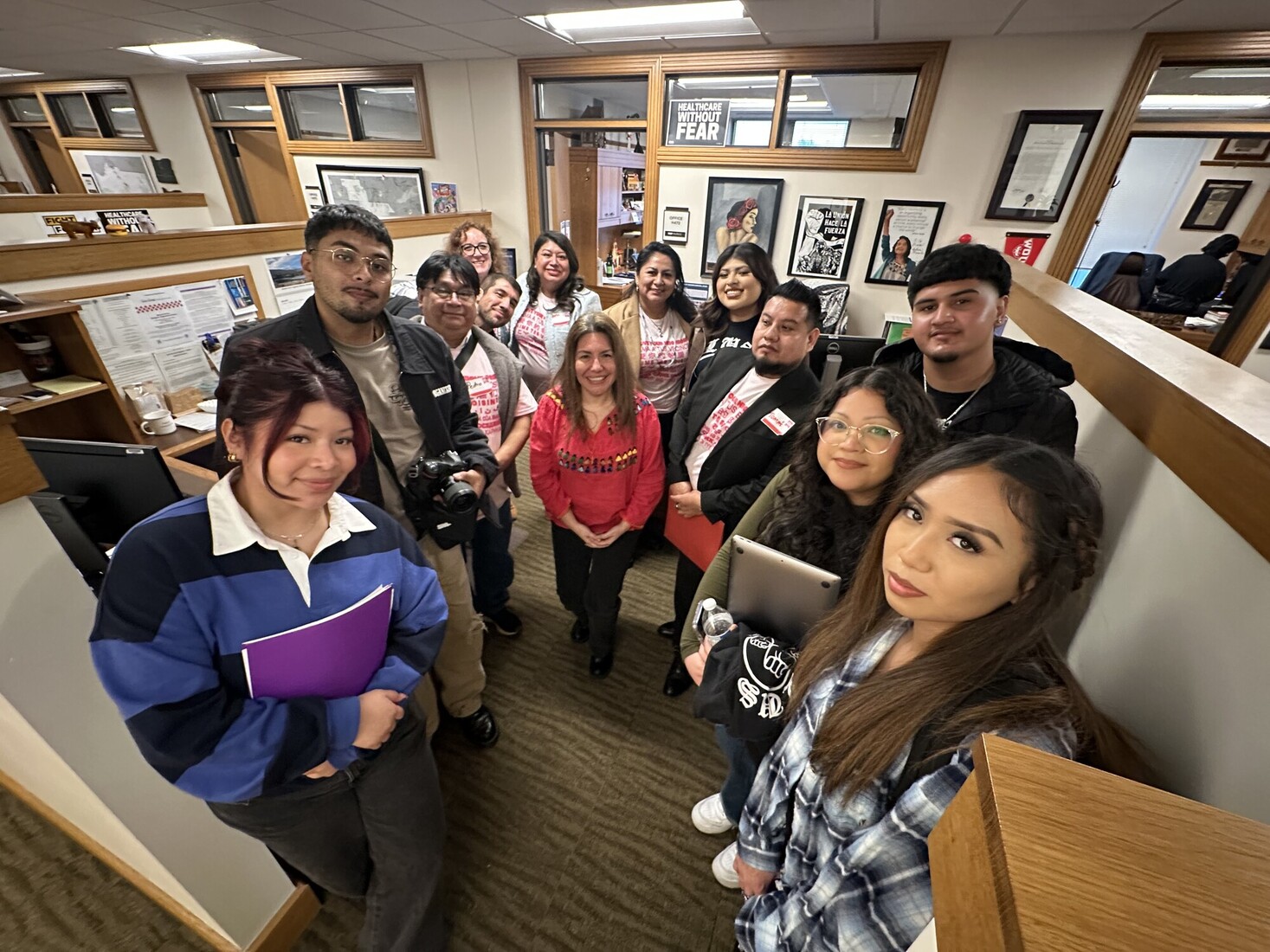
Over the past year, we organized and advocated at legislative events. We showed up in support of immigrants. We joined lobby days with partners and community members. Together, we gave voice to the pain and fear ICE inflicts. We also trained hundreds of people to act as human rights observers. These volunteers report ICE assaults and arrests, so they don’t fall under the radar.
As a result of our collective efforts, Oregon passed more than a dozen important laws. These laws make it harder to `target immigrants and easier to reclaim rights. For example, federal agents cannot enter public schools and colleges before they give notice. They must also display their name or badge number and agency information. New protections are now in place, too. Immigration status is on the list of protected health information. And civil court proceedings cannot include it.
The Oregon legislature also approved $8 million for the universal representation program. This guarantees free, culturally sensitive legal representation to immigrant Oregonians facing deportation.
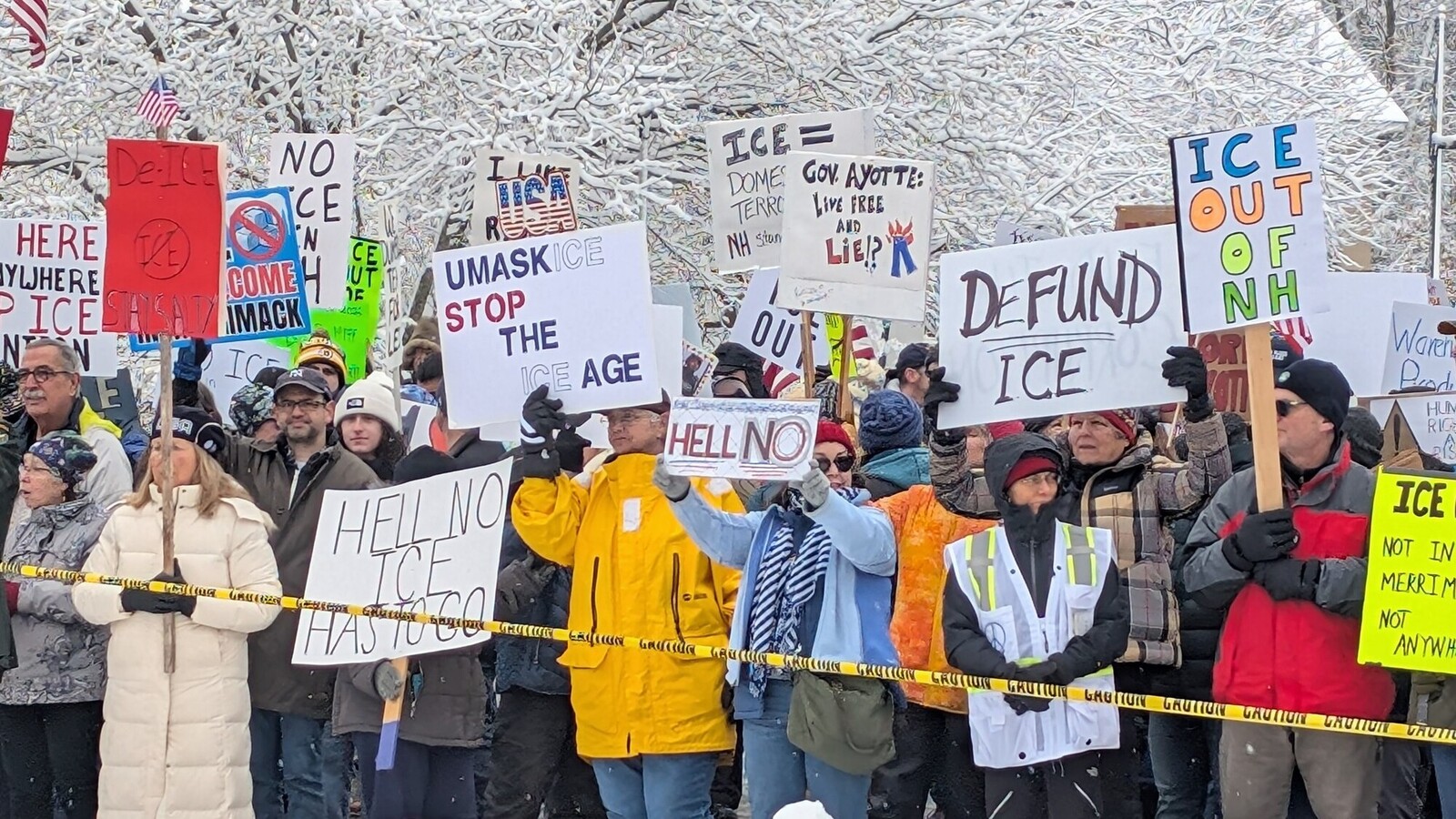
Community members protest plans for an ICE warehouse jail in Merrimack, New Hampshire. KT Brown
New Hampshire: A small town stops an ICE warehouse jail
On Christmas Eve 2025, The Washington Post published an alarming article. The Trump administration was going to turn warehouses into ICE facilities. Cages would contain tens of thousands of people across the country. Private, for-profit prison companies and ICE would be
in charge.
In New Hampshire, the small town of Merrimack made the list. The news was shocking, but a bold base was ready to respond. These community members launched a grassroots campaign. State representative Wendy Thomas backed their effort. Others came on board, including folks who had never participated in any sort of protest.
With support from AFSC and other organizations, the campaign took off. Private group chats sprang up overnight so people could communicate. Residents flooded town officials with calls and emails. They leveraged personal connections. They urged their elected officials to immediately halt the project. And a congressional delegation conducted surveys across the state. These showed that New Hampshire residents opposed the president’s plan.
AFSC-trained nonviolence leaders helped to ensure that Merrimack protests remained peaceful. Peacekeepers met with organizers, town officials, and local police before anyone assembled. The town was not accustomed to demonstrations, so it was important to keep things calm. We also wanted to show that the community can come together in a powerful, nonviolent way.
The pressure to halt the warehouse reached the governor’s office. Organizers stayed focused. They maintained a clear message of opposition, and their strategy worked. After two months, the administration canceled plans for the ICE facility. This huge win was a testament to the power of community and coming together for what’s right.