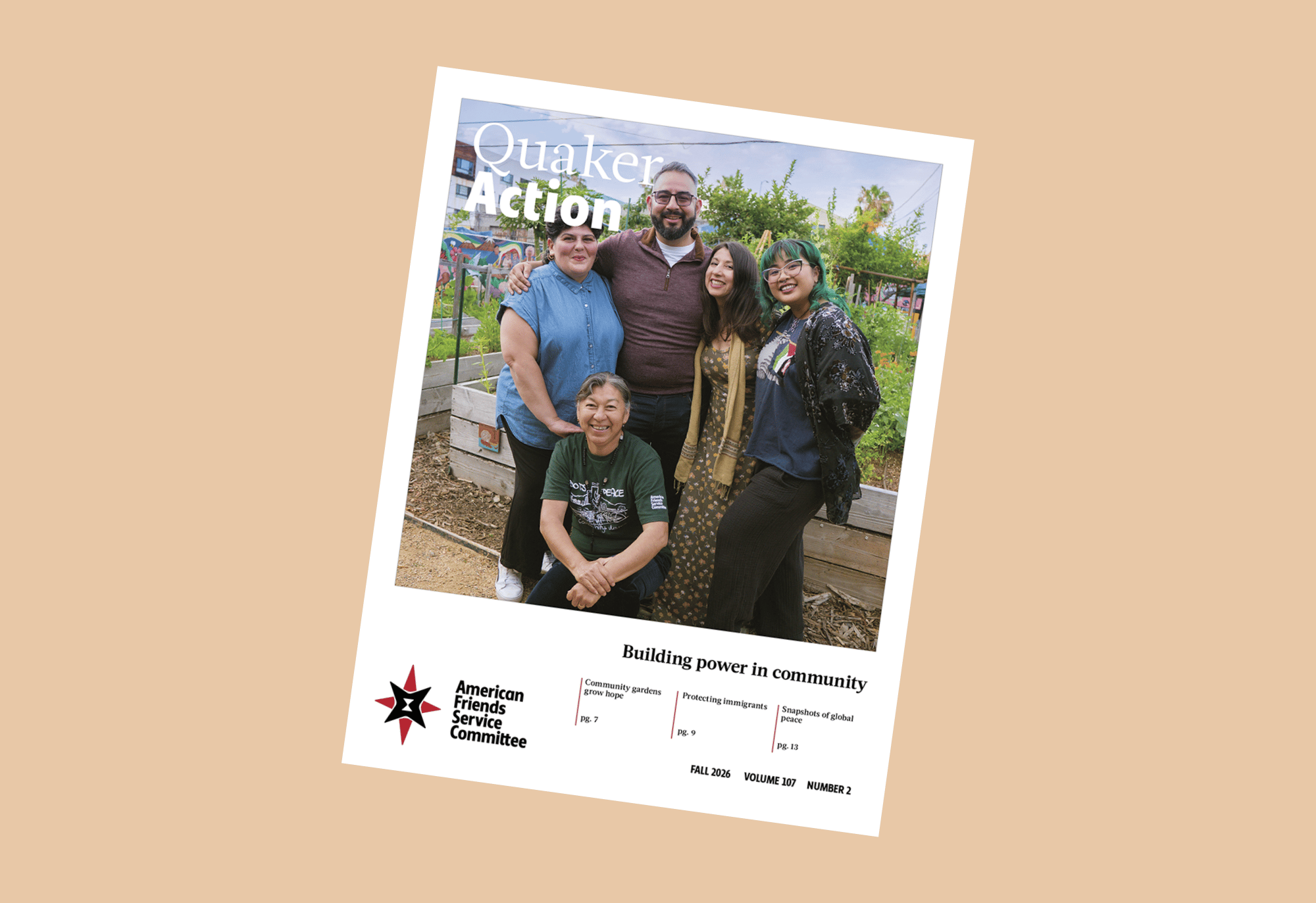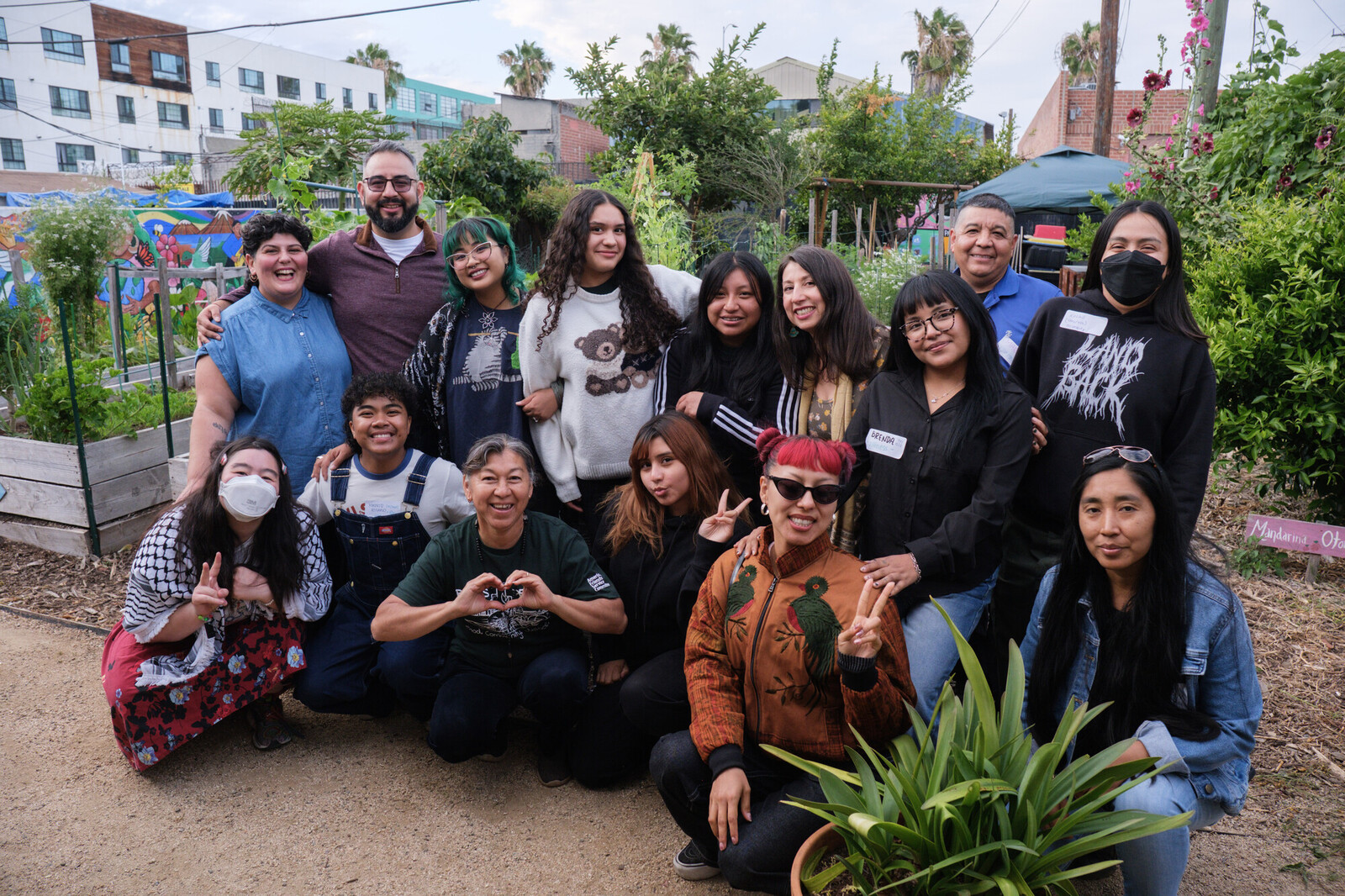
Community members gather at the Roots for Peace Open House in Los Angeles. Jayrol San Jose
When World War I ended in 1918, hunger persisted and starvation loomed. Quakers and the newly formed AFSC stepped in. We nourished hundreds of thousands of children in Germany, Austria, Poland, and Russia. Since then, our food justice work has spanned continents and cultures.
In the United States, nearly 50 million people live in food insecure households. The workers who produce our food face unsafe conditions and low wages. Discrimination and unfair economic policies prevent people from accessing fresh food. Under the Trump administration, critical programs like the Supplemental Nutrition Assistance Program (SNAP) are getting slashed. People of color are disproportionately affected.
AFSC has long supported mutual aid networks, which play a pivotal role in closing food gaps. Here’s how two communities are organizing to make a difference.
Roots for Peace
The Roots for Peace program is based in Los Angeles. Since 2015, it has supported young people of color working for social change. These dedicated organizers tackle racial, health, and economic injustices in their communities. Food justice has always been at the top of the agenda.
When the program began, a group of South Central residents wanted to transform a 30-year-old vacant lot. The goal was to create a shared green space where people could come together to grow nutritious food. There was a complicated history. South Central once had the United States' largest urban farm. It was destroyed in 2006, and warehouses were built on the land. The community suffered a significant loss but was not deterred.
In 2015, Roots for Peace established the Food Growers Network. This group urged the L.A. City Council to allow local people to transform vacant lots. The Council listened and eventually passed the Urban Agriculture Incentive Zones policy. Over time, it resulted in urban farms across the city.
The lot transformation began in 2018. Soil and vegetable beds replaced asphalt and gravel. The next year, young people created a bright onsite mural. Its subject was how community can come together to grow a more just and sustainable future.
Community members used ancestral techniques to grow corn. These techniques nourish the soil, conserve water, and protect delicate ecosystems. In 2019, the converted land yielded its first harvest. And the farm was named Corazón de la Gente—Heart of the People. A fitting name given that some 21 families grow food there each year.
In recent times, local raids have targeted immigrants. Corazón has served as a safe haven where community members can gather, share basic items, and provide childcare. And the farm functions as an invaluable mutual aid hub, producing approximately 1,500 pounds of food a year.
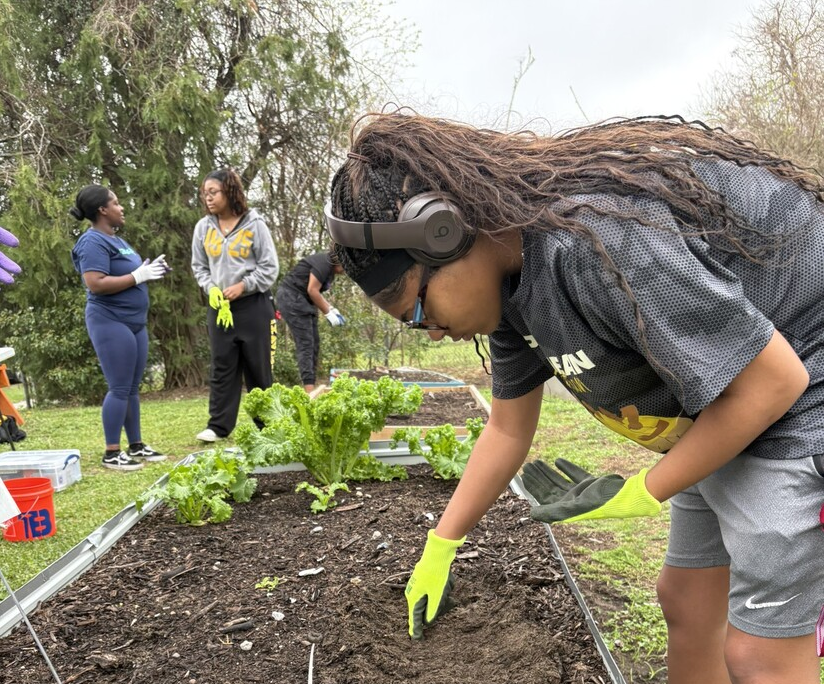
Garden service day in New Orleans Blair Minnard / AFSC
Peace by Piece
Vacant plots of land dot New Orleans’ 17th Ward. Some are used as dumping grounds. Others are sold to developers keen on building expensive properties. AFSC’s Peace by Piece program supports community members seeking to reclaim these spaces. The results are remarkable.
Peace by Piece works with Hollygrove residents to develop the skills needed to bring change and build a self-determined community that controls the cultivation and distribution of its resources. The program uses sustainable urban agriculture as a tool for community care, bringing Hollygrove residents together to grow and share fresh food, care for the land, and build a healthier, more resilient neighborhood. Teaching and demonstrating urban farming, composting, and environmental stewardship to local residents helps to improve conditions for everyone.
Over the past year, staff, alongside 352 volunteers and community members, maintained the Hollygrove Community Farm. Students, elders, and family members distributed over 5,500 pounds of food. More than 2,000 residents have participated in community food shares. And 20 households and the Carrollton-Hollygrove Senior Center recycled more than 4,000 pounds of food waste. This reduced landfill contributions while creating valuable compost.
At monthly garden workshops, Hollygrove residents participate in critical conversations. They discuss food systems, environmental justice, and economic inequality. They deepen discourse and strengthen community ties. Now, planning is underway for a large remediation project. One of the gardens will serve as a resilience hub and include 30 garden beds. It will be powered with green installations, including solar.
These programs demonstrate the power of community. Working in partnership, neighbors have turned vacant lots into vibrant green spaces. They have nurtured bodies and souls. They have built sustainable food systems. And they have shown that it is possible to disrupt inequality and create lasting change.