Global Voices for Peace
Please join our 2026 Global Voices for Peace series, Dialogues to Collective Action.
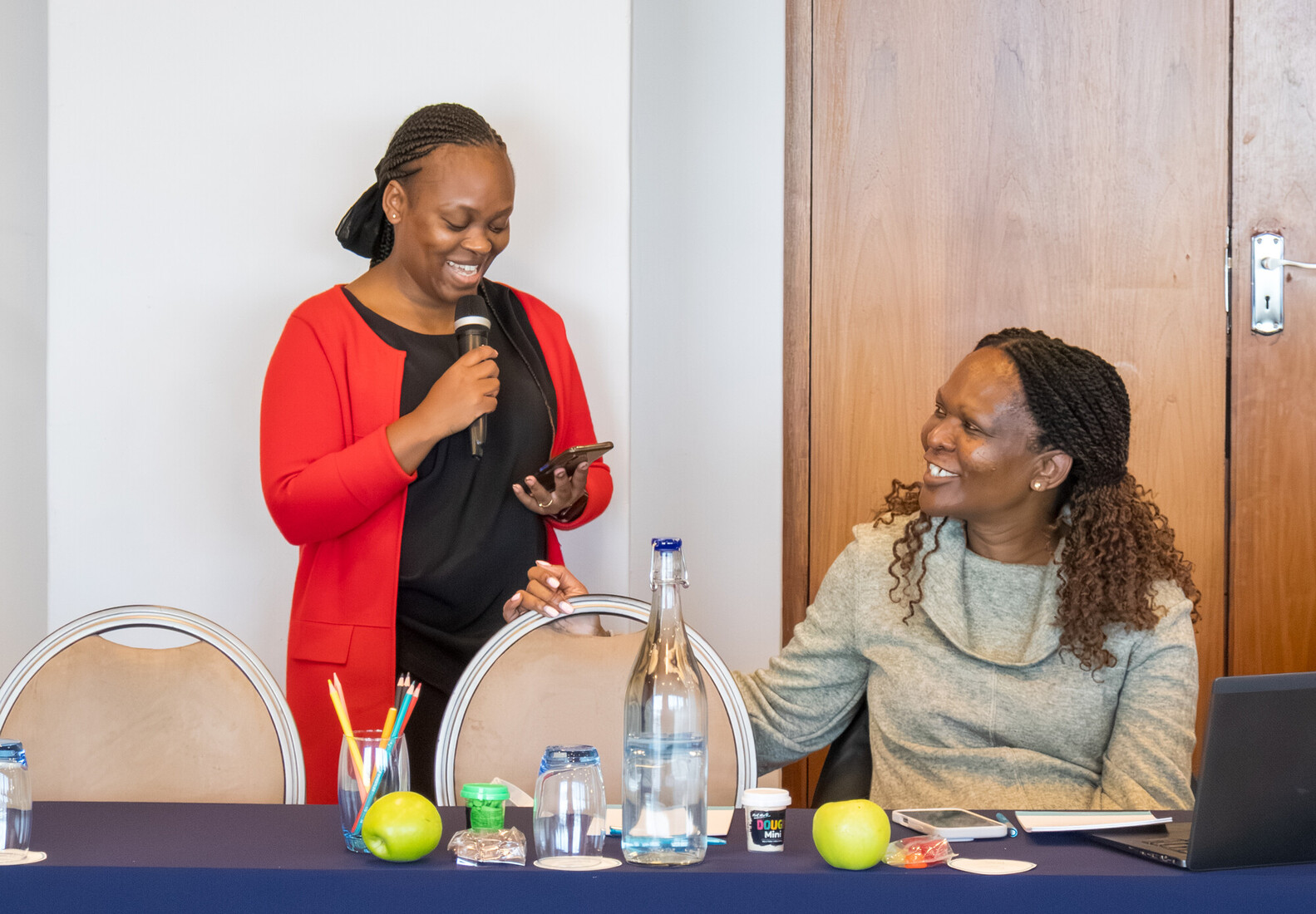
A photo from the 2025 Global Dialogue series held in Cape Town, South Africa where participants discussed the freezing of USAID funding and regressive shifts in U.S. immigration policy. Photo: AFSC Africa
Today, authoritarianism is rising. Militarism is spreading. And democratic and multilateral norms and processes are eroding. Our 2026 dialogue series brings peacebuilders and those concerned with human rights and social justice together to respond. Let's deepen our collective analysis. Let's strengthen transnational solidarity. And let's take action together.
Anchored in Quaker values, we will be guided by those affected by conflict and injustice. We will speak truth to power while fostering dialogue and reconciliation. We will do this even where—rather, especially where—the odds are long, and the polarization is deep.
No prior participation or qualifications are necessary to join our online events. Please register below.
Schedule
Learning & Setting the Stage
Join us for an online session where we will present and discuss findings from the 2025 Global Voices for Peace series. Read more in “State of the World Today – What Is Civil Society Calling For?”
This session will center on:
- Global civil society priorities and renewed calls for peace.
- Democracy.
- Humanitarian access.
- Accountable and equitable systems for global collaboration.
AFSC will also introduce its broader work on organizing and non-violent resistance in authoritarian contexts.
More Info
Global Voices for Peace: Global Dialogues to Collective Action will build on the lessons and experiences from the 2025 Global Dialogue Series.
Moving beyond diagnosis, we will focus on:
- Shared pathways forward.
- Strategic alignment.
- Amplifying voices.
- Movement and network building.
This series will be grounded in AFSC’s legacy of peacebuilding, diplomacy, and disciplined nonviolent action. Global Voices for Peace events will take place alongside AFSC’s broader international and U.S. efforts on peacebuilding, social justice, and migration rights. We will seek ongoing collaboration and learning across U.S. and international efforts, particularly since the impact of U.S. actions is being felt globally.
Drawing on AFSC’s historic role supporting civil society in authoritarian contexts and informed by contemporary organizing frameworks, we will also focus on how movements build power and legitimacy, as civic space is shrinking and military responses and war are on the rise. Select training and facilitated dialogues will explore how movements move people from concern to commitment to collective action in high-risk contexts.
The convenings will also include reflections on the need for long-term peacebuilding, nonviolent action, and crisis response in the current moment.
In addition, AFSC is planning to launch small grants for rapid response initiatives for faith-based, and local partners to support emerging initiatives in 2026. A request for proposals will be posted in May/June 2026. Additional thematic dialogues may also be announced.
Global Voices for Peace will embrace the following principles for engagement:
Values‑led nonviolence: AFSC’s nonviolent legacy and Quaker values (such as love and empathy) serve as a strategic framework for organizing that prioritizes dignity, counters hate and dehumanization, promotes legitimacy, and has long‑term impact.
Leverage AFSC’s deep footprint in peace AND justice: Tap into the creative potential of a dual approach to ‘confront’ and ‘convene’, building on AFSC’s legacy of speaking truth to power and acting as a bridge builder and convener at the same time.
Early action, prevention, and preparedness: Our approach will be guided by a focus on anticipating—not just reacting to—authoritarian shifts and engaging in prevention and preparedness where possible.
Systems change approach and agility: AFSC’s approach is guided by addressing the structural drivers of violent conflict, injustice, and oppression to influence wider systems. At the same time, we apply the flexibility and adaptability required to respond to urgent needs.
Global Voices for Peace will intentionally link dialogue and action through the following integrated tracks:
Strategic dialogues: Global convenings that position specific policy or geographic issues, surface analysis, amplify civil society demands, and clarify strategic choices facing the peacebuilding field. This will include partners and stakeholders working at different levels in the ecosystem. These strategic dialogues will also deepen relationships and collaboration around priority issues and regions.
Coalition & movement‑building: Facilitate relationship‑building across faith, civil society, humanitarian, peacebuilding, and organizing networks to strengthen collective protection and coordinated action. This can include research, actions, or campaigns that cut across issues and regions.
Seeded collective action: Enable small grants or shared initiatives that link organizing, safety, and nonviolent action, particularly for grassroots and faith‑based partners.
The 2025 Global Voices for Peace series highlighted a shared global assessment and urgent challenges impacting peacebuilding and civil society across regions:
- The quality of democracy is declining globally, while the number of violent conflicts is alarmingly high. 2024 marked a grim new record: the highest number of state-based armed conflicts in over seven decades. In addition, the climate crisis is dismissed or not treated with the urgency it requires.
- Authoritarianism, repression, inequalities, extremely restrictive migration policies, the dehumanization of immigrants, and militarization are mutually reinforcing and undermine democratic norms and the trust of people in democratic processes.
- The USAID funding freezes and significantly reduced funding from the EU and many European donors have destabilizing effects on many countries across Africa, Asia, Latin America, and the Middle East. While other actors and private funders are stepping in, it will be a longer-term process for new, more accountable, and equitable systems for global partnerships and cooperation to emerge systematically.
- Civil society organizations and local movements are under increasing financial and political pressure. They are at risk of criminalization in authoritarian contexts, though they remain central to peace, democracy, and humanitarian responses. Many face threats, human rights violations, or direct physical attacks. Against this context, civil society leaders are concerned about their ability to push back effectively against authoritarian tendencies.
- International norms, laws, and multilateral and regional institutions, including the United Nations system, are facing well-coordinated attacks and experiencing declining legitimacy, capacity, and funding at a moment of heightened global need.
- Despite these challenges, civil society actors emphasize that collective action, movement building, and cross-regional solidarity can still alter trajectories if intentional spaces for collaboration exist.
These findings underscore the need to complement ongoing dialogue with connective infrastructure, shared strategy, and collective action.
Visit Voices for Peace 2025 for more info.
Small Seed Grants
Application update
Thank you for your interest and submission to the Global Voices for Peace Small Grants!
We have received a high volume of applications, and are currently reviewing the submissions sent before September 15th, 2026.
Given the volume of applications received and the limited funding available, we anticipate a highly competitive selection process. To ensure that all proposals receive a thorough, fair, and equitable review, the additional review time required for submissions received through September 15 may result in a delay to the original award notification timeline. If the process for the application review extends the original proposed grant timeline, we will work with recipients to adjust program timelines as necessary. Only those candidates who reach the final review phase will be notified.
We appreciate the feedback we received and thank all applicants for their patience, understanding, and commitment to advancing peace, justice, and democratic participation.
Global Voices for Peace reports
Reports and documents created from follow-ups to the 2026 & 2025 dialogues
How We Work
Learn how AFSC works for a better future—focusing on three strategic program goals while using four core methodologies.