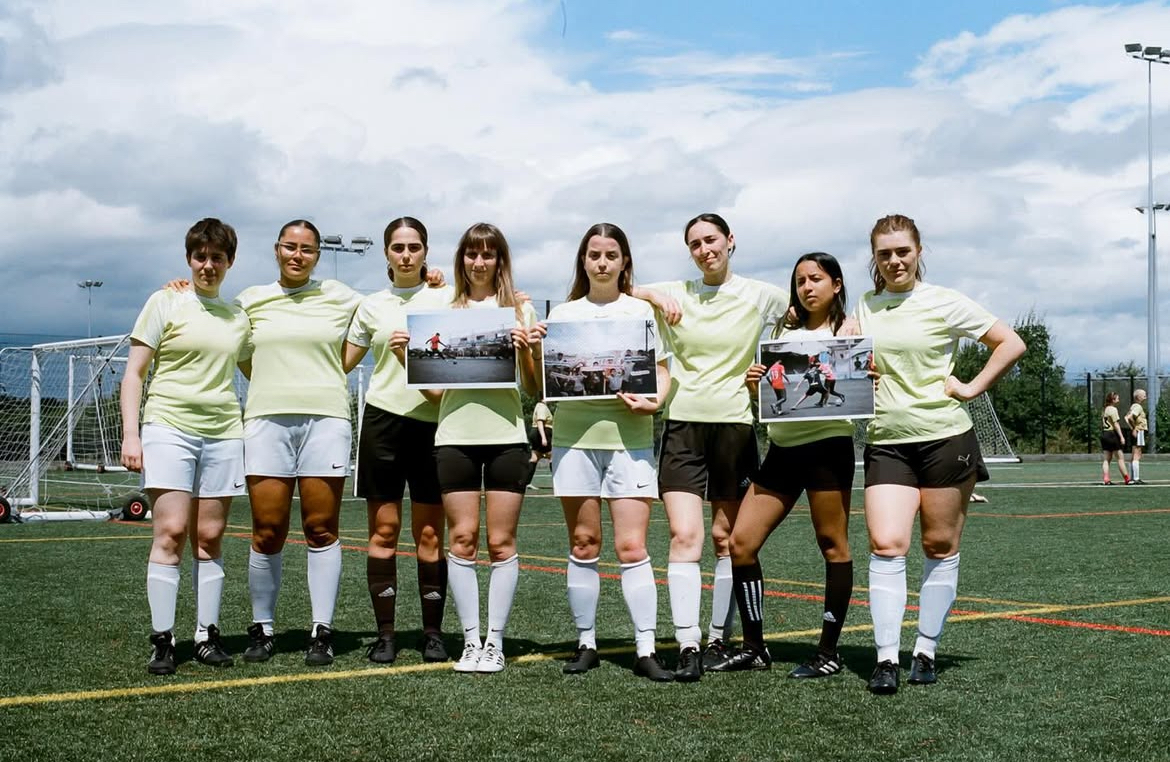
Two years ago, communities all over the world came together to play solidarity matches, denouncing Israel’s attacks on sporting infrastructure and raising funds for life-saving humanitarian aid for Palestinians in Gaza. These players are from North London.
This summer, as millions of people around the world cheered on their favorite teams and players in the 2026 World Cup, AFSC’s team in Gaza worked with local municipalities and Gaza soccer players to host three matches as part of our #GoalsForGaza initiative. In the midst of ongoing genocide, through daily attacks from Israeli forces, and despite being blocked from accessing life-saving food and medical aid, players in Gaza showed the world that Palestinians yearn to live, thrive, and play in freedom.
Here’s where you come in: we’re inviting communities all over the world to host their own matches, exposing Israel’s killing of Palestinian athletes and demonstrating active solidarity with the Palestinian people.
Logistics
So you’ve decided to host a game, fantastic! First, think about who else to recruit to help organize the event. Who in your community has skills that might be helpful? Who has time and interest to devote? Hosting a solidarity game can be a great opportunity to involve new people who might not typically participate in political organizing. Then consider your venue. Do you want to host the game indoors or outdoors? What spaces in your community are accessible to your target audience? Are there any venue rental fees or restrictions to be aware of? What day of the week do you think you’ll attract the highest participation? Make sure your chosen venue is open at your chosen time.
Teams
Next, figure out who will play in your game. Do some research to see if there are any local athletic clubs in your area. Might they be interested in collaborating? How many players do you want on each team? Is the game open to players of all skill levels? All ages? Will you appoint team captains? If not, how will you divide players into teams? Consider whether you think you’ll have enough players to host a single game, multiple games, or a tournament. Then think about how you’ll differentiate the teams. Will players wear different colors? Could you borrow jerseys or pinnies?
Promotion
Once you’ve outlined your event and set a date and time, you should begin advertising. Who might be able to help design a poster for your event? It doesn’t have to be fancy! Once you have a poster, reach out to local organizations and ask for their help promoting your event. If people in your community use social media, make sure to post details about your event there. You can also use other neighborhood messaging platforms to spread the word. Think about if there are any places in your community, like a farmers market, where you could advertise in-person. Will you ask people to register to attend on a platform like Facebook or Eventbrite?
Programming
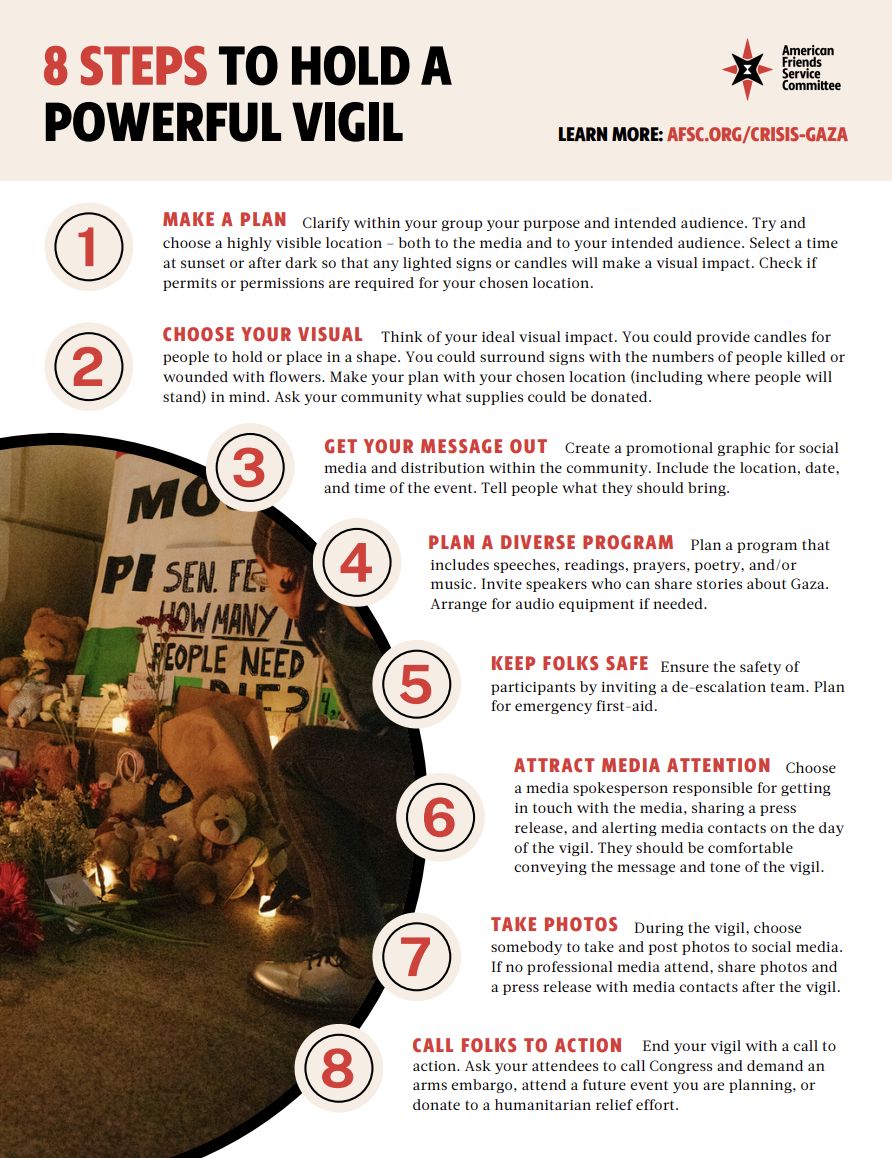
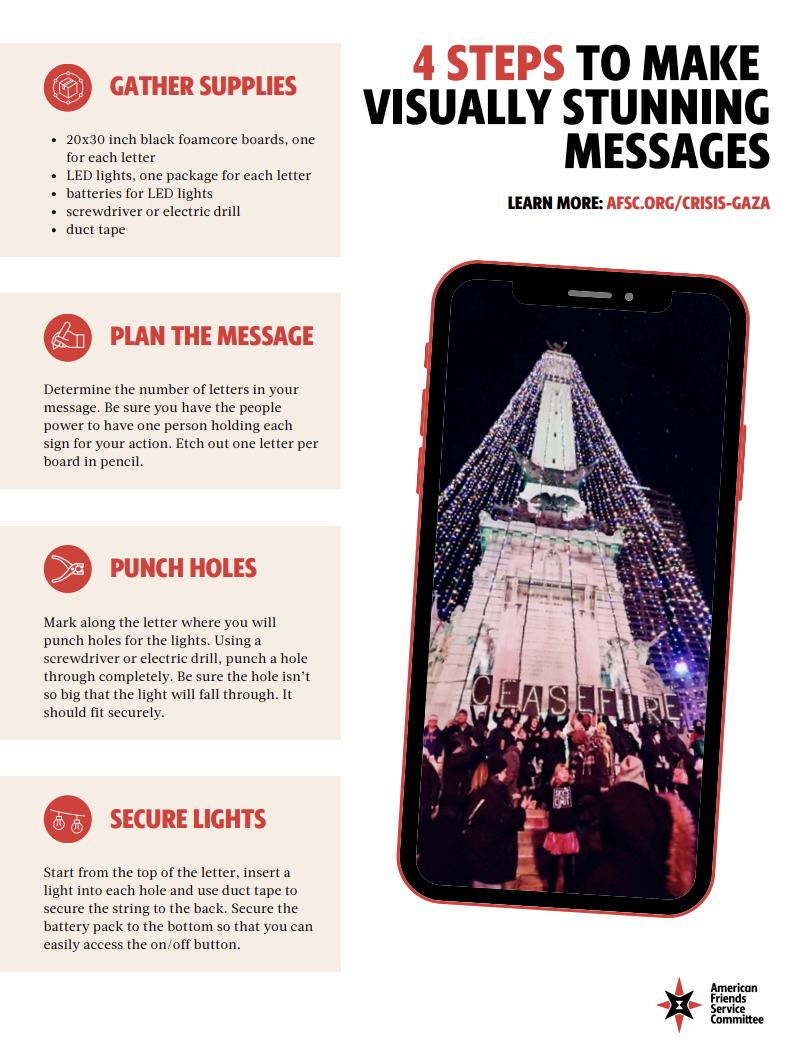
Once you’ve built your planning team and determined who might play in your game, you’ll need to think about your event programming. Will your event consist solely of the game(s) or will you include a welcome, short speeches, or a vigil/memorial component? Will you ask for donations? Will you serve food or have other vendors? Adding other components to the event might allow you to involve other parts of your community who are less interested in sports. Then, ask yourself how you can make it clear what the purpose of hosting the game is. How might those walking by your game learn what’s going on? If you plan on taking pictures, secure a photographer and consider what signage you might put up to let the photos easily tell the full story of your event. Can you set up a physical memorial? Ask the players to wear jerseys with the names of Palestinian players who have been killed? Finally, think about how the event will end. Will the winning team get a prize? Will you have a closing ceremony?
Donations
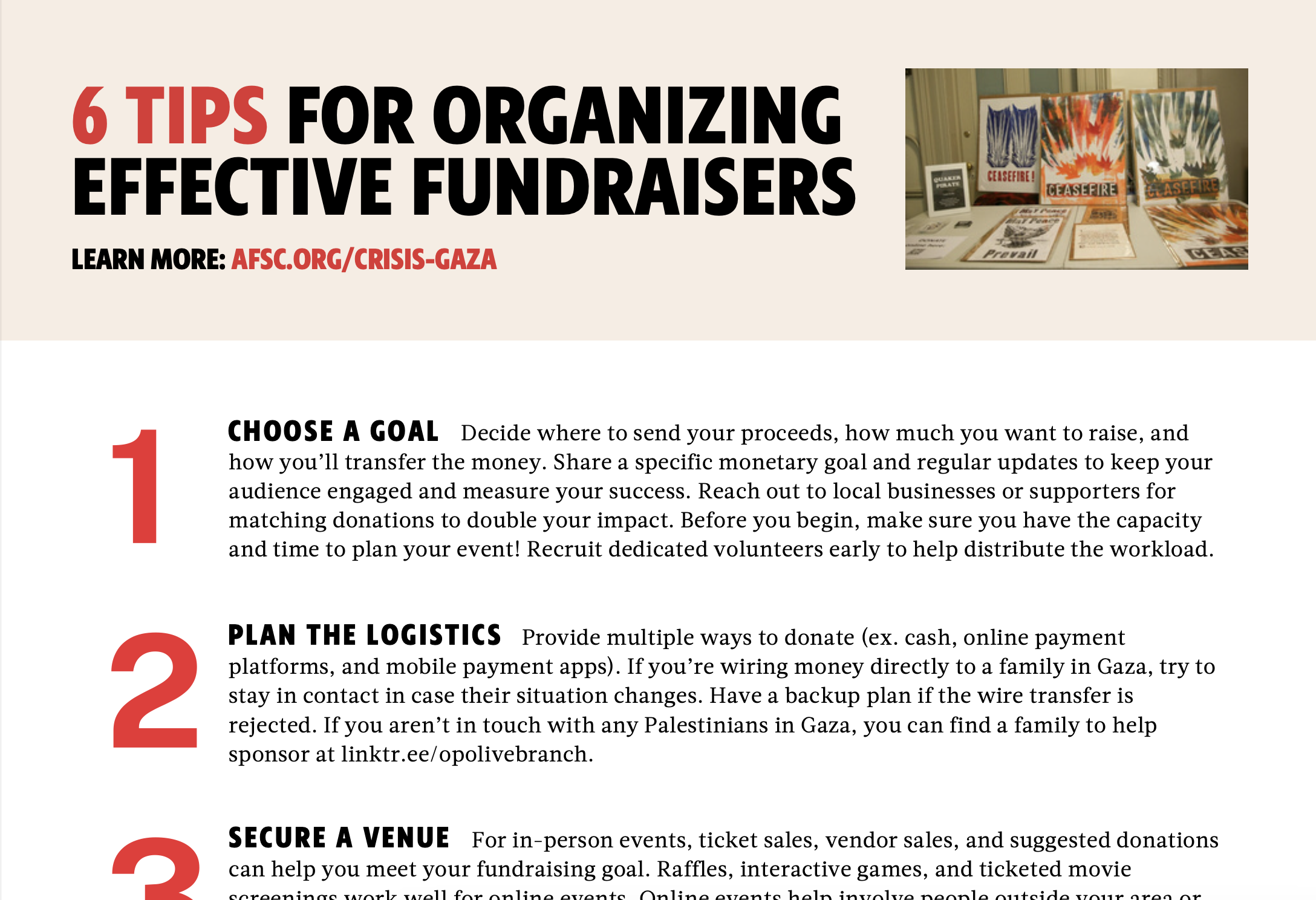
If you’ve decided to collect donations at your game, consider what model will work best for your community. You could make the game(s) pay-to-play or ask each player to fundraise within their circles before the game. You could sell tickets to spectators or set up a raffle. You could ask for donations on site or sell donated food items. You could even create a donation bingo, asking spectators to donate more money if certain conditions are met, for instance a certain number of goals scored. Consider how best to take donations. Are members of your community likely to carry cash? Know how to make online donations? Do you have a way you can accept donations by credit card? Setting a public fundraising goal might help you raise more money. You can use AFSC’s site below to set up a fundraising page just for your event.
Follow-up
The best events engage a community beyond just one day. Consider how you could keep your audience engaged beyond the end of the game. You can ask your community to post any pictures of the game on social media with the hashtag #GoalsForGaza. You could also invite attendees to join the next meeting of a local organizing group or attend the next event you’re organizing. Brainstorm creative ways you might stay in touch with players and other attendees after the end of your event.