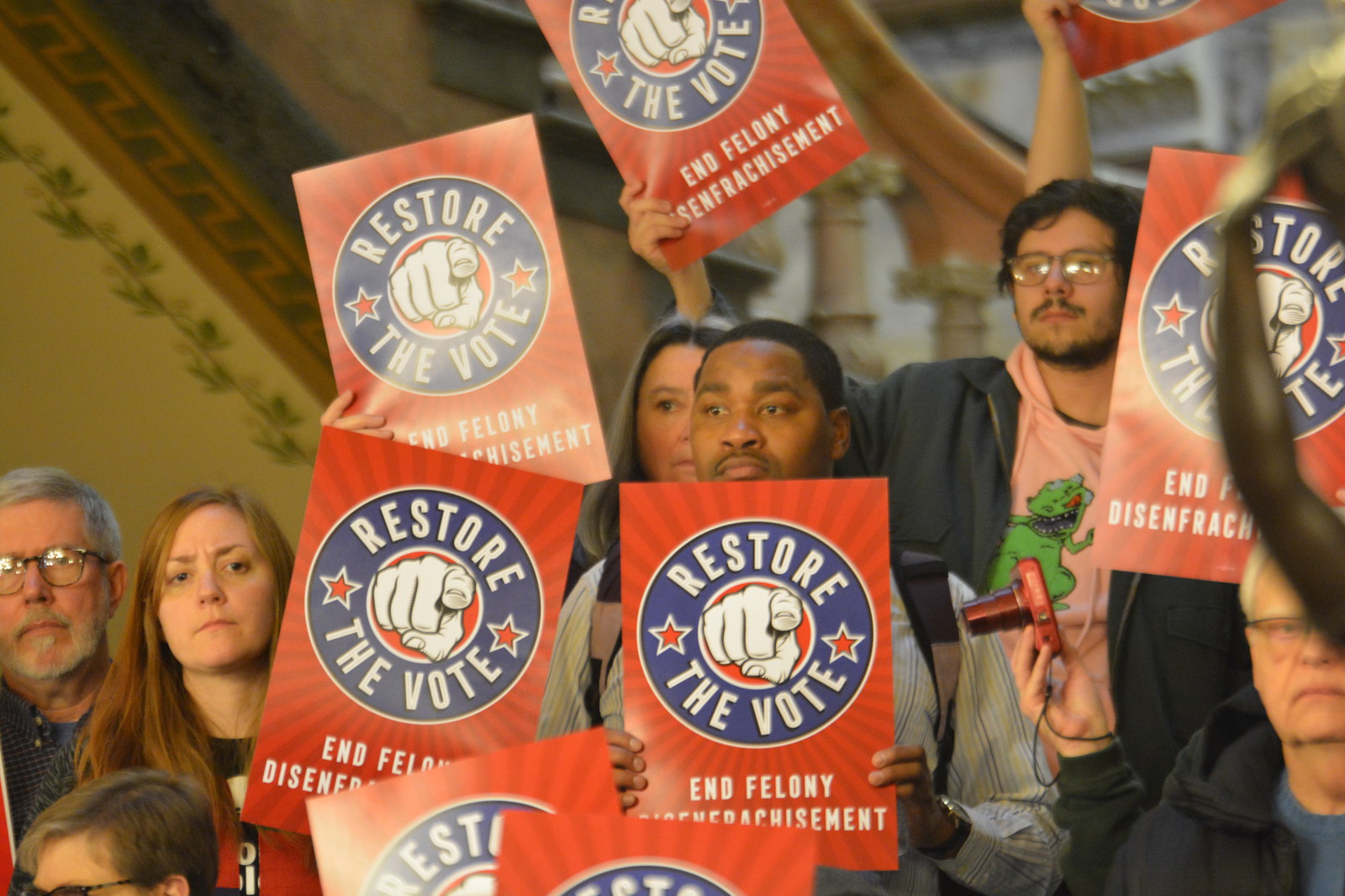
"Restore the Vote" rally in Des Moines, Iowa. Jon Krieg / AFSC
Voting is fundamental to our democracy. It is a right that should never be taken away. But today, an estimated 4 million Americans are barred from exercising their right to vote because they have felony convictions. Most are Black and living in poverty.
Felony disenfranchisement remains the longest-standing form of voter suppression in the U.S.—and it’s past time for us to end it once and for all.
Felony disenfranchisement is a policy of white supremacy. Coupled with more than 40 years of mass incarceration, felony disenfranchisement has silenced the African American’s political voice in ways that echo the “Black codes” of the 1860s and the Jim Crow laws of the 1950s. Today, one in 22 African American adults have lost their right to vote because of a felony conviction. That’s a disenfranchisement rate that’s more than three times that of all other Americans), according to The Sentencing Project.
The injustice of felony disenfranchisement has penetrated the electoral process in all but two states. Outside of Maine, Vermont, and the District of Columbia (where people can vote from their prison cells), the denial of this fundamental right is devastating and far-reaching. Political engagement is quashed, and political strength is decimated. That has resulted in the intentional and perpetual powerlessness of people of color and the poor. This strategic incapacitation of people is driven by systemic racism, fuels continued poverty, and stymies notions of equal and human rights.
Not only does felony disenfranchisement contribute to the class and race bias in the electorate, it also has generational impacts. As more and more African Americans and other people of color are disenfranchised, their children and grandchildren become less politically engaged and don’t vote. And their communities continue to lose out on needed resources.
Until we restore the right to vote to all, our elections will be undemocratic—and the results illegitimate.
In recent years, several states have made progressive reforms to address felony disenfranchisement. These changes are the direct result of organizing and advocacy by people who have experienced incarceration, their families, advocates, and community organizations.
In Virginia, Gov. Abigail Spanberger announced her administration has restored voting rights to more than 66,000 people with past felony convictions. This November, Virginians will also vote on a constitutional amendment that would make restoration automatic upon release from incarceration.
In March 2026, Tennessee lawmakers eased financial barriers to regaining voting rights after incarceration. They removed the requirement that people pay off outstanding court debts before their right to vote is restored.
In Illinois, advocates are pushing to pass a bill that would restore voting rights to people while they're still incarcerated. If passed, the bill would restore voting rights to as many as 50,000 people.
In 2023, the New Mexico Voting Rights Act was signed into law, automatically restoring voting rights to over 11,000 people on probation or parole. That same year, Minnesota legislators also passed the Restore the Vote Act, which automatically expands voting rights to more than 46,000 Minnesotans on probation or parole.
We must also hold government accountable for implementing these reforms as intended. In Florida, for example, public officials continue to suppress the vote. That's even though voters approved a constitutional amendment in 2018 to restore voting rights to over a million people with felony convictions who had been subject to lifetime disenfranchisement. In 2019, Florida’s governor signed into law the equivalent of a poll tax to disenfranchise them again. In 2023, legal challenges to the law hit a roadblock when the Supreme Court refused to intervene.
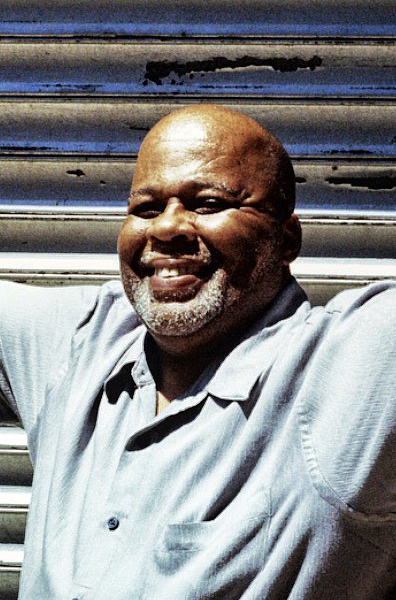
As millions of people across this country continue their struggle to be recognized, I’m reminded of the words of my friend, the late Larry White. Larry was formerly incarcerated and worked with AFSC’s Healing Justice Program.
At the age of 77, Larry voted for the first time—after more than 40 years of being disenfranchised. He told me, “I now matter, my opinion counts.”
Let’s end this injustice now.
Here’s what you can do today:
1. Tell your governor: Restore voting rights to all!
Take action and tell your governor: The right to vote should never be taken away! Spread the word by sharing our action on social media.
2. Ask candidates if they support ending felony disenfranchisement.
During election season, you have a unique opportunity to get candidates on the record about issues that are important to you—and to influence their opinions. You can do this by seeking out a candidate for any public office; asking them where they stand on issues you care about, including ending felony disenfranchisement; and documenting their responses to share with the public.
Here’s a sample script you can use:
“Here in [your state], many people are barred from exercising their right to vote because of involvement in the criminal legal system. I believe the right to vote should never be taken away. Will you protect our right to vote by working to end felony disenfranchisement?”